
Neoclassical Music ⁞ New Releases⁞ Artist Interviews⁞ Music News
Introduction of Neoclassical Music
Neoclassical music is a style of classical music that is characterized by its use of traditional forms and styles, as well as a focus on structure and balance. It is often seen as a reaction against the romantic style of music, which was characterized by emotion and passion, and was influenced by the ideas of the Enlightenment, which valued reason and classical learning.
Some of the key features of neoclassical music include the use of traditional forms such as sonata form, the use of clear and concise melodies, and the incorporation of elements of folk music and popular music. Neoclassical music also often featured a return to tonality, which is the use of a specific key or tonal center in a piece of music.
The neoclassical style has had a lasting influence on classical music, and it continues to be an important part of the classical repertoire
Favorite Neoclassical Music on Spotify
Favorite Neoclassical Videos on Youtube
Recent Neoclassical Interviews
Neoclassical Features

Harris Procopiou – Dawn

“This piano composition sends you to the edge of the sandy cape, where you are alone with nature and wandering in the crowns of trees by the wind, you expect dawn. The night recedes, dark clouds go into the distance, and from behind the mountains the fiery ball of the orange sun rises. (Automatically Translated with Google Translate)”
“Это фортепианная композиция отправляет вас на край песчаного мыса, где наедине с природой и блуждающим в кронах деревьев ветром, вы ожидаете рассвет. Ночь отступает, тёмные тучи уходят в даль, а из-за гор поднимается огненный шар оранжевого солнца.”
-Nagamag.com
https://www.instagram.com/harrisandco
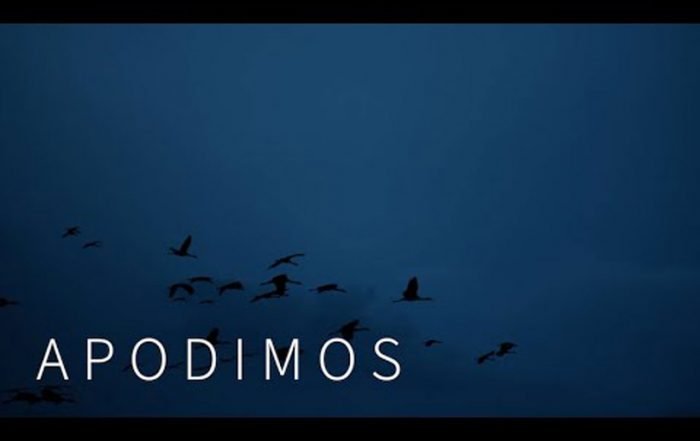
Ted Regklis – Apodimos
“Atmospheric, neoclassical composition that can fill all your consciousness with its hypnotic sound. The melody forms beautiful landscapes in the soul and adds a product of mystery, resembling a gust of fresh wind, which raises the dust of roads, makes noise between the branch of trees and disperses the lazily floating clouds in the sky. (Automatically Translated with Google Translate)”
“Атмосферная, неоклассическая композиция, способная заполнить всё ваше сознание своим гипнотическим звучанием. Мелодия формирует в душе красивые пейзажи и добавляет произведению таинственности, напоминая порыв свежего ветра, который поднимает пыль дорог, шумит между ветвь деревьев и разгоняет в небе лениво плывущие облака.”
-Nagamag.com
This is a piece, part of a series of music pieces, aiming in exploring a more direct and unfiltered way of composing music.
Four elements interact with each other, in a free-form creative process where a piece of footage, a text phrase, moments from everyday life, or world events are allowed to interact with each other and trigger the creation of a piece of music in no specific order. The role of the artist is just to be available and willing to observe and translate this process into a piece of music.
This particular piece is an experiment around the antithesis of the concepts of elevation and fall and how the two coexist during moments of exploration. Apodimos is a Greek word and means the one who leave far from home.
http://www.tedregklis.com/
Latest Neoclassical discoveries

Ethereal Bonds – Deaths Gentle Embrace | Neoclassical music review
Το σκοτάδι σε φοβίζει και όταν όλα είναι γύρω είναι παγωμένα η υπέροχη μελωδία σου δίνει μια αγκαλιά βγάζοντας σε από τη λύπη... >>> Read full review & listen to the song on Nagamag #neo #modernclassical #etherealbonds #nagamag #musicmagazine #musicreview #review

Markus Lehmann-Horn – Paula´s Diary | Neoclassical music review
Эта трагичная и минорная композиция впечатляет своей способностью достичь сердца каждого слушателя. Мелодия очень эмоциональн... >>> Read full review & listen to the song on Nagamag #neo #modernclassical #crossoverclassical #markuslehmannhorn #germany #nagamag #musicmagazine #musicreview #review

Alyssa Reit – Oratorio de Noël, Op. 12: No. 7, Tecum Principium | Neoclassical music review
Это импозантное, камерное классическое произведение. -Alyssa Reit- создала великолепную аранжировку этой части оратории, доба... >>> Read full review & listen to the song on Nagamag #cinematic #epicmusic #holidaymusic #alyssareit #unitedstates #nagamag #musicmagazine #musicreview #review
Christopher Carr – Kyiv | Neoclassical music review
Почувствуйте всю боль и одиночество вместе с -Christopher Carr- и его новой неоклассической композицией. Мелодия осторожно, н... >>> Read full review & listen to the song on Nagamag #neo #modernclassical #classicalstrings #christophercarr #france #nagamag #musicmagazine #musicreview #review
Amorphous Nature – Until My Final Breath | Neoclassical music review
By crafting shapes of Epic sounds, "Amorphous Nature" introduce us in a highly immersive atmosphere. Energetic blasts of wav... >>> Read full review & listen to the song on Nagamag #cinematic #nagamag #musicmagazine #musicreview #review IG: @amorphousnature

Izzy Flynn – Lumière | Neoclassical music review
Emotional and very melancholic vibe is perfect for those lonely nights, alone with your own thoughts that goes really deep, s... >>> Read full review & listen to the song on Nagamag #neo #modernclassical #izzyflynn #unitedkingdom #nagamag #musicmagazine #musicreview #review

DragonflySally233 – Once There Was an Epic Hotpot | Neoclassical music review
A mythical world of adventure and glory unfolds within dynamic soundscapes. From the first seconds you can feel those sonorou... >>> Read full review & listen to the song on Nagamag #cinematic #epicmusic #worldmusicfareast #dragonflysally233 #china #nagamag #musicmagazine #musicreview #review

TheJRSoundDesign – Dreaming of the Sun | Neoclassical music review
Incredibly calming atmosphere and mesmerizing melancholic themes of this piano beauty engage deeply with its first notes. Har... >>> Read full review & listen to the song on Nagamag #neo #modernclassical #solopiano #thejrsounddesign #germany #nagamag #musicmagazine #musicreview #review
Arash Behzadi – Alma | Neoclassical music review
For those who express theirselves through music, Arash Behzadi offers the strongest feeling. Discover the indescribable magic... >>> Read full review & listen to the song on Nagamag #neo #modernclassical #cinematic #epicmusic #arashbehzadi #canada #nagamag #musicmagazine #musicreview #review
Difference between Classical and Neoclassical Music
Classical music refers to a broad range of music written in the classical tradition, which encompasses a wide range of styles and forms. It is generally characterized by its formal structure and its use of traditional instruments and ensemble configurations.
Neoclassicism is a style of music that refers to the revival and use of classical forms and styles in music, particularly in the 18th and early 19th centuries. It is characterized by its use of clear, concise forms and a focus on structure and balance. Neoclassicism was a reaction against the romantic style of music, which was characterized by emotion and passion, and was influenced by the ideas of the Enlightenment, which valued reason and classical learning.
Some of the key differences between classical and neoclassical music include:
Time period: Classical music refers to music written during the classical period (1730-1820), while neoclassicism refers to music written after the classical period that incorporates elements of classical forms and styles.
Emphasis on structure: Classical music is known for its formal structure and the use of traditional forms such as the sonata and the symphony. Neoclassical music also places a strong emphasis on structure, but may also incorporate elements of popular music and folk music.
Emphasis on emotion: Classical music is often more reserved and formal in its emotional expression, while neoclassicism tends to be more emotional and expressive.
Use of tonality: Both classical and neoclassical music use tonality, but neoclassicism often incorporates a wider range of tonal structures and may experiment with atonality.
Use of traditional instruments: Both classical and neoclassical music use traditional classical instruments such as strings, woodwinds, brass, and percussion. However, neoclassicism may also incorporate elements of popular music and folk music, and may use a wider range of instruments.
Overall, the main difference between classical and neoclassical music is the time period in which the music was written, and the specific techniques and styles used by the composer. Classical music is generally more formal and reserved in its expression, while neoclassicism tends to be more expressive and may incorporate elements of popular music and folk music.
The most used instruments in Neoclassical Music
In neoclassical music, the most common instruments used are those found in the classical orchestra, including:
Strings: Violin, viola, cello, double bass
Woodwinds: Flute, oboe, clarinet, bassoon
Brass: Trumpet, French horn, trombone, tuba
Percussion: Timpani, snare drum, bass drum, cymbals, xylophone, marimba, triangle
Keyboard: Piano, harpsichord
These instruments are often used to create a wide range of textures and sounds, and are featured in many different types of classical music, including neoclassical music. In addition to these instruments, many composers also incorporate elements of popular music and folk music into their compositions, and may use a variety of other instruments such as guitars, bass, drums, and synthesizers.
It’s also worth noting that many composers and performers of neoclassical music are skilled in a variety of different instruments, and may switch between different instruments in order to achieve the desired sound and texture.
Vocals are sometimes used in neoclassical music, although they are not as common as instrumental music. When vocals are used in neoclassical music, they are typically performed by trained classical singers who have the ability to sing with precise pitch and control.
One common use of vocals in neoclassical music is in operatic compositions, where singers perform arias and recitatives in a style that is similar to traditional opera. Neoclassical opera is a subgenre of classical music that combines elements of traditional opera with elements of neoclassicism, and often incorporates elements of popular music and folk music.
In addition to operatic vocals, vocals may also be used in other forms of neoclassical music, such as choral music or vocal chamber music. Some composers may also incorporate elements of popular music or folk music into their compositions, and may use vocals in a more modern or experimental style.
It’s worth noting that the use of vocals in neoclassical music is highly dependent on the individual composer and the specific piece of music, and not all neoclassical compositions will feature vocals.