
Neoclassical Music ⁞ New Releases⁞ Artist Interviews⁞ Music News
Introduction of Neoclassical Music
Neoclassical music is a style of classical music that is characterized by its use of traditional forms and styles, as well as a focus on structure and balance. It is often seen as a reaction against the romantic style of music, which was characterized by emotion and passion, and was influenced by the ideas of the Enlightenment, which valued reason and classical learning.
Some of the key features of neoclassical music include the use of traditional forms such as sonata form, the use of clear and concise melodies, and the incorporation of elements of folk music and popular music. Neoclassical music also often featured a return to tonality, which is the use of a specific key or tonal center in a piece of music.
The neoclassical style has had a lasting influence on classical music, and it continues to be an important part of the classical repertoire
Favorite Neoclassical Music on Spotify
Favorite Neoclassical Videos on Youtube
Recent Neoclassical Interviews
Harry Maes Interview on Nagamag.com

Nagamag:
What are the genres that describe better your music style?
Harry Maes:
My current music is influenced by neo-classical and melancholic music with an underlying emotion which focuses on listening to and finding your inner voice of soul. You can also find elements of jazz / fusion, EDM, Pop and Guitar instrumental music influences because I've been producing in these styles before I chose my new musical direction in 2019.
Nagamag:
Few words about your musical background and career?
Harry Maes:
I’m a multi-instrumentalist (guitar, bass, piano/synths, drums, percussion). I’ve studied pop/jazz Guitar at the Rotterdam Conservatorium in the Netherlands. I've focused on playing fusion music in the 90s and started producing Pop and EDM after the year 2000. Between 2010 and 2018 I created fusion guitar compositions and video demos for various guitar related products. Since the end of 2018 I'm focusing on my new music direction.
Nagamag:
Do you remember your first connection of love to music that was the right impact to be a music artist now?
Harry Maes:
Before the end of 2018 I was mainly focusing on producing music for other artists. In 2010 I've had a life threatening experience and it took me years to process all the emotions from that time. I've composed songs around 2012 that I've finally been able to work on again in 2019 and 2020. Inner Voice of Soul is one of those older songs that came to life in the last years. So my new music direction gave me the confidence to produce and finalize this music and choose to promote myself as an artist. It feels very liberating to finally share something that truly represents myself.
Nagamag:
Why have you chosen a new music direction in 2019?
Harry Maes:
At the end of 2018 I've made the bold decision to move from composing on guitar to piano! Because of that 2019 was a very intense but also exciting year in which I've forced myself to only compose on piano and improve my playing ability on piano. It was quite challenging but also liberating to not focus on guitar and fall back onto default patterns. The limitation of the piano has really led me to find my deeper underlying emotions, my inner voice and truly following my heart!
Nagamag:
Are your family or children also musicians?
Harry Maes:
My son Justin is a DJ and producer who lives in Seoul (South Korea). He's currently working closely with DJ Koo and LIPHOP and he's building his Entertainment Agency RISEDAWN specializing in Korean Future Pop and Digital Marketing. I've also worked with my daughter Tiffany during 2000 - 2010 in which we composed songs together and where she performed in the Dutch Eurovision preselection contest in 2004 and participated in the Dutch Idols 4 competition in 2008.
Nagamag:
Most artists have a favorite song from a different music genre than the one they are producing music for... Which is yours?
Harry Maes:
Ailee (DJ Koo, Undaunted, Justin Levai) "Heartcrusher"
Nagamag:
Of Course Nagamag would love to listen also which track from a similar artist you admire?
Harry Maes:
Olafur Arnalds "Only the Winds"
Discover & Listen to Harry Maes
Harry Maes on Spotify
Harry Maes's Signature Track
Harry Maes on Social Media
Harry Maes's Website
Matt Stewart-Evans Interview on Nagamag.com
Matt Stewart-Evans
Interview

Nagamag:
What are the genres that describe better your music style?
Matt Stewart-Evans:
As a solo artist - contemporary classical, neo-classical, whatever you want to call it.
Nagamag:
Few words about your musical background and career?
Matt Stewart-Evans:
I’ve been playing piano for the past 12 years or so and have been writing music alongside that, whilst completing various music theory and performance exams right through to making the decision last year to switch to composing (almost) full-time.
Nagamag:
Do you remember your first connection of love to music that was the right impact to be a music artist now?
Matt Stewart-Evans:
I've had a fascination of music from quite an early age, but only had a couple of years of piano lessons as a child before being distracted by other things in life. Thankfully my teacher was very good despite my lack of attention at the time, and I built a solid grasp of the essentials which was hugely valuable in picking the instrument back up years later. At 15, I got my first pair of turntables and mixer and that was my main musical outlet for the next ten years, but piano slowly took up more time and become more serious as a realised how much satisfaction I got from developing my skills and writing.
Nagamag:
What was a defining moment for you as an artist?
Matt Stewart-Evans:
A big change for me came around four years ago when 1631 Recordings contacted me to ask whether I'd be interested in adding one of my piano pieces "Opus #24" onto a compilation (Piano Cloud), as they were just starting out the label. That ended up being very successful and was playlisted for 6 months or so. Up until then, I'd not considered releasing my music commercially, but that was a big moment for me in terms of seeing an unexpected reward for doing something I loved, which made me consider how I could make it more central to my life.
Nagamag:
Most artists have a favorite song from a different music genre than the one they are producing music for... Which is yours?
Matt Stewart-Evans:
Djrum "Showreel, Pt. 3"
Nagamag:
Of Course Nagamag would love to listen also which track from a similar artist you admire?
Matt Stewart-Evans:
Hania Rani "F Major"
Discover & Listen to Matt Stewart-Evans
Matt Stewart-Evans on Spotify
Matt Stewart-Evans' Signature Track
Matt Stewart-Evans on Social Media
Matt Stewart-Evans' Website
Neoclassical Features

La última experiencia – Juan Pablo Fernández Ramos
“Serene and very beautiful ethereal melodies and gentle textures with this enchanting and soothing composition. Its harmonic structure brings depth of emotions with every sound. Enchanting and perfect progression will bring you closer to the realm of tranquility and inner peace. ”
-Nagamag.com
Expand to read review translations *
“Γαλήνιες και πολύ όμορφες αιθέριες μελωδίες και απαλές υφές με αυτή τη μαγευτική και καταπραϋντική σύνθεση. Η αρμονική του δομή φέρνει βάθος συναισθημάτων με κάθε ήχο. Η μαγευτική και τέλεια εξέλιξη θα σας φέρει πιο κοντά στο βασίλειο της ηρεμίας και της εσωτερικής γαλήνης. ”
-Nagamag.com
“Melodías etéreas serenas y muy hermosas y texturas suaves con esta composición encantadora y relajante. Su estructura armónica aporta profundidad de emociones con cada sonido. Una progresión encantadora y perfecta te acercará al reino de la tranquilidad y la paz interior. ”
-Nagamag.com
The original review of “Juan Pablo Fernández Ramos – La última experiencia” is written in the native language that is spoken by the dedicated, for this song, Nagamag’s Neoclassical reviewer and followed by two translations*, of which the one depends from the country of origin of the artist “Juan Pablo Fernández Ramos” (Spain) and the other one is translated to a different language than original review and the country of origin of the artist.
* Automatically Translated
Nagamag unveils the mesmerizing composition “La última experiencia”, an extraordinary creation of harmony and creativity that “Juan Pablo Fernández Ramos” offered to all of us. A Neoclassical song, which evoked an emotional voyage to our curator that desired to write down a unique review for “Juan Pablo Fernández Ramos – La última experiencia”. What also sets this song among the featured choices of Nagamag is the way that “La última experiencia” is enriched with Cinematic characteristics. “Juan Pablo Fernández Ramos – La última experiencia” is a rich music creation that deserves to be listened to again and again. Nagamag is honored to share this detailed music review by one of our experienced reviewers for Neoclassical music compositions. As always, Nagamag keeps up evaluating Neoclassical songs from across the globe, ensuring that all Neoclassical enthusiasts around the world have access to these auditory treasures .
Neoclassical home page where “Juan Pablo Fernández Ramos – La última experiencia” is hosted on Nagamag Music Magazine
Nagamag takes pride in supporting Neoclassical artists like “Juan Pablo Fernández Ramos”, providing music reviews and music discoveries like “La última experiencia”.
This music post about song “La última experiencia” by “Juan Pablo Fernández Ramos” is hosted in Neoclassical page on Nagamag.
There you can find similar Neoclassical artists to “Juan Pablo Fernández Ramos” and more Neoclassical, Cinematic songs like “La última experiencia” that have been carefully selected by Nagamag’s Neoclassical experienced curators and reviewed by Nagamag’s Neoclassical dedicated reviewers.
Learn everything about Neoclassical on Wikipedia
If you enjoyed “Juan Pablo Fernández Ramos – La última experiencia” but you have never listened before to any other Neoclassical song or you are interested in learning more about Neoclassical music gerne then click here to visit Neoclassical music page on Wikipedia.
Neoclassical music refers to a distinct style with common characteristics. Each genre carries its unique sound, instruments, and cultural influences. For a deeper understanding of Neoclassical music, Wikipedia provides comprehensive insights into its history, notable artists, and iconic works. Delve into the diverse and dynamic world of Neoclassical music through this valuable resource, broadening your knowledge around Neoclassical genre.
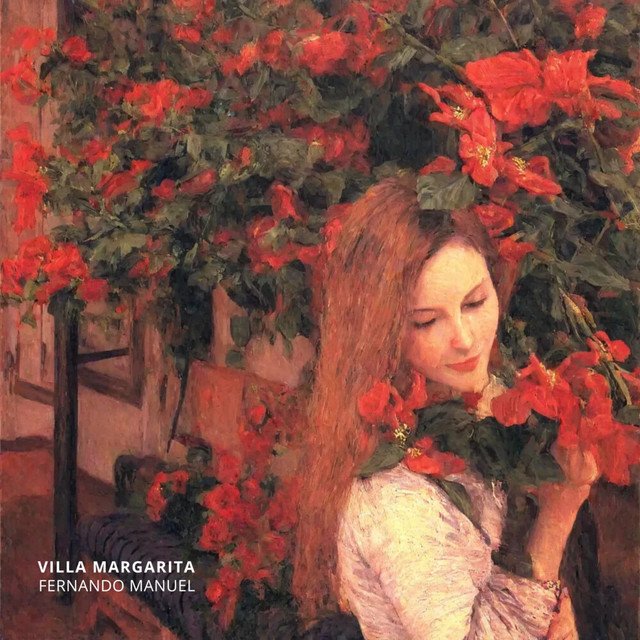
Villa Margarita – Fernando Manuel
“О, Villa Margarita – это великолепная композиция! Она словно переносит в эпоху неоклассицизма, наполнившуюся чувствами и эмоциями. С первых нот вы погрузитесь в атмосферу изысканности и благородства, словно окунулись в потрясающий, цветущий сад. Мелодия льется из инструментов словно ручей, создавая картины живописных пейзажей. Грациозные фортепианные фразы переплетаются с мягкими звуками струнных инструментов, создавая удивительное сочетание гармонии и красоты.”
-Nagamag.com
Expand to read review translations *
“Oh, Villa Margarita – this is a magnificent composition! It seems to take you back to the era of neoclassicism, filled with feelings and emotions. From the first notes you will be immersed in an atmosphere of sophistication and nobility, as if you have plunged into a stunning, blooming garden. The melody flows from the instruments like a stream, creating pictures of picturesque landscapes. Graceful piano phrases intertwine with the soft sounds of string instruments, creating an amazing combination of harmony and beauty.”
-Nagamag.com
“¡Oh, Villa Margarita, es una composición magnífica! Parece transportarte a la época del neoclasicismo, lleno de sentimientos y emociones. Desde las primeras notas te sumergirás en una atmósfera de sofisticación y nobleza, como si te hubieras sumergido en un impresionante jardín floreciente. La melodía fluye de los instrumentos como un arroyo, creando imágenes de paisajes pintorescos. Graciosas frases de piano se entrelazan con los suaves sonidos de los instrumentos de cuerda, creando una sorprendente combinación de armonía y belleza.”
-Nagamag.com
The original review of “Fernando Manuel – Villa Margarita
“ is written in the native language that is spoken by the dedicated, for this song, Nagamag’s Neoclassical reviewer and followed by two translations*, of which the one depends from the country of origin of the artist “Fernando Manuel
“ (Mexico) and the other one is translated to a different language than original review and the country of origin of the artist.
* Automatically Translated
Nagamag unveils the mesmerizing composition “Villa Margarita”, an extraordinary creation of harmony and creativity that “Fernando Manuel” offered to all of us. A Neoclassical song, which evoked an emotional voyage to our curator that desired to write down a unique review for “Fernando Manuel – Villa Margarita”. What also sets this song among the featured choices of Nagamag is the way that “Villa Margarita” is enriched with Piano characteristics. “Fernando Manuel – Villa Margarita” is a rich music creation that deserves to be listened to again and again. Nagamag is honored to share this detailed music review by one of our experienced reviewers for Neoclassical music compositions. As always, Nagamag keeps up evaluating Neoclassical songs from across the globe, ensuring that all Neoclassical enthusiasts around the world have access to these auditory treasures .
Neoclassical home page where “Fernando Manuel – Villa Margarita” is hosted on Nagamag Music Magazine
Nagamag takes pride in supporting Neoclassical artists like “Fernando Manuel”, providing music reviews and music discoveries like “Villa Margarita”.
This music post about song “Villa Margarita” by “Fernando Manuel” is hosted in Neoclassical page on Nagamag.
There you can find similar Neoclassical artists to “Fernando Manuel” and more Neoclassical, Piano songs like “Villa Margarita” that have been carefully selected by Nagamag’s Neoclassical experienced curators and reviewed by Nagamag’s Neoclassical dedicated reviewers.
Learn everything about Neoclassical on Wikipedia
If you enjoyed “Fernando Manuel – Villa Margarita” but you have never listened before to any other Neoclassical song or you are interested in learning more about Neoclassical music gerne then click here to visit Neoclassical music page on Wikipedia.
Neoclassical music refers to a distinct style with common characteristics. Each genre carries its unique sound, instruments, and cultural influences. For a deeper understanding of Neoclassical music, Wikipedia provides comprehensive insights into its history, notable artists, and iconic works. Delve into the diverse and dynamic world of Neoclassical music through this valuable resource, broadening your knowledge around Neoclassical genre.
Latest Neoclassical discoveries
Music Review: PIERS BARON – Beneath Our Regal Moon | Neoclassical Release
Η ηρεμία και η μεγαλοπρέπεια της μελωδίας σε πηγαίνει ένα όμορφο ταξίδι πίσω στο χρόνο όπου όλα είναι πιο αθώα και γαλήνια. Η... >>> Read full review & listen to the song on Nagamag #neo #modernclassical #cinematic #epicmusic #classicalstrings #piersbaron #unitedkingdom #nagamag #musicmagazine #musicreview #review
Single Review: Karen Salicath – Angel Raphaels Touch | Review
Mesmerizing and melancholic mood that keeps gaining momentum as this piece progresses. With every piano note and the themes, ... >>> Read full review & listen to the song on Nagamag #piano #nagamag #musicmagazine #musicreview #review

Feature Review: Edward Cross – Feeling’s Mutual | An essential Neoclassical Song
Η γοητεία την αθωότητας μένει ανεξίτηλη στο χρόνο. Η υπέροχη αυτή μελωδία ξυπνά όλα αυτά τα συναισθήματα της νιότης μας και μ... >>> Read full review & listen to the song on Nagamag #piano #nagamag #musicmagazine #musicreview #review
Release Review: Jonas Elliot Bedsted – Copenhagen | Neoclassical
Οι υπέροχες νότες του πιάνου μελωδικές και ανήσυχες μέσα από μια εκκωφαντική ησυχία εισχωρούν στην ψυχή μας και συναντιούνται... >>> Read full review & listen to the song on Nagamag #neo #modernclassical #jonaselliotbedsted #denmark #nagamag #musicmagazine #musicreview #review
Track Review: Magnus John Anderson – Ever There | Neoclassical
Οι χτύποι της καρδιάς γίνονται πιο γρήγοροι και η εξαίσια μελωδία φωνάζει μέσα μου και θλίβεται μαζί μου. Όμως η αισιόδοξη πλ... >>> Read full review & listen to the song on Nagamag #neo #modernclassical #cinematic #epicmusic #ambient #magnusjohnanderson #sweden #nagamag #musicmagazine #musicreview #review
Fresh Find Review: Erwann Balthazar – Mon étoile | Neoclassical Discovery
Με μια ευχάριστη λαχτάρα η μελωδία έρχεται να μας πλησιάσει και να μας θυμίζει μια μεγάλη αγάπη. Απαλά και με διακριτικότητα ... >>> Read full review & listen to the song on Nagamag #piano #nagamag #musicmagazine #musicreview #review

Next Up Neoclassical Review: Aryaman Natt – Scent of Summer
Χαμένος μέσα στις χαρούμενες νότες του πιάνου νιώθω μια ανέλπιστη αισιοδοξία και όλα τώρα μοιάζουν πιο εύκολά και πιο απλά. Η... >>> Read full review & listen to the song on Nagamag #piano #nagamag #musicmagazine #musicreview #review

Music Review: Alex Solely – Alone (Live) | Neoclassical Release
Πόση ηρεμία και γαλήνη μας μεταφέρει αυτή η μελωδία. Εισχωρεί μέσα μας με τόση ευκολία και κάνει τους χτύπους της καρδιάς μας... >>> Read full review & listen to the song on Nagamag #cinematic #nagamag #musicmagazine #musicreview #review

Fresh Find Review: Oxiroma – Hug & Hold the Ocean (Piano Version) | Neoclassical Discovery
Μέσα από αυτή την υπέροχη μελαγχολική μελωδία βρίσκω την ευκαιρία να μιλήσω με ειλικρίνεια στον εαυτό μου. Οι μαγικές νότες τ... >>> Read full review & listen to the song on Nagamag #neo #modernclassical #cinematic #epicmusic #solopiano #oxiroma #cyprus #nagamag #musicmagazine #musicreview #review
Difference between Classical and Neoclassical Music
Classical music refers to a broad range of music written in the classical tradition, which encompasses a wide range of styles and forms. It is generally characterized by its formal structure and its use of traditional instruments and ensemble configurations.
Neoclassicism is a style of music that refers to the revival and use of classical forms and styles in music, particularly in the 18th and early 19th centuries. It is characterized by its use of clear, concise forms and a focus on structure and balance. Neoclassicism was a reaction against the romantic style of music, which was characterized by emotion and passion, and was influenced by the ideas of the Enlightenment, which valued reason and classical learning.
Some of the key differences between classical and neoclassical music include:
Time period: Classical music refers to music written during the classical period (1730-1820), while neoclassicism refers to music written after the classical period that incorporates elements of classical forms and styles.
Emphasis on structure: Classical music is known for its formal structure and the use of traditional forms such as the sonata and the symphony. Neoclassical music also places a strong emphasis on structure, but may also incorporate elements of popular music and folk music.
Emphasis on emotion: Classical music is often more reserved and formal in its emotional expression, while neoclassicism tends to be more emotional and expressive.
Use of tonality: Both classical and neoclassical music use tonality, but neoclassicism often incorporates a wider range of tonal structures and may experiment with atonality.
Use of traditional instruments: Both classical and neoclassical music use traditional classical instruments such as strings, woodwinds, brass, and percussion. However, neoclassicism may also incorporate elements of popular music and folk music, and may use a wider range of instruments.
Overall, the main difference between classical and neoclassical music is the time period in which the music was written, and the specific techniques and styles used by the composer. Classical music is generally more formal and reserved in its expression, while neoclassicism tends to be more expressive and may incorporate elements of popular music and folk music.
The most used instruments in Neoclassical Music
In neoclassical music, the most common instruments used are those found in the classical orchestra, including:
Strings: Violin, viola, cello, double bass
Woodwinds: Flute, oboe, clarinet, bassoon
Brass: Trumpet, French horn, trombone, tuba
Percussion: Timpani, snare drum, bass drum, cymbals, xylophone, marimba, triangle
Keyboard: Piano, harpsichord
These instruments are often used to create a wide range of textures and sounds, and are featured in many different types of classical music, including neoclassical music. In addition to these instruments, many composers also incorporate elements of popular music and folk music into their compositions, and may use a variety of other instruments such as guitars, bass, drums, and synthesizers.
It’s also worth noting that many composers and performers of neoclassical music are skilled in a variety of different instruments, and may switch between different instruments in order to achieve the desired sound and texture.
Vocals are sometimes used in neoclassical music, although they are not as common as instrumental music. When vocals are used in neoclassical music, they are typically performed by trained classical singers who have the ability to sing with precise pitch and control.
One common use of vocals in neoclassical music is in operatic compositions, where singers perform arias and recitatives in a style that is similar to traditional opera. Neoclassical opera is a subgenre of classical music that combines elements of traditional opera with elements of neoclassicism, and often incorporates elements of popular music and folk music.
In addition to operatic vocals, vocals may also be used in other forms of neoclassical music, such as choral music or vocal chamber music. Some composers may also incorporate elements of popular music or folk music into their compositions, and may use vocals in a more modern or experimental style.
It’s worth noting that the use of vocals in neoclassical music is highly dependent on the individual composer and the specific piece of music, and not all neoclassical compositions will feature vocals.