
Neoclassical Music ⁞ New Releases⁞ Artist Interviews⁞ Music News
Introduction of Neoclassical Music
Neoclassical music is a style of classical music that is characterized by its use of traditional forms and styles, as well as a focus on structure and balance. It is often seen as a reaction against the romantic style of music, which was characterized by emotion and passion, and was influenced by the ideas of the Enlightenment, which valued reason and classical learning.
Some of the key features of neoclassical music include the use of traditional forms such as sonata form, the use of clear and concise melodies, and the incorporation of elements of folk music and popular music. Neoclassical music also often featured a return to tonality, which is the use of a specific key or tonal center in a piece of music.
The neoclassical style has had a lasting influence on classical music, and it continues to be an important part of the classical repertoire
Favorite Neoclassical Music on Spotify
Favorite Neoclassical Videos on Youtube
Recent Neoclassical Interviews
Neoclassical Features

Hanno Herbst – Shine on Jerusalem | Neoclassical music review
“Классическое оперное произведение, которое наполнено красотой и эмоциональными переживаниями. Композиция является великолепным творением музыкального гения -Hanno Herbst-, который показывает свое мастерство в создании величественных и глубоких оперных текстур. Музыка играет важную роль в передаче эмоций и чувств, а автор умело создает картины, описывающие величие священного города Иерусалима.”
-Nagamag.com
Expand to read review translations *
“A classic opera work that is filled with beauty and emotional experiences. The composition is a great creation of musical genius -hanno Herbst-, which shows its skill in creating majestic and deep opera textures. Music plays an important role in transmitting emotions and feelings, and the author skillfully creates paintings describing the greatness of the sacred city of Jerusalem.”
-Nagamag.com
“Eine klassische Opernarbeit, die voller Schönheit und emotionaler Erfahrungen ist. Die Komposition ist eine große Schöpfung des musikalischen Genies -Hanno Herbst-, der seine Fähigkeiten bei der Schaffung majestätischer und tiefer Operntexturen zeigt. Musik spielt eine wichtige Rolle bei der Übertragung von Emotionen und Gefühlen, und der Autor schafft gekonnt Gemälde, die die Größe der heiligen Stadt Jerusalem beschreiben.”
-Nagamag.com
The original review of “Hanno Herbst – Shine on Jerusalem” is written in the native language that is spoken by the dedicated, for this song, Nagamag’s Neoclassical reviewer and followed by two translations*, of which the one depends from the country of origin of the artist “Hanno Herbst
“ (Germany) and the other one is translated to a different language than original review and the country of origin of the artist.
* Automatically Translated
Nagamag unveils the mesmerizing composition “Shine on Jerusalem”, an extraordinary creation of harmony and creativity that “Hanno Herbst
“ offered to all of us. A Neoclassical song, which evoked an emotional voyage to our curator that desired to write down a unique review for “Hanno Herbst – Shine on Jerusalem”. What also sets this song among the featured choices of Nagamag is the way that “Shine on Jerusalem” is enriched with Piano, Opera characteristics. “Hanno Herbst – Shine on Jerusalem” is a rich music creation that deserves to be listened to again and again. Nagamag is honored to share this detailed music review by one of our experienced reviewers for Neoclassical music compositions. As always, Nagamag keeps up evaluating Neoclassical songs from across the globe, ensuring that all Neoclassical enthusiasts around the world have access to these auditory treasures .
Additional information/sources for Hanno Herbst – Shine on Jerusalem
SHINE ON JERUSALEM is just released. It is a peace song and an anti-war anthem and is intended as a small light to shine into a time of warlike conflicts and destructive actions by mankind. Jerusalem as a name stands for the center of unity through mutual esteem and respect, tolerance and patience, love and forgiveness. It is the symbol of a higher power that stands for the good in people. That is why we have chosen this name. The song was arranged with a large orchestra and modern sounds, recorded with classical and pop voices and thus already unites as a song a wonderful harmonious diversity and difference, as this is and should be possible among all people, so that together we can build a future worth living and viable as humanity. Help spread this message.
Hanno Herbst was commercially successful in the 90s. He worked as a composer, arranger and producer for the record companies EMI Electrola and Warner Music and achieved several top ten and top 100 chart positions. He produced and arranged the official remixes of the worldwide hits from Kajagoogoo (Tool Shy) and Delegation (Where is the love we used to know), among others. He is considered one of the pioneers of the German techno scene in the early 90s, and his hit with MYRDIN is still a cult hit today. In the mid-90s, he founded his own music label and his own music publishing company, which he still runs today. Since then, the focus of his work and musical output has shifted more towards the genres of New Age, Spirituals and World Music. From the 2000s onwards, he also began working in the fields of classical music and crossover, writing and releasing several albums with opera world star Marlies Petersen and opera tenor Andrea Belmonte, among others, as well as soundtracks for various documentaries on television and his own CELTIC BRAVEHEART series. Since 2010, he has composed and released several albums of German Schlager and folk hits. In 2023 he produced the synth-pop album ANALOG SPACE completely with old analog technology, original synthesizers, effect devices and tape machines from the 80s and combined the digital world with analog technology to give the music the unique authentic analog feeling again. With opera tenor Andrea Belmonte, he released the album Lieder der Heimat at the beginning of 2024, which was produced together with the well-known producer Gerd Jacobs. He has currently written and produced a song called SHINE ON JERUSALEM, which is a peace anthem and anti-war song that highlights the problems of current world events and sends a message of peace to all people.
Neoclassical home page where “Hanno Herbst – Shine on Jerusalem” is hosted on Nagamag Music Magazine
Nagamag takes pride in supporting Neoclassical artists like “Hanno Herbst
“, providing music reviews and music discoveries like “Shine on Jerusalem”.
This music post about song “Shine on Jerusalem” by “Hanno Herbst
“ is hosted in Neoclassical page on Nagamag.
There you can find similar Neoclassical artists to “Hanno Herbst
“ and more Neoclassical, Piano, Opera songs like “Shine on Jerusalem” that have been carefully selected by Nagamag’s Neoclassical experienced curators and reviewed by Nagamag’s Neoclassical dedicated reviewers.
Learn everything about Neoclassical on Wikipedia
If you enjoyed “Hanno Herbst – Shine on Jerusalem” but you have never listened before to any other Neoclassical song or you are interested in learning more about Neoclassical music gerne then click here to visit Neoclassical music page on Wikipedia.
Neoclassical music refers to a distinct style with common characteristics. Each genre carries its unique sound, instruments, and cultural influences. For a deeper understanding of Neoclassical music, Wikipedia provides comprehensive insights into its history, notable artists, and iconic works. Delve into the diverse and dynamic world of Neoclassical music through this valuable resource, broadening your knowledge around Neoclassical genre.

Maria Karakusheva – Enlightening | Neoclassical music review
“Mesmerizing and melancholic mood that keeps gaining momentum as this piece progresses. With every piano note, this beautiful classic piece just keeps growing on you. Arrangement and transitions are done perfectly, just proving how dreamy piano could sound. ”
-Nagamag.com
Expand to read review translations *
“Μελαγχολική και μελαγχολική διάθεση που συνεχίζει να κερδίζει δυναμική καθώς αυτό το κομμάτι εξελίσσεται. Με κάθε σημείωμα πιάνου, αυτό το όμορφο κλασικό κομμάτι συνεχίζει να σας μεγαλώνει. Η διάταξη και οι μεταβάσεις γίνονται τέλεια, αποδεικνύοντας πόσο ονειρικό πιάνο θα μπορούσε να ακούγεται.”
-Nagamag.com
“Хипнотизиращо и меланхолично настроение, което продължава да набира скорост с напредването на това парче. С всяка нотка на пиано това красиво класическо парче просто продължава да расте върху вас. Подреждането и преходите се извършват перфектно, просто доказвайки как мечтаното пиано може да звучи.”
-Nagamag.com
The original review of “Maria Karakusheva – Enlightening” is written in the native language that is spoken by the dedicated, for this song, Nagamag’s Neoclassical reviewer and followed by two translations*, of which the one depends from the country of origin of the artist “Maria Karakusheva
“ (Bulgaria) and the other one is translated to a different language than original review and the country of origin of the artist.
* Automatically Translated
Nagamag unveils the mesmerizing composition “Enlightening”, an extraordinary creation of harmony and creativity that “Maria Karakusheva
“ offered to all of us. A Neoclassical song, which evoked an emotional voyage to our curator that desired to write down a unique review for “Maria Karakusheva – Enlightening”. What also sets this song among the featured choices of Nagamag is the way that “Enlightening” is enriched with Piano characteristics. “Maria Karakusheva – Enlightening” is a rich music creation that deserves to be listened to again and again. Nagamag is honored to share this detailed music review by one of our experienced reviewers for Neoclassical music compositions. As always, Nagamag keeps up evaluating Neoclassical songs from across the globe, ensuring that all Neoclassical enthusiasts around the world have access to these auditory treasures .
Additional information/sources for Maria Karakusheva – Enlightening
“Enlightening” – A Neo-Classical Journey Through Madagascar’s Dreams
Experience a captivating blend of neo-classical music and the mystical allure of Madagascar’s landscapes in the music video – “Enlightening.” This extraordinary journey unfolds the concept that life is akin to a series of dreams, with a unique harmony that transcends musical genres.
The Neo-Classical Muse:
Maria Karakusheva’s neo-classical melodies take center stage, offering an enchanting backdrop to our dreamer’s voyage. Her music serves as the unifying force, turning Valerie’s dreams into a fantastical realm where the boundaries between reality and imagination blur.
A Dreamer’s Paradise:
Miss Madagascar – Valerie Binguira becomes the muse, embodying the idea that life is an ever-evolving dream. Her dreams transport us through the stunning landscapes of Madagascar, from lush forests inhabited by lemurs to hidden waterfalls and remote islands.
Bridging Cultures and Realities:
“Enlightening” finds its inspiration in Eastern philosophies but acknowledges the global nature of dreams and aspirations. Madagascar’s landscapes provide the perfect canvas for this cross-cultural exploration.
This video is an artistic fusion, harmonizing neo-classical music with the mystique of Madagascar’s natural beauty, all while conveying the notion that life is a sequence of dreams waiting to be discovered and fulfilled.
Neoclassical home page where “Maria Karakusheva – Enlightening” is hosted on Nagamag Music Magazine
Nagamag takes pride in supporting Neoclassical artists like “Maria Karakusheva
“, providing music reviews and music discoveries like “Enlightening”.
This music post about song “Enlightening” by “Maria Karakusheva
“ is hosted in Neoclassical page on Nagamag.
There you can find similar Neoclassical artists to “Maria Karakusheva
“ and more Neoclassical, Piano songs like “Enlightening” that have been carefully selected by Nagamag’s Neoclassical experienced curators and reviewed by Nagamag’s Neoclassical dedicated reviewers.
Learn everything about Neoclassical on Wikipedia
If you enjoyed “Maria Karakusheva – Enlightening” but you have never listened before to any other Neoclassical song or you are interested in learning more about Neoclassical music gerne then click here to visit Neoclassical music page on Wikipedia.
Neoclassical music refers to a distinct style with common characteristics. Each genre carries its unique sound, instruments, and cultural influences. For a deeper understanding of Neoclassical music, Wikipedia provides comprehensive insights into its history, notable artists, and iconic works. Delve into the diverse and dynamic world of Neoclassical music through this valuable resource, broadening your knowledge around Neoclassical genre.
Latest Neoclassical discoveries
oliviacolboc – Dance with myself | Neoclassical music review
Композиция в исполнении -Oliviacolboc- на пиано — это прекрасное и так нужное человеческому сердцу музыкальное произведение. ... >>> Read full review & listen to the song on Nagamag #piano #nagamag #musicmagazine #musicreview #review

Fil Uno – Fragancia | Neoclassical music review
Эта композиция не так проста, как может показаться на первый взгляд — она магическим образом закрадывается в душу и вызывает ... >>> Read full review & listen to the song on Nagamag #neo #modernclassical #classicalstrings #filuno #peru #nagamag #musicmagazine #musicreview #review
Raynald Grenier – Canon in E Flat | Neoclassical music review
Serene and very beautiful ethereal melodies and gentle textures with this enchanting and soothing composition. Its harmonic s... >>> Read full review & listen to the song on Nagamag #neo #modernclassical #classicalstrings #raynaldgrenier #canada #nagamag #musicmagazine #musicreview #review

Samuel Subrt – Leaf | Neoclassical music review
Melancholic and very emotional atmosphere, perfectly capturing its title. Beautiful and playful dynamic of the composition is... >>> Read full review & listen to the song on Nagamag #piano #nagamag #musicmagazine #musicreview #review
Jordi Forniés – We Invented Love | Neoclassical music review
Композиция -We Invented Love- исполненная на пиано погружает в атмосферу минимализма, танца теней в полумраке чувств и любви,... >>> Read full review & listen to the song on Nagamag #neo #modernclassical #solopiano #jordiforniés #spain #nagamag #musicmagazine #musicreview #review

Charlie Grey and Joseph Peach – A’ Mirean San Adhar | Neoclassical music review
Игра на скрипке и фортепиано создает атмосферу невероятной красоты, словно танец двух лун на орбите, которые так далеки от на... >>> Read full review & listen to the song on Nagamag #celtic #charliegreyandjosephpeach #unitedkingdom #nagamag #musicmagazine #musicreview #review

DragonflySally233 – Let’s Eat Together When I am Back | Neoclassical music review
Композиция встречает нас нежными фортепианными аккордами, которые создают атмосферу ожидания. Постепенно мелодия обогащается ... >>> Read full review & listen to the song on Nagamag #neo #modernclassical #cinematic #epicmusic #worldmusicfareast #dragonflysally233 #china #nagamag #musicmagazine #musicreview #review
yannick Fortin – Longue Marche entre les dunes | Neoclassical music review
Χιλιάδες συναισθήματα ζωντανεύουν και παίρνουν μορφή μέσα από αυτή την εκπληκτική μελωδία. Με μια νοσταλγική θλίψη μας παρασύ... >>> Read full review & listen to the song on Nagamag #cinematic #nagamag #musicmagazine #musicreview #review
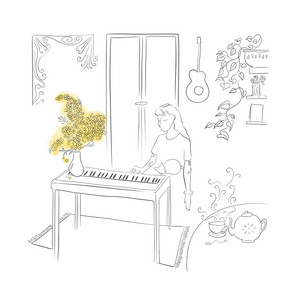
Chloé Antoniotti – Mimosa | Neoclassical music review
Η απαλή και γλυκιά μελωδία μέσα από τις ζέστες νότες του πιάνου μας ταξιδεύει σε απίστευτα όμορφα τοπία. Πολύχρωμα λουλούδια ... >>> Read full review & listen to the song on Nagamag #neo #modernclassical #chloéantoniotti #france #nagamag #musicmagazine #musicreview #review
Difference between Classical and Neoclassical Music
Classical music refers to a broad range of music written in the classical tradition, which encompasses a wide range of styles and forms. It is generally characterized by its formal structure and its use of traditional instruments and ensemble configurations.
Neoclassicism is a style of music that refers to the revival and use of classical forms and styles in music, particularly in the 18th and early 19th centuries. It is characterized by its use of clear, concise forms and a focus on structure and balance. Neoclassicism was a reaction against the romantic style of music, which was characterized by emotion and passion, and was influenced by the ideas of the Enlightenment, which valued reason and classical learning.
Some of the key differences between classical and neoclassical music include:
Time period: Classical music refers to music written during the classical period (1730-1820), while neoclassicism refers to music written after the classical period that incorporates elements of classical forms and styles.
Emphasis on structure: Classical music is known for its formal structure and the use of traditional forms such as the sonata and the symphony. Neoclassical music also places a strong emphasis on structure, but may also incorporate elements of popular music and folk music.
Emphasis on emotion: Classical music is often more reserved and formal in its emotional expression, while neoclassicism tends to be more emotional and expressive.
Use of tonality: Both classical and neoclassical music use tonality, but neoclassicism often incorporates a wider range of tonal structures and may experiment with atonality.
Use of traditional instruments: Both classical and neoclassical music use traditional classical instruments such as strings, woodwinds, brass, and percussion. However, neoclassicism may also incorporate elements of popular music and folk music, and may use a wider range of instruments.
Overall, the main difference between classical and neoclassical music is the time period in which the music was written, and the specific techniques and styles used by the composer. Classical music is generally more formal and reserved in its expression, while neoclassicism tends to be more expressive and may incorporate elements of popular music and folk music.
The most used instruments in Neoclassical Music
In neoclassical music, the most common instruments used are those found in the classical orchestra, including:
Strings: Violin, viola, cello, double bass
Woodwinds: Flute, oboe, clarinet, bassoon
Brass: Trumpet, French horn, trombone, tuba
Percussion: Timpani, snare drum, bass drum, cymbals, xylophone, marimba, triangle
Keyboard: Piano, harpsichord
These instruments are often used to create a wide range of textures and sounds, and are featured in many different types of classical music, including neoclassical music. In addition to these instruments, many composers also incorporate elements of popular music and folk music into their compositions, and may use a variety of other instruments such as guitars, bass, drums, and synthesizers.
It’s also worth noting that many composers and performers of neoclassical music are skilled in a variety of different instruments, and may switch between different instruments in order to achieve the desired sound and texture.
Vocals are sometimes used in neoclassical music, although they are not as common as instrumental music. When vocals are used in neoclassical music, they are typically performed by trained classical singers who have the ability to sing with precise pitch and control.
One common use of vocals in neoclassical music is in operatic compositions, where singers perform arias and recitatives in a style that is similar to traditional opera. Neoclassical opera is a subgenre of classical music that combines elements of traditional opera with elements of neoclassicism, and often incorporates elements of popular music and folk music.
In addition to operatic vocals, vocals may also be used in other forms of neoclassical music, such as choral music or vocal chamber music. Some composers may also incorporate elements of popular music or folk music into their compositions, and may use vocals in a more modern or experimental style.
It’s worth noting that the use of vocals in neoclassical music is highly dependent on the individual composer and the specific piece of music, and not all neoclassical compositions will feature vocals.