
Neoclassical Music ⁞ New Releases⁞ Artist Interviews⁞ Music News
Introduction of Neoclassical Music
Neoclassical music is a style of classical music that is characterized by its use of traditional forms and styles, as well as a focus on structure and balance. It is often seen as a reaction against the romantic style of music, which was characterized by emotion and passion, and was influenced by the ideas of the Enlightenment, which valued reason and classical learning.
Some of the key features of neoclassical music include the use of traditional forms such as sonata form, the use of clear and concise melodies, and the incorporation of elements of folk music and popular music. Neoclassical music also often featured a return to tonality, which is the use of a specific key or tonal center in a piece of music.
The neoclassical style has had a lasting influence on classical music, and it continues to be an important part of the classical repertoire
Favorite Neoclassical Music on Spotify
Favorite Neoclassical Videos on Youtube
Recent Neoclassical Interviews
Neoclassical Features

Michael Richardson – Decay | Neoclassical music review
“Удивительное композиция, которое несомненно заслуживает каждой секунды вашего внимания. Мелодичное и атмосферное звучание, тонкая гармония и минималистичная звуковая палитра. Композиция создаёт особенное настроение и вызывает глубокие эмоции. Такая музыка способна развить воображение и перенести слушателя в другой мир.”
-Nagamag.com
Expand to read review translations *
“An amazing composition that undoubtedly deserves every second of your attention. Melodic and atmospheric sound, subtle harmony and minimalist sound palette. The composition creates a special mood and causes deep emotions. Such music is able to develop the imagination and transfer the listener to another world.”
-Nagamag.com
“Μια εκπληκτική σύνθεση που αναμφισβήτητα αξίζει κάθε δευτερόλεπτο της προσοχής σας. Μελωδική και ατμοσφαιρική ήχο, λεπτή αρμονία και μινιμαλιστική παλέτα ήχου. Η σύνθεση δημιουργεί μια ειδική διάθεση και προκαλεί βαθιά συναισθήματα. Αυτή η μουσική είναι σε θέση να αναπτύξει τη φαντασία και να μεταφέρει τον ακροατή σε έναν άλλο κόσμο.”
-Nagamag.com
The original review of “Michael Richardson – Decay” is written in the native language that is spoken by the dedicated, for this song, Nagamag’s Neoclassical reviewer and followed by two translations*, of which the one depends from the country of origin of the artist “Michael Richardso
“ (United Kingdom) and the other one is translated to a different language than original review and the country of origin of the artist.
* Automatically Translated
Nagamag unveils the mesmerizing composition “Decay”, an extraordinary creation of harmony and creativity that “Michael Richardso
“ offered to all of us. A Neoclassical song, which evoked an emotional voyage to our curator that desired to write down a unique review for “Michael Richardson – Decay”. What also sets this song among the featured choices of Nagamag is the way that “Decay” is enriched with Piano characteristics. “Michael Richardson – Decay” is a rich music creation that deserves to be listened to again and again. Nagamag is honored to share this detailed music review by one of our experienced reviewers for Neoclassical music compositions. As always, Nagamag keeps up evaluating Neoclassical songs from across the globe, ensuring that all Neoclassical enthusiasts around the world have access to these auditory treasures .
Nagamag takes pride in supporting Neoclassical artists like “Michael Richardso
“, providing music reviews and music discoveries like “Decay”.
This music post about song “Decay” by “Michael Richardso
“ has been arranged in Neoclassical page on Nagamag.
There you can find similar Neoclassical artists to “Michael Richardso
“ and more Neoclassical, Piano songs like “Decay” that have been carefully selected by Nagamag’s Neoclassical experienced curators and reviewed by Nagamag’s Neoclassical dedicated reviewers.
If you enjoyed “Michael Richardson – Decay” but you have never listened before to any other Neoclassical song or you are interested in learning more about Neoclassical music gerne then click here to visit Neoclassical music page on Wikipedia.
Neoclassical music refers to a distinct style with common characteristics. Each genre carries its unique sound, instruments, and cultural influences. For a deeper understanding of Neoclassical music, Wikipedia provides comprehensive insights into its history, notable artists, and iconic works. Delve into the diverse and dynamic world of Neoclassical music through this valuable resource, broadening your knowledge around Neoclassical genre.
José Javier Delgado – Nuit Blue – instrumental | Neoclassical music review
“Pieces like these are more like dessert for thought. Relaxing piano themes that flows with its tempo and harmonic structure so well. The piece progressed so well, more complexity appeared within the arrangement parts, that stimulated your brain both intellectually and emotionally.”
-Nagamag.com
Expand to read review translations *
“Κομμάτια όπως αυτά είναι περισσότερο σαν επιδόρπιο για σκέψη. Χαλαρωτικά θέματα πιάνου που ρέουν με το ρυθμό και την αρμονική του δομή τόσο καλά. Το κομμάτι προχώρησε τόσο καλά, η πολυπλοκότητα εμφανίστηκε μέσα στα τμήματα ρύθμισης, που διεγείρουν τον εγκέφαλό σας τόσο διανοητικά όσο και συναισθηματικά.”
-Nagamag.com
“Piezas como estas son más como el postre para pensar. Temas de piano relajantes que fluyen con su tempo y estructura armónica muy bien. La pieza progresó tan bien, una mayor complejidad apareció dentro de las partes de la disposición, que estimuló su cerebro tanto intelectual como emocionalmente.”
-Nagamag.com
The original review of “José Javier Delgado – Nuit Blue – instrumental” is written in the native language that is spoken by the dedicated, for this song, Nagamag’s Neoclassical reviewer and followed by two translations*, of which the one depends from the country of origin of the artist “José Javier Delgado” (Spain) and the other one is translated to a different language than original review and the country of origin of the artist.
* Automatically Translated
Nagamag unveils the mesmerizing composition “Nuit Blue – instrumental”, an extraordinary creation of harmony and creativity that “José Javier Delgado” offered to all of us. A Neoclassical song, which evoked an emotional voyage to our curator that desired to write down a unique review for “José Javier Delgado – Nuit Blue – instrumental”. What also sets this song among the featured choices of Nagamag is the way that “Nuit Blue – instrumental” is enriched with Piano, Cinematic characteristics. “José Javier Delgado – Nuit Blue – instrumental” is a rich music creation that deserves to be listened to again and again. Nagamag is honored to share this detailed music review by one of our experienced reviewers for Neoclassical music compositions. As always, Nagamag keeps up evaluating Neoclassical songs from across the globe, ensuring that all Neoclassical enthusiasts around the world have access to these auditory treasures .
www.josejavierdelgado.com
Nagamag takes pride in supporting Neoclassical artists like “José Javier Delgado”, providing music reviews and music discoveries like “Nuit Blue – instrumental”.
This music post about song “Nuit Blue – instrumental” by “José Javier Delgado” has been arranged in Neoclassical page on Nagamag.
There you can find similar Neoclassical artists to “José Javier Delgado” and more Neoclassical, Piano, Cinematic songs like “Nuit Blue – instrumental” that have been carefully selected by Nagamag’s Neoclassical experienced curators and reviewed by Nagamag’s Neoclassical dedicated reviewers.
If you enjoyed “José Javier Delgado – Nuit Blue – instrumental” but you have never listened before to any other Neoclassical song or you are interested in learning more about Neoclassical music gerne then click here to visit Neoclassical music page on Wikipedia.
Neoclassical music refers to a distinct style with common characteristics. Each genre carries its unique sound, instruments, and cultural influences. For a deeper understanding of Neoclassical music, Wikipedia provides comprehensive insights into its history, notable artists, and iconic works. Delve into the diverse and dynamic world of Neoclassical music through this valuable resource, broadening your knowledge around Neoclassical genre.
Latest Neoclassical discoveries

Robert Ouyang Rusli – Elizabeth’s Voicemail | Neoclassical music review
Эта музыкальная работа поражает своей эмоциональностью и красотой, демонстрируя уникальное владение неоклассическим жанром, о... >>> Read full review & listen to the song on Nagamag #cinematic #epicmusic #robertouyangrusli #unitedstates #nagamag #musicmagazine #musicreview #review
Kev Rowe – Dream Fade | Neoclassical music review
Нежная, очень приятная на слух неоклассическая композиция, которая мгновенно погружает слушателя в атмосферу спокойствия. Муз... >>> Read full review & listen to the song on Nagamag #cinematic #epicmusic #kevrowe #unitedstates #nagamag #musicmagazine #musicreview #review

Markus Lehmann-Horn – Morgentau | Neoclassical music review
Crystal clear piano vibrations slowly emerge in the silence of a distant past. The minimalistic soundscape completes the scen... >>> Read full review & listen to the song on Nagamag #neo #modernclassical #solopiano #markuslehmannhorn #germany #nagamag #musicmagazine #musicreview #review

Cabin Fever Orchestra – Worn | Neoclassical music review
Главная особенность этой классической композиции — это её феноменальная мелодия, которая уносит слушателя в захватывающее муз... >>> Read full review & listen to the song on Nagamag #neo #modernclassical #cabinfeverorchestra #canada #nagamag #musicmagazine #musicreview #review

Solbore – As Children (feat. Kaska String Section & Victor Morales) | Neoclassical music review
В композиции слышится невероятная изящность и нежность, которые переносят слушателя в мир эмоций, рисуя в воображении нечто о... >>> Read full review & listen to the song on Nagamag #neo #modernclassical #solbore #unitedkingdom #nagamag #musicmagazine #musicreview #review
Dmitry Klevansky x Stefan Kristinkov – The Messenger (Romance) | Neoclassical music review
Cinematic structure gives this song different sound dimension, more depth and emotion to the already beautiful string themes.... >>> Read full review & listen to the song on Nagamag #cinematic #epicmusic #crossoverclassical #dmitryklevanskyxstefankristinkov #dmitryklevanskyxstefankristinkov #unitedstates #nagamag #musicmagazine #musicreview #review
Lars Jakob Rudjord – Margit | Neoclassical music review
Прекрасный пример современной неоклассической музыки, который окружает нас своей нежностью и красотой, как если бы перед нами... >>> Read full review & listen to the song on Nagamag #neo #modernclassical #larsjakobrudjord #norway #nagamag #musicmagazine #musicreview #review
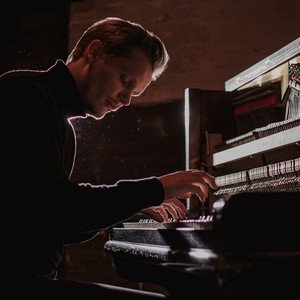
A. Blomqvist – Kaiho | Neoclassical music review
Mesmerizing and melancholic mood that keeps gaining momentum as this piece progresses. With every piano note, this beautiful ... >>> Read full review & listen to the song on Nagamag #neo #modernclassical #solopiano #ablomqvist #finland #nagamag #musicmagazine #musicreview #review

Roger Evernden and Nico de Napoli – Girl On A Swing | Neoclassical music review
For the lovers of Neoclassical and many more, a really impactful piano piece is out... >>> Read full review & listen to the song on Nagamag #piano #nagamag #musicmagazine #musicreview #review
Difference between Classical and Neoclassical Music
Classical music refers to a broad range of music written in the classical tradition, which encompasses a wide range of styles and forms. It is generally characterized by its formal structure and its use of traditional instruments and ensemble configurations.
Neoclassicism is a style of music that refers to the revival and use of classical forms and styles in music, particularly in the 18th and early 19th centuries. It is characterized by its use of clear, concise forms and a focus on structure and balance. Neoclassicism was a reaction against the romantic style of music, which was characterized by emotion and passion, and was influenced by the ideas of the Enlightenment, which valued reason and classical learning.
Some of the key differences between classical and neoclassical music include:
Time period: Classical music refers to music written during the classical period (1730-1820), while neoclassicism refers to music written after the classical period that incorporates elements of classical forms and styles.
Emphasis on structure: Classical music is known for its formal structure and the use of traditional forms such as the sonata and the symphony. Neoclassical music also places a strong emphasis on structure, but may also incorporate elements of popular music and folk music.
Emphasis on emotion: Classical music is often more reserved and formal in its emotional expression, while neoclassicism tends to be more emotional and expressive.
Use of tonality: Both classical and neoclassical music use tonality, but neoclassicism often incorporates a wider range of tonal structures and may experiment with atonality.
Use of traditional instruments: Both classical and neoclassical music use traditional classical instruments such as strings, woodwinds, brass, and percussion. However, neoclassicism may also incorporate elements of popular music and folk music, and may use a wider range of instruments.
Overall, the main difference between classical and neoclassical music is the time period in which the music was written, and the specific techniques and styles used by the composer. Classical music is generally more formal and reserved in its expression, while neoclassicism tends to be more expressive and may incorporate elements of popular music and folk music.
The most used instruments in Neoclassical Music
In neoclassical music, the most common instruments used are those found in the classical orchestra, including:
Strings: Violin, viola, cello, double bass
Woodwinds: Flute, oboe, clarinet, bassoon
Brass: Trumpet, French horn, trombone, tuba
Percussion: Timpani, snare drum, bass drum, cymbals, xylophone, marimba, triangle
Keyboard: Piano, harpsichord
These instruments are often used to create a wide range of textures and sounds, and are featured in many different types of classical music, including neoclassical music. In addition to these instruments, many composers also incorporate elements of popular music and folk music into their compositions, and may use a variety of other instruments such as guitars, bass, drums, and synthesizers.
It’s also worth noting that many composers and performers of neoclassical music are skilled in a variety of different instruments, and may switch between different instruments in order to achieve the desired sound and texture.
Vocals are sometimes used in neoclassical music, although they are not as common as instrumental music. When vocals are used in neoclassical music, they are typically performed by trained classical singers who have the ability to sing with precise pitch and control.
One common use of vocals in neoclassical music is in operatic compositions, where singers perform arias and recitatives in a style that is similar to traditional opera. Neoclassical opera is a subgenre of classical music that combines elements of traditional opera with elements of neoclassicism, and often incorporates elements of popular music and folk music.
In addition to operatic vocals, vocals may also be used in other forms of neoclassical music, such as choral music or vocal chamber music. Some composers may also incorporate elements of popular music or folk music into their compositions, and may use vocals in a more modern or experimental style.
It’s worth noting that the use of vocals in neoclassical music is highly dependent on the individual composer and the specific piece of music, and not all neoclassical compositions will feature vocals.