
Neoclassical Music ⁞ New Releases⁞ Artist Interviews⁞ Music News
Introduction of Neoclassical Music
Neoclassical music is a style of classical music that is characterized by its use of traditional forms and styles, as well as a focus on structure and balance. It is often seen as a reaction against the romantic style of music, which was characterized by emotion and passion, and was influenced by the ideas of the Enlightenment, which valued reason and classical learning.
Some of the key features of neoclassical music include the use of traditional forms such as sonata form, the use of clear and concise melodies, and the incorporation of elements of folk music and popular music. Neoclassical music also often featured a return to tonality, which is the use of a specific key or tonal center in a piece of music.
The neoclassical style has had a lasting influence on classical music, and it continues to be an important part of the classical repertoire
Favorite Neoclassical Music on Spotify
Favorite Neoclassical Videos on Youtube
Recent Neoclassical Interviews
Neoclassical Features

someofw – Movement

“This piece of music is one of the best I've heard in a while. Beautiful themes, strings sections, lush piano, arranged perfectly. I hope that this would feature in some movie soundtrack one day. Something that I played in a loop for an hour, just amazing, pure musical art.”
-Nagamag.com
https://www.instagram.com/someofw/

Sleeping Lily – On It Goes

“The breathing of the chamber orchestra and the lonely crying of the piano in the middle of the ice lake. Music, which constrains your hearts, connects the lonely souls of everyone who has lost their way in the darkness and is looking for a satellite. Here it is - your music is a guiding star. Take her hand and follow her where the light is. The heart will not deceive.” (Automatically Translated with Google Translate)
“Дыхание камерного оркестра и одинокий плач фортепиано посередине ледяного озера. Музыка, которая сковывает ваши сердца, связывает одинокие души всех, кто заблудился во тьме и ищет спутника. Вот она — музыка ваша путеводная звезда. Возьмите её за руку и иди за ней туда, где свет. Сердце не обманет.”
-Nagamag.com
https://linktr.ee/sleepinglily
Latest Neoclassical discoveries

Mare Insularum Pier – Tiny Things Last | Neoclassical music review
Фортепианная композиция, которая заставляет нас полностью погрузиться в мир эмоций и воспоминаний от -Mare Insularum Pier-. Э... >>> Read full review & listen to the song on Nagamag #neo #modernclassical #solopiano #mareinsularumpier #italy #nagamag #musicmagazine #musicreview #review

Liam Phan – Grains | Neoclassical music review
Эта замечательная фортепианная пьеса от -Liam Phan- открывает перед слушателем потрясающий мир звуков и эмоций, создавая впеч... >>> Read full review & listen to the song on Nagamag #piano #nagamag #musicmagazine #musicreview #review IG: @liamphanmusic

Sebastian von Pückler – Für Tamara | Neoclassical music review
Song catches you right away. Nice instrumentation and nice development and layering of the opening melodic statement. Great m... >>> Read full review & listen to the song on Nagamag #piano #nagamag #musicmagazine #musicreview #review IG: @pueckler.melodies

Rick Oli – Divine Templar Chant | Neoclassical music review
Structure and its cinematic mood gives this composition different sound dimension, more depth and emotion. Choir pads, violin... >>> Read full review & listen to the song on Nagamag #cinematic #nagamag #musicmagazine #musicreview #review IG: @rick0li

Christophe Luciani – Bouquet of Notes | Neoclassical music review
Serene world of ethereal melodies and gentle textures with this enchanting Synthesia tutorial. Its harmonic piano structure b... >>> Read full review & listen to the song on Nagamag #piano #nagamag #musicmagazine #musicreview #review

Steven Poole – The Tempest | Neoclassical music review
Нежные, чувственные, такие воздушные и меланхоличные аккорды пиано, которые подчеркивают разнообразие эмоций и настроения ком... >>> Read full review & listen to the song on Nagamag #piano #nagamag #musicmagazine #musicreview #review IG: @steven__poole

Waldemar Moes – In the Bleak Midwinter | Neoclassical music review
Композиция от автора -Waldemar Moes- является переосмыслением классической рождественской песни с тем же названием, написанно... >>> Read full review & listen to the song on Nagamag #piano #nagamag #musicmagazine #musicreview #review
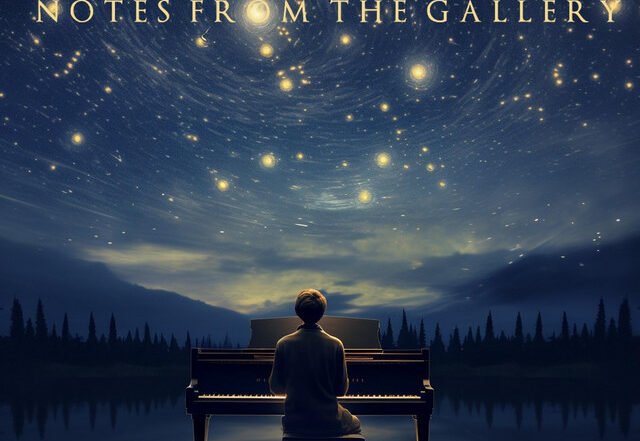
Lucas King – Persistence of Memory | Neoclassical music review
Мелодия начинается так тихо и медленно, постепенно разворачиваясь в потрясающий музыкальный пейзаж. Музыка изобилует эмоциона... >>> Read full review & listen to the song on Nagamag #piano #nagamag #musicmagazine #musicreview #review

Lina Gervasi – Rising | Neoclassical music review
Начало композиции захватывает с первых нот, ведь образы, которые рисует музыка, создают атмосферу торжественности и надежды. ... >>> Read full review & listen to the song on Nagamag #piano #strings #thremin #nagamag #musicmagazine #musicreview #review
Difference between Classical and Neoclassical Music
Classical music refers to a broad range of music written in the classical tradition, which encompasses a wide range of styles and forms. It is generally characterized by its formal structure and its use of traditional instruments and ensemble configurations.
Neoclassicism is a style of music that refers to the revival and use of classical forms and styles in music, particularly in the 18th and early 19th centuries. It is characterized by its use of clear, concise forms and a focus on structure and balance. Neoclassicism was a reaction against the romantic style of music, which was characterized by emotion and passion, and was influenced by the ideas of the Enlightenment, which valued reason and classical learning.
Some of the key differences between classical and neoclassical music include:
Time period: Classical music refers to music written during the classical period (1730-1820), while neoclassicism refers to music written after the classical period that incorporates elements of classical forms and styles.
Emphasis on structure: Classical music is known for its formal structure and the use of traditional forms such as the sonata and the symphony. Neoclassical music also places a strong emphasis on structure, but may also incorporate elements of popular music and folk music.
Emphasis on emotion: Classical music is often more reserved and formal in its emotional expression, while neoclassicism tends to be more emotional and expressive.
Use of tonality: Both classical and neoclassical music use tonality, but neoclassicism often incorporates a wider range of tonal structures and may experiment with atonality.
Use of traditional instruments: Both classical and neoclassical music use traditional classical instruments such as strings, woodwinds, brass, and percussion. However, neoclassicism may also incorporate elements of popular music and folk music, and may use a wider range of instruments.
Overall, the main difference between classical and neoclassical music is the time period in which the music was written, and the specific techniques and styles used by the composer. Classical music is generally more formal and reserved in its expression, while neoclassicism tends to be more expressive and may incorporate elements of popular music and folk music.
The most used instruments in Neoclassical Music
In neoclassical music, the most common instruments used are those found in the classical orchestra, including:
Strings: Violin, viola, cello, double bass
Woodwinds: Flute, oboe, clarinet, bassoon
Brass: Trumpet, French horn, trombone, tuba
Percussion: Timpani, snare drum, bass drum, cymbals, xylophone, marimba, triangle
Keyboard: Piano, harpsichord
These instruments are often used to create a wide range of textures and sounds, and are featured in many different types of classical music, including neoclassical music. In addition to these instruments, many composers also incorporate elements of popular music and folk music into their compositions, and may use a variety of other instruments such as guitars, bass, drums, and synthesizers.
It’s also worth noting that many composers and performers of neoclassical music are skilled in a variety of different instruments, and may switch between different instruments in order to achieve the desired sound and texture.
Vocals are sometimes used in neoclassical music, although they are not as common as instrumental music. When vocals are used in neoclassical music, they are typically performed by trained classical singers who have the ability to sing with precise pitch and control.
One common use of vocals in neoclassical music is in operatic compositions, where singers perform arias and recitatives in a style that is similar to traditional opera. Neoclassical opera is a subgenre of classical music that combines elements of traditional opera with elements of neoclassicism, and often incorporates elements of popular music and folk music.
In addition to operatic vocals, vocals may also be used in other forms of neoclassical music, such as choral music or vocal chamber music. Some composers may also incorporate elements of popular music or folk music into their compositions, and may use vocals in a more modern or experimental style.
It’s worth noting that the use of vocals in neoclassical music is highly dependent on the individual composer and the specific piece of music, and not all neoclassical compositions will feature vocals.