
Neoclassical Music ⁞ New Releases⁞ Artist Interviews⁞ Music News
Introduction of Neoclassical Music
Neoclassical music is a style of classical music that is characterized by its use of traditional forms and styles, as well as a focus on structure and balance. It is often seen as a reaction against the romantic style of music, which was characterized by emotion and passion, and was influenced by the ideas of the Enlightenment, which valued reason and classical learning.
Some of the key features of neoclassical music include the use of traditional forms such as sonata form, the use of clear and concise melodies, and the incorporation of elements of folk music and popular music. Neoclassical music also often featured a return to tonality, which is the use of a specific key or tonal center in a piece of music.
The neoclassical style has had a lasting influence on classical music, and it continues to be an important part of the classical repertoire
Favorite Neoclassical Music on Spotify
Favorite Neoclassical Videos on Youtube
Recent Neoclassical Interviews
Neoclassical Features

Båd – Oktober (Spotify)
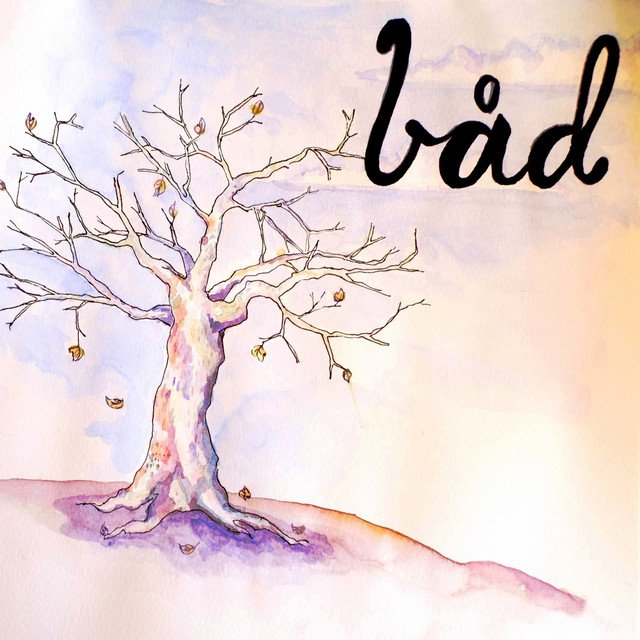
“"Oktober" is the matching piece to leave behind Summer and welcome Autumn. According to the Classical music spirit, the artist combines chords from two instruments. Now is your chance to realize the great affection of this amazing result.”
-Nagamag.com
Oktober' is the piano- and cellodriven lead single from the new Copenhagen-based classical/dreamjazz-project Båd's forthcoming debutalbum 'Oktober Vipper Bladene Af Træerne'.
Behind Båd is Jeppe Dengsø, composer-student at Rhythmic Music Conservatory in Copenhagen.
”'Oktober' is my humble declaration of love to Autumn and the nostalgic sensation it contains. Sad but hopeful, bittersweet and intangible. I hope it can act as a soundtrack for people's Autumn; that they'll listen to it on a rainy Autumn-walk through the city or forest” – Jeppe Dengsø
https://www.facebook.com/baadbaadbaadmusic
https://soundcloud.com/baadbaadbaad

ÜUCE, Arttu Silvast – sea / boat / water (Spotify)

“Where the sea meets an altar and waves embrace the crystal cathedrals is where this takes place. A romance with sound of synths and strings telling the tale. ”
-Nagamag.com
https://www.arttusilvast.com/seaboatwater
'sea / boat / water' is the first single that’s flourished from a collaboration between two neo-classical composers; ÜUCE (USA) and Arttu Silvast (FIN).
The project started to come together after the two musicians found each other through shared digital spaces and started exchanging musical ideas online. It turned out that they both had a similar taste in music, sounds, and textures.
I grew up spending my summers in the sand on the east coast of the USA. Naturally while there, I had life-giving experiences, fell in love with the ocean, and fell in love with the women who ended up becoming my wife. As the years moved on and I finally got to enjoy the sea with my son, a melody broke onto the shore in front of us. After sharing the concept with Arttu, he thoughtfully observed the notes to find the meaning for me… not to mention expand profoundly on it. - ÜUCE
I’m originally from a very small seaside town in Southern Finland and the sea has always made me feel at home and offered an endless source of inspiration. ‘sea / boat / water’ came together as ÜUCE sent me one of his piano ideas that I started to build on. Turned out that we have a very similar taste in aesthetics and music but also, we are both fascinated by the sea. - Arttu Silvast
https://www.instagram.com/uuce_music/
https://www.instagram.com/arttusilvast/
Latest Neoclassical discoveries

Xeuphoria – self reflection
Η ατελείωτη ομορφιά της φύσης απλώνεται εντυπωσιακή και μια μελωδία έρχεται για να μας συναρπάσει και να μας ταξιδέψει στα πολύχρωμα λιβάδια του μυαλού και της... >>> Read more & listen to this song on Nagamag #solopiano #ambient #xeuphoria #unitedkingdom #nagamag #musicmagazine TW: @iamxeuphoria

Cyrus Reynolds – American Steppes
Darker tones of lower frequencies and beautiful melancholic strings are very moving. Emotional depth of this compositions literally explodes with that soft pia... >>> Read more & listen to this song on Nagamag #neo #modernclassical #ambient #cyrusreynolds #unitedstates #nagamag #musicmagazine IG: @cyrus_reynolds

Eydís Evensen – Dreaming of Light
Deep and very emotional piano theme layers the beautiful vocal and its chanting atmosphere perfectly. Blissful synergy between her voice and piano notes is ver... >>> Read more & listen to this song on Nagamag #singersongwriter #neo #modernclassical #eydísevensen #iceland #nagamag #musicmagazine IG: @eydisevensen TW: @eydis_evensen

Mike Goodspeed – A Real Gullywasher (Reprise)
Rain atmosphere and samples definitely expand the melancholic vibe of the composition and its melodic structure. Deep and darker tone, specially with string th... >>> Read more & listen to this song on Nagamag #neo #modernclassical #cinematic #epicmusic #ambient #mikegoodspeed #unitedstates #nagamag #musicmagazine IG: @goodspeed_mike
Gleb Andrianov – Madrigale
Darker and melancholic atmosphere of the strings piano notes fulfill with a more brighter tone. Beautiful synergy between the two. Composition oscillates withi... >>> Read more & listen to this song on Nagamag #neo #modernclassical #glebandrianov #unitedkingdom #nagamag #musicmagazine

Domenico Quaceci – La ballata delle cose nascoste
Depth and emotion can be felt with every piano note played. Transitions of the lower keys creates very dreamy atmosphere, specially with a change of pace and i... >>> Read more & listen to this song on Nagamag #neo #modernclassical #cinematic #epicmusic #domenicoquaceci #italy #nagamag #musicmagazine IG: @domenicoquaceci_official

Karl Hugo – Lovation
Emotional piano theme sets the tone of this composition in a best possible way. Instrument after instrument layers this amazing dreamy soundscapes, that create... >>> Read more & listen to this song on Nagamag #neo #modernclassical #karlhugo #canada #nagamag #musicmagazine IG: @karlhugomusic

Escaped Apple – Flowers by a chest
Blissful vocal and beautiful strings in the background creates very dreamy atmosphere. Song reminds at moments of Enya, with vocals and melodic structure. Cine... >>> Read more & listen to this song on Nagamag #neo #modernclassical #escapedapple #sweden #nagamag #musicmagazine IG: @escapedapple

Karl Edh – Atlantis Revealed
Новая неоклассическая композиция от -Karl Edh- очень яркое и увлекательное музыкальное путешествие. Она начинается нежными и загадочными звуками, которые медле... >>> Read more & listen to this song on Nagamag #cinematic #epicmusic #karledh #sweden #nagamag #musicmagazine IG: @karledhcomposer
Difference between Classical and Neoclassical Music
Classical music refers to a broad range of music written in the classical tradition, which encompasses a wide range of styles and forms. It is generally characterized by its formal structure and its use of traditional instruments and ensemble configurations.
Neoclassicism is a style of music that refers to the revival and use of classical forms and styles in music, particularly in the 18th and early 19th centuries. It is characterized by its use of clear, concise forms and a focus on structure and balance. Neoclassicism was a reaction against the romantic style of music, which was characterized by emotion and passion, and was influenced by the ideas of the Enlightenment, which valued reason and classical learning.
Some of the key differences between classical and neoclassical music include:
Time period: Classical music refers to music written during the classical period (1730-1820), while neoclassicism refers to music written after the classical period that incorporates elements of classical forms and styles.
Emphasis on structure: Classical music is known for its formal structure and the use of traditional forms such as the sonata and the symphony. Neoclassical music also places a strong emphasis on structure, but may also incorporate elements of popular music and folk music.
Emphasis on emotion: Classical music is often more reserved and formal in its emotional expression, while neoclassicism tends to be more emotional and expressive.
Use of tonality: Both classical and neoclassical music use tonality, but neoclassicism often incorporates a wider range of tonal structures and may experiment with atonality.
Use of traditional instruments: Both classical and neoclassical music use traditional classical instruments such as strings, woodwinds, brass, and percussion. However, neoclassicism may also incorporate elements of popular music and folk music, and may use a wider range of instruments.
Overall, the main difference between classical and neoclassical music is the time period in which the music was written, and the specific techniques and styles used by the composer. Classical music is generally more formal and reserved in its expression, while neoclassicism tends to be more expressive and may incorporate elements of popular music and folk music.
The most used instruments in Neoclassical Music
In neoclassical music, the most common instruments used are those found in the classical orchestra, including:
Strings: Violin, viola, cello, double bass
Woodwinds: Flute, oboe, clarinet, bassoon
Brass: Trumpet, French horn, trombone, tuba
Percussion: Timpani, snare drum, bass drum, cymbals, xylophone, marimba, triangle
Keyboard: Piano, harpsichord
These instruments are often used to create a wide range of textures and sounds, and are featured in many different types of classical music, including neoclassical music. In addition to these instruments, many composers also incorporate elements of popular music and folk music into their compositions, and may use a variety of other instruments such as guitars, bass, drums, and synthesizers.
It’s also worth noting that many composers and performers of neoclassical music are skilled in a variety of different instruments, and may switch between different instruments in order to achieve the desired sound and texture.
Vocals are sometimes used in neoclassical music, although they are not as common as instrumental music. When vocals are used in neoclassical music, they are typically performed by trained classical singers who have the ability to sing with precise pitch and control.
One common use of vocals in neoclassical music is in operatic compositions, where singers perform arias and recitatives in a style that is similar to traditional opera. Neoclassical opera is a subgenre of classical music that combines elements of traditional opera with elements of neoclassicism, and often incorporates elements of popular music and folk music.
In addition to operatic vocals, vocals may also be used in other forms of neoclassical music, such as choral music or vocal chamber music. Some composers may also incorporate elements of popular music or folk music into their compositions, and may use vocals in a more modern or experimental style.
It’s worth noting that the use of vocals in neoclassical music is highly dependent on the individual composer and the specific piece of music, and not all neoclassical compositions will feature vocals.