
Neoclassical Music ⁞ New Releases⁞ Artist Interviews⁞ Music News
Introduction of Neoclassical Music
Neoclassical music is a style of classical music that is characterized by its use of traditional forms and styles, as well as a focus on structure and balance. It is often seen as a reaction against the romantic style of music, which was characterized by emotion and passion, and was influenced by the ideas of the Enlightenment, which valued reason and classical learning.
Some of the key features of neoclassical music include the use of traditional forms such as sonata form, the use of clear and concise melodies, and the incorporation of elements of folk music and popular music. Neoclassical music also often featured a return to tonality, which is the use of a specific key or tonal center in a piece of music.
The neoclassical style has had a lasting influence on classical music, and it continues to be an important part of the classical repertoire
Favorite Neoclassical Music on Spotify
Favorite Neoclassical Videos on Youtube
Recent Neoclassical Interviews
Neoclassical Features

LE BERRY – Jordi Forniés (Video)
“The bright, searing flames of emotion warm our cold souls when their half-closed door glides with this neoclassical work by -Jordi Forniés-. Inspiring piece, it helps to reflect on the most important things in life…”
“Яркое, обжигающее пламя эмоций согревает холодные души, когда в их полузакрытые двери словно прохладный ветерок скользит это неоклассическое произведение от -Jordi Forniés-. Вдохновляющая работа, помогает задуматься о самых важных в жизни вещах…”
-Nagamag.com
Artist shared few words with Nagamag behind this inspiration:
“My new single ‘Le Berry’ is out today, a piece that i composed in my piano just thinking about a special place I have in France. Sometimes a simple melody becomes strong enough to bring powerful emotions. Le Berry is describing a very special place that I will call home one day.” – Jordi Forniés
https://jordifornies.bandcamp.com/releases
https://www.facebook.com/jordifornies.artist
https://www.instagram.com/jordifornies

Mirabai Ceiba – She (Video)
“Peaceful and meditative work by Mirabai Ceiba. Acoustic performance dedicated to all the women out there. A song that opens a gate to inner self giving the chance for spiritual and emotional development.”
-Nagamag.com
The serene beauty of duo Mirabai Ceiba’s upcoming album The Quiet Hour is a timely antidote, set for a June 11th release on Spirit Voyage. Mastered by Martyn Heyne (7K!), gently plucked strings and beckoning textures lead the listener on an inward journey of calm centeredness. Angelika Baumbach’s voice wells up like an undulating stream, blossoming forth with sublime poetry.
The deep, loving bond between Baumbach and her musical life partner—multi-instrumentalist/vocalist Markus Sieber (Aukai)—is palpable, as their instruments and voices intertwine on Mirabai Ceiba’s most intimate and meditative album to date.
The serene new single “She” embraces calm acoustics, an inward pulse, and the defining quality of silence.
https://www.mirabaiceiba.com/
https://www.instagram.com/mirabaiceiba/
https://open.spotify.com/artist/2qBg3GRK1U9XCkJ9JabBt3
https://www.youtube.com/channel/UCnjjMT2nK6LEQyUta6sCgTA
Latest Neoclassical discoveries
![Hugar - ok (Dustin O'Halloran Rework) [feat. Dustin O'Halloran], Neoclassical music genre, Nagamag Magazine](https://www.nagamag.com/wp-content/uploads/2023/04/hugar-ok-dustin-ohalloran-rework-feat-dustin-ohalloran-nagamag-music-magazine-640x441.jpg)
Hugar – ok (Dustin O’Halloran Rework) [feat. Dustin O’Halloran]
Melancholic feelings and atmosphere are mixed with such depth and detail. Really amazing work is done with this composition. Cinematic emotion can be felt as w... >>> Read more & listen to this song on Nagamag #neo #modernclassical #ambient #hugar #iceland #nagamag #musicmagazine IG: @hugarmusic TW: @hugarmusic

Olario – Layers
Full cinematic experience, depth and atmosphere is something that is an understatement considering how beautifully composed this piece is. Strings arrangement ... >>> Read more & listen to this song on Nagamag #cinematic #epicmusic #classicalstrings #olario #austria #nagamag #musicmagazine IG: @yuryrevich
Matthias Krauss – La valse de l’amour
Very emotional and in a way cinematic feeling that this composition evokes is full of beautiful piano themes that are arranged in a magnificent way. Depth and ... >>> Read more & listen to this song on Nagamag #neo #modernclassical #matthiaskrauss #germany #nagamag #musicmagazine IG: @matthiaskraussofficial

Sam Miller – The Islands
Από το παράθυρο ατενίζω το πέλαγος και τον ορίζοντα. Τίποτα δεν μπαίνει ανάμεσα σε μένα και την υπέροχη μελωδία που ηχεί τόσο ευχάριστα στα αφτιά μου. Οι αναμν... >>> Read more & listen to this song on Nagamag #solopiano #neo #modernclassical #sammiller #unitedstates #nagamag #musicmagazine IG: @sammillermusic TW: @sammiller

Paolo Guarneri – Honfleur
Η ήρεμη και απαλή μελωδία μας μεταφέρει σε άλλους κόσμους και μας παρασύρει στα μονοπάτια της. Η γοητευτική μελαγχολία της εισχωρεί μέσα μας και μας κάνει να ... >>> Read more & listen to this song on Nagamag #solopiano #neo #modernclassical #paologuarneri #italy #nagamag #musicmagazine IG: @guarneri.paolo80
Richard E. Brown x Anna Kislitsyna x Ovidiu Marinescu – Sonatina for Cello and Piano: I. Allegro moderato
Η μαγεία της μελωδίας αγγίζει την ψυχή μας και μας παρασύρει σε θάλασσες ανοιχτές και ανεμοδαρμένες παραλίες. Πάντα εναλλάσσεται. Άλλοτε είναι έντονη και άλλοτ... >>> Read more & listen to this song on Nagamag #neo #modernclassical #cinematic #epicmusic #richardebrown #richardebrownxannakislitsynaxovidiumarinescu #unitedstates #russia #nagamag #musicmagazine
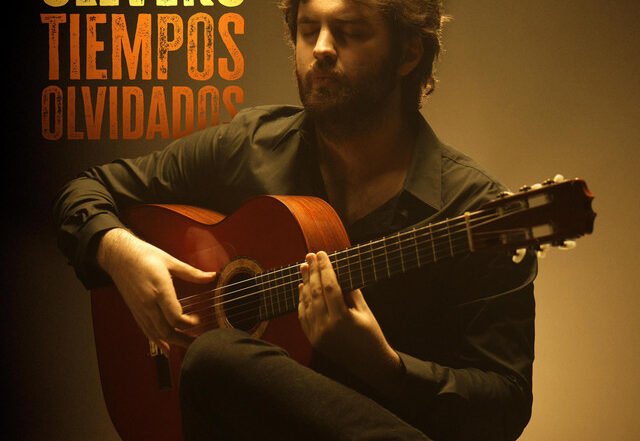
Olivero x Duquende x Alain Pérez – Tiempos Olvidados
With a huge influence by Flamenco in style, this composition captures a variety of both contemporary and traditional musical elements. Blissful guitar themes a... >>> Read more & listen to this song on Nagamag #cinematic #epicmusic #newage #olivero #oliveroxduquendexalainpérez #spain #austria #nagamag #musicmagazine IG: @olivero_music_

Erwin Deleux – Ad Fontes
Сольная мелодия пиано словно спускается прохладными, весенними ручейками с высоких гор, пробуждая внутри чувство прекрасного. -Erwin Deleux- с любовью к своим ... >>> Read more & listen to this song on Nagamag #solopiano #erwindeleux #belgium #nagamag #musicmagazine

Eydís Evensen – Transcending
Словно дыхание Бога мелодия фортепиано от -Eydís Evensen- входит в ваше сознание потоками обжигающей энергии. Очень выразительная и крайне эмоциональная работа... >>> Read more & listen to this song on Nagamag #solopiano #neo #modernclassical #eydísevensen #iceland #nagamag #musicmagazine IG: @eydisevensen TW: @eydis_evensen
Difference between Classical and Neoclassical Music
Classical music refers to a broad range of music written in the classical tradition, which encompasses a wide range of styles and forms. It is generally characterized by its formal structure and its use of traditional instruments and ensemble configurations.
Neoclassicism is a style of music that refers to the revival and use of classical forms and styles in music, particularly in the 18th and early 19th centuries. It is characterized by its use of clear, concise forms and a focus on structure and balance. Neoclassicism was a reaction against the romantic style of music, which was characterized by emotion and passion, and was influenced by the ideas of the Enlightenment, which valued reason and classical learning.
Some of the key differences between classical and neoclassical music include:
Time period: Classical music refers to music written during the classical period (1730-1820), while neoclassicism refers to music written after the classical period that incorporates elements of classical forms and styles.
Emphasis on structure: Classical music is known for its formal structure and the use of traditional forms such as the sonata and the symphony. Neoclassical music also places a strong emphasis on structure, but may also incorporate elements of popular music and folk music.
Emphasis on emotion: Classical music is often more reserved and formal in its emotional expression, while neoclassicism tends to be more emotional and expressive.
Use of tonality: Both classical and neoclassical music use tonality, but neoclassicism often incorporates a wider range of tonal structures and may experiment with atonality.
Use of traditional instruments: Both classical and neoclassical music use traditional classical instruments such as strings, woodwinds, brass, and percussion. However, neoclassicism may also incorporate elements of popular music and folk music, and may use a wider range of instruments.
Overall, the main difference between classical and neoclassical music is the time period in which the music was written, and the specific techniques and styles used by the composer. Classical music is generally more formal and reserved in its expression, while neoclassicism tends to be more expressive and may incorporate elements of popular music and folk music.
The most used instruments in Neoclassical Music
In neoclassical music, the most common instruments used are those found in the classical orchestra, including:
Strings: Violin, viola, cello, double bass
Woodwinds: Flute, oboe, clarinet, bassoon
Brass: Trumpet, French horn, trombone, tuba
Percussion: Timpani, snare drum, bass drum, cymbals, xylophone, marimba, triangle
Keyboard: Piano, harpsichord
These instruments are often used to create a wide range of textures and sounds, and are featured in many different types of classical music, including neoclassical music. In addition to these instruments, many composers also incorporate elements of popular music and folk music into their compositions, and may use a variety of other instruments such as guitars, bass, drums, and synthesizers.
It’s also worth noting that many composers and performers of neoclassical music are skilled in a variety of different instruments, and may switch between different instruments in order to achieve the desired sound and texture.
Vocals are sometimes used in neoclassical music, although they are not as common as instrumental music. When vocals are used in neoclassical music, they are typically performed by trained classical singers who have the ability to sing with precise pitch and control.
One common use of vocals in neoclassical music is in operatic compositions, where singers perform arias and recitatives in a style that is similar to traditional opera. Neoclassical opera is a subgenre of classical music that combines elements of traditional opera with elements of neoclassicism, and often incorporates elements of popular music and folk music.
In addition to operatic vocals, vocals may also be used in other forms of neoclassical music, such as choral music or vocal chamber music. Some composers may also incorporate elements of popular music or folk music into their compositions, and may use vocals in a more modern or experimental style.
It’s worth noting that the use of vocals in neoclassical music is highly dependent on the individual composer and the specific piece of music, and not all neoclassical compositions will feature vocals.