
Neoclassical Music ⁞ New Releases⁞ Artist Interviews⁞ Music News
Introduction of Neoclassical Music
Neoclassical music is a style of classical music that is characterized by its use of traditional forms and styles, as well as a focus on structure and balance. It is often seen as a reaction against the romantic style of music, which was characterized by emotion and passion, and was influenced by the ideas of the Enlightenment, which valued reason and classical learning.
Some of the key features of neoclassical music include the use of traditional forms such as sonata form, the use of clear and concise melodies, and the incorporation of elements of folk music and popular music. Neoclassical music also often featured a return to tonality, which is the use of a specific key or tonal center in a piece of music.
The neoclassical style has had a lasting influence on classical music, and it continues to be an important part of the classical repertoire
Favorite Neoclassical Music on Spotify
Favorite Neoclassical Videos on Youtube
Recent Neoclassical Interviews
Neoclassical Features
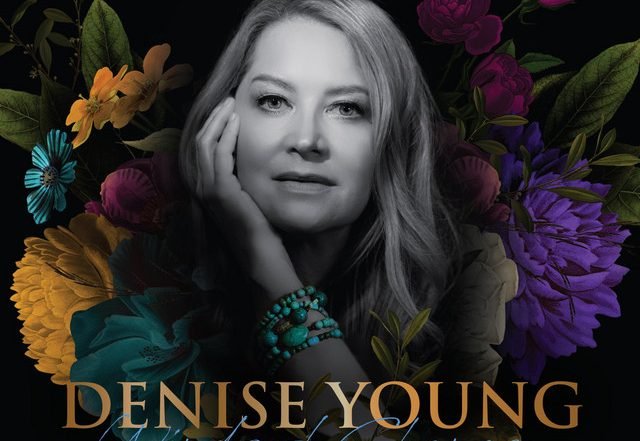
Denise Young – Moonlit Heart (Spotify)
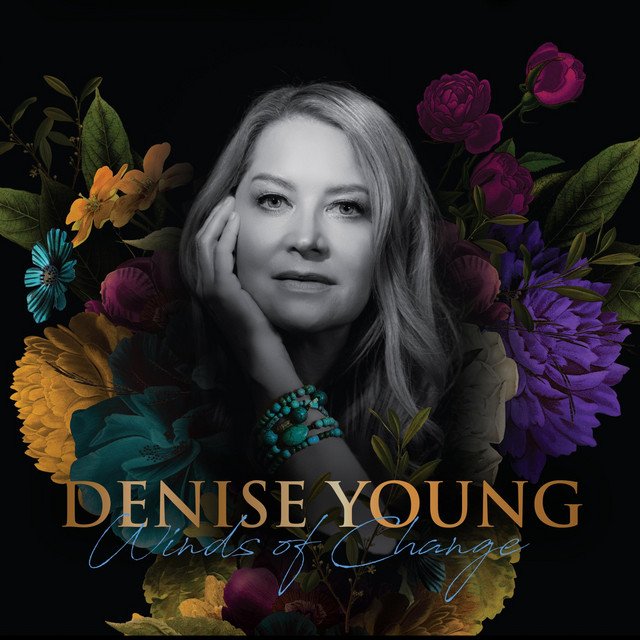
“Classical diamond carefully selected for your best sound collection. Dominating piano melodies decorated with the silvery voice of Denise, spreading love and beauty in the air. Real talents can't be hidden, because they shine like bright stars in the dark sky.”
-Nagamag.com
Moonlit Heart is inspired by a Divine encounter on a moonlit beach in the early evening. Each listener may imagine a different experience for this musical story.
https://www.facebook.com/DeniseYoung.DAY.Music
https://deniseyoung.com/
https://www.instagram.com/deniseyoungmusic/
https://twitter.com/MusicofDay
Denise Young is a composer, pianist, producer, arranger, and music publisher on the record label, Dancing Horses Music. She lives in Southern California and 4th studio album was released released on 12/12/2019.
Denise grew up in the suburbs just outside St. Louis, Missouri. Playing by ear at age 4 and beginning formal lessons at age five, she started composing original music in her early teens. Denise holds a Bachelor of Science in Music Therapy (a double major in music and psychology), and a Master of Arts. She composes original piano-centered instrumental music that combines a contemporary style with arrangements that often include bass, cello, violin, vocalizations, percussion, acoustic and classical guitar, English horn, clarinet, and other wind instruments. Her music can be heard on radio stations around the world and often plays on Balmorhea stations. Her musical influences include, Nils Frahm, Ennio Morricone, Hans Zimmer, Chopin, and Beethoven.
Her musical accomplishments include three studio albums of original music and original scores for three short films, two shown at the LA Short Film Festival and one full length documentary, Broadway Treasures (2019). Her music has earned two nominations for Best Piano Album by Zone Music Reporter, and one nomination for Best New Age album by Just Plain Folks. On the Zone Music Reporter top 100 radio airplay chart, her album Something You Dream Of… charted at number two, and her album Passionata charted at number three.
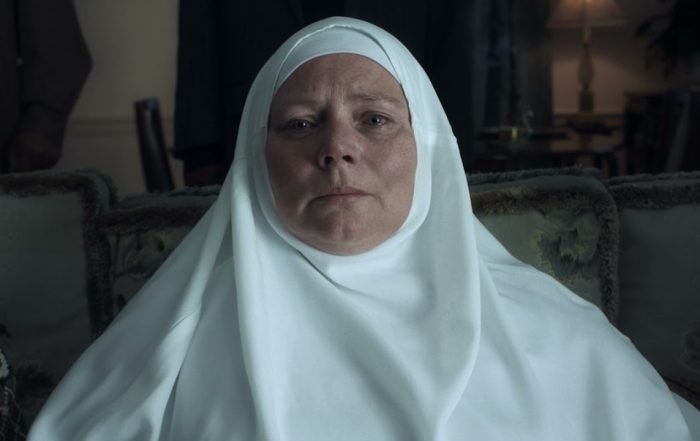
Chris Roe – Cliffs – Exclusive Track from the After Love Soundtrack | BFI (Video)
“Deeply moving, this soundtrack for ‘After Love’ by Chris Roe is all about the divine performance of cellist Alice Purton. Alice takes on the main theme, her part representing the motion of the waves. The score is brilliant in its simplicity, the supporting instruments and sound effects subtly adding to the coastal atmosphere. A wonderful piece of music.”
-Nagamag.com
The soundtrack to #AfterLove is out now featuring original score from award-winning composer Chris Roe.
https://www.facebook.com/chrisroemusic
https://chrisroemusic.com/
“Scoring After Love was a dream project for me, and was intensely collaborative from start to finish,” said Roe. “Aleem and I worked closely with sound designer Joakim Sundström to blend the score and soundtrack together, and I was lucky enough to work with phenomenal cellist and improviser Alice Purton to explore how the cello could mimic the sounds of the sea and build the entire score just from one instrument.”
Roe’s music for After Love won Best Original Score at the Les Arcs Film Festival. It follows Roe’s highly praised work on Armstrong, Spitfire and Children of the Snow Land – just three of his thirty screen credits since 2014.
The immensely moving feature debut from BAFTA-nominated director Aleem Khan, After Love premiered to great acclaim at the BFI London Film Festival in 2020 and was an official selection for Cannes Critics’ Week and the Telluride Film Festival.
After Love open in cinemas across the UK since Friday 4 June 2021.
Find a screening near you: https://theb.fi/AfterLove
Stream the full EP: http://theb.fi/AfterLoveScore
Subscribe: http://bit.ly/subscribetotheBFI
Claim an extended BFI Player Subscription free trial (UK only) – subscribe using code BFIYOUTUBE: http://theb.fi/player-subscription
Watch more on BFI Player: http://player.bfi.org.uk/
Like on Facebook: https://www.facebook.com/BritishFilmI…
Follow on Instagram: https://www.instagram.com/britishfilm…
Follow on Twitter: https://twitter.com/BFI
Chris Roe is an award winning Royal College of Music composer and the film ‘After Love’ was selected for Cannes Critics Week, BFI London Film Festival Telluride amongst several others and won Best Original Score at Les Arcs Film Festival.
Latest Neoclassical discoveries

Remy Barjolin – Far From Home
Всё дальше и дальше удалясь от родного дома, посещают пугающие мысли, что где-то на одном из перекрёстков была выбрана неверная дорога. В своей новой, эмоциона... >>> Read more & listen to this song on Nagamag #cinematic #epicmusic #remybarjolin #france #nagamag #musicmagazine IG: @remy.barjolin
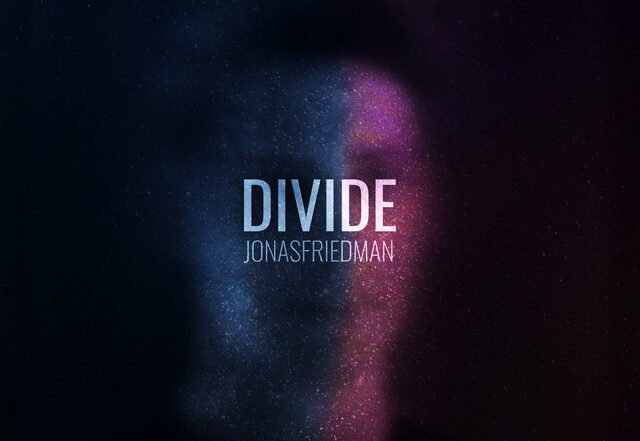
Jonas Friedman – Divide
К этой удивительной глубины неоклассической композиции подойдёт одно верное и точное определение — красивая и печальная тоска. Музыка словно взывает вас к себе... >>> Read more & listen to this song on Nagamag #cinematic #epicmusic #jonasfriedman #unitedstates #nagamag #musicmagazine

Steyl – Golden Days
Cinematic heaven, full emotional roller coaster with beautiful themes and harmonies. Subtle but blissful piano theme in the background makes the depth with thi... >>> Read more & listen to this song on Nagamag #neo #modernclassical #cinematic #epicmusic #steyl #switzerland #nagamag #musicmagazine IG: @steyl_music

Beautiful Life – Easy Morning
Вы когда-либо слышали о таком выражении, что утро начинается с кружечки крепкого, чёрного кофе? А быть может вы пожелаете латте? Но нет ничего лучше, чем встре... >>> Read more & listen to this song on Nagamag #solopiano #beautifullife #canada #nagamag #musicmagazine IG: @christinadegazio
Kevin Stahl – Constellations
Dreamy piano theme is beautiful from the first note, as it was playing with your mind, a roller coaster of emotion, full of amazing transitions. Subtle rhythm ... >>> Read more & listen to this song on Nagamag #neo #modernclassical #cinematic #epicmusic #kevinstahl #unitedstates #nagamag #musicmagazine TW: @kstahl

KLINGER – Labyrinth
Among the vibrating keys and various acoustic piano frequencies of "Labyrinth", lies the spirit of exploration and discovery of the unknown aspects in sound. M... >>> Read more & listen to this song on Nagamag #solopiano #neo #modernclassical #klinger #germany #nagamag #musicmagazine IG: @klingermusic

Ben Marino – Tenebron
Very playful cinematic composition, full of transition, dynamic orchestrations and blissful themes. Occasional but subtle rhythm part gives just enough layers ... >>> Read more & listen to this song on Nagamag #neo #modernclassical #benmarino #unitedstates #nagamag #musicmagazine IG: @bmmar676 TW: @bmmar676
Neil Foster – Moonrise
Dreamy theme and blissful sound color makes this composition very catchy, even with first few notes. Cinematic structure and atmosphere are amplified with the ... >>> Read more & listen to this song on Nagamag #neo #modernclassical #neilfoster #unitedkingdom #nagamag #musicmagazine IG: @neil_foster_music

THE BURGER TUNES – Never Waive
Faster paced composition full of cinematic signature sounds that will take you instantly out of this world into the imagination triggered with the depth of the... >>> Read more & listen to this song on Nagamag #cinematic #epicmusic #theburgertunes #ireland #nagamag #musicmagazine IG: @epic.compositions
Difference between Classical and Neoclassical Music
Classical music refers to a broad range of music written in the classical tradition, which encompasses a wide range of styles and forms. It is generally characterized by its formal structure and its use of traditional instruments and ensemble configurations.
Neoclassicism is a style of music that refers to the revival and use of classical forms and styles in music, particularly in the 18th and early 19th centuries. It is characterized by its use of clear, concise forms and a focus on structure and balance. Neoclassicism was a reaction against the romantic style of music, which was characterized by emotion and passion, and was influenced by the ideas of the Enlightenment, which valued reason and classical learning.
Some of the key differences between classical and neoclassical music include:
Time period: Classical music refers to music written during the classical period (1730-1820), while neoclassicism refers to music written after the classical period that incorporates elements of classical forms and styles.
Emphasis on structure: Classical music is known for its formal structure and the use of traditional forms such as the sonata and the symphony. Neoclassical music also places a strong emphasis on structure, but may also incorporate elements of popular music and folk music.
Emphasis on emotion: Classical music is often more reserved and formal in its emotional expression, while neoclassicism tends to be more emotional and expressive.
Use of tonality: Both classical and neoclassical music use tonality, but neoclassicism often incorporates a wider range of tonal structures and may experiment with atonality.
Use of traditional instruments: Both classical and neoclassical music use traditional classical instruments such as strings, woodwinds, brass, and percussion. However, neoclassicism may also incorporate elements of popular music and folk music, and may use a wider range of instruments.
Overall, the main difference between classical and neoclassical music is the time period in which the music was written, and the specific techniques and styles used by the composer. Classical music is generally more formal and reserved in its expression, while neoclassicism tends to be more expressive and may incorporate elements of popular music and folk music.
The most used instruments in Neoclassical Music
In neoclassical music, the most common instruments used are those found in the classical orchestra, including:
Strings: Violin, viola, cello, double bass
Woodwinds: Flute, oboe, clarinet, bassoon
Brass: Trumpet, French horn, trombone, tuba
Percussion: Timpani, snare drum, bass drum, cymbals, xylophone, marimba, triangle
Keyboard: Piano, harpsichord
These instruments are often used to create a wide range of textures and sounds, and are featured in many different types of classical music, including neoclassical music. In addition to these instruments, many composers also incorporate elements of popular music and folk music into their compositions, and may use a variety of other instruments such as guitars, bass, drums, and synthesizers.
It’s also worth noting that many composers and performers of neoclassical music are skilled in a variety of different instruments, and may switch between different instruments in order to achieve the desired sound and texture.
Vocals are sometimes used in neoclassical music, although they are not as common as instrumental music. When vocals are used in neoclassical music, they are typically performed by trained classical singers who have the ability to sing with precise pitch and control.
One common use of vocals in neoclassical music is in operatic compositions, where singers perform arias and recitatives in a style that is similar to traditional opera. Neoclassical opera is a subgenre of classical music that combines elements of traditional opera with elements of neoclassicism, and often incorporates elements of popular music and folk music.
In addition to operatic vocals, vocals may also be used in other forms of neoclassical music, such as choral music or vocal chamber music. Some composers may also incorporate elements of popular music or folk music into their compositions, and may use vocals in a more modern or experimental style.
It’s worth noting that the use of vocals in neoclassical music is highly dependent on the individual composer and the specific piece of music, and not all neoclassical compositions will feature vocals.