
Neoclassical Music ⁞ New Releases⁞ Artist Interviews⁞ Music News
Introduction of Neoclassical Music
Neoclassical music is a style of classical music that is characterized by its use of traditional forms and styles, as well as a focus on structure and balance. It is often seen as a reaction against the romantic style of music, which was characterized by emotion and passion, and was influenced by the ideas of the Enlightenment, which valued reason and classical learning.
Some of the key features of neoclassical music include the use of traditional forms such as sonata form, the use of clear and concise melodies, and the incorporation of elements of folk music and popular music. Neoclassical music also often featured a return to tonality, which is the use of a specific key or tonal center in a piece of music.
The neoclassical style has had a lasting influence on classical music, and it continues to be an important part of the classical repertoire
Favorite Neoclassical Music on Spotify
Favorite Neoclassical Videos on Youtube
Recent Neoclassical Interviews
Neoclassical Features
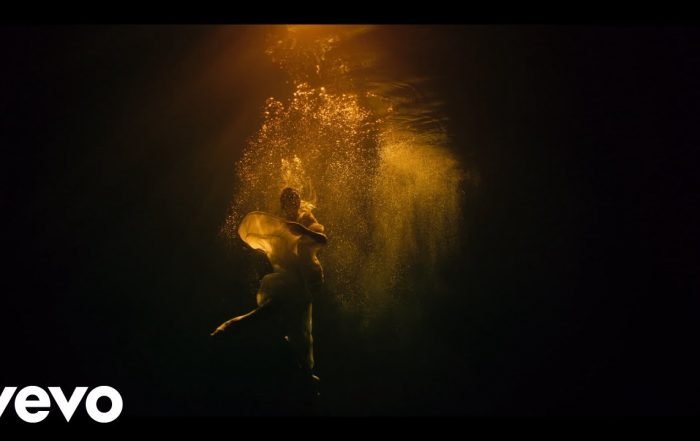
Steve Barakatt – Néoréalité (Video)
“Remember the words of the great William Shakespeare – The whole world is a theater, and the people in it are actors. -Néoréalité- like the play of an invisible composer who has just stepped out from behind the curtains; Sat down at the piano, the light goes out and a stream of radiant emotions and feelings rushed into the hall. -Néoréalité is beauty, grace and real art in the neoclassical genre!”
“Вспоминаются слова великого Вильяма Шекспира – Весь мир театр, а люди в нём актёры. -Néoréalité- словно игра невидимого композитора, который только что вышел из-за кулис; сел за пиано, гаснет свет и в зал хлынул поток лучезарных эмоций и чувств. -Néoréalité- это красота, грация и настоящее искусство в жанре неоклассики!”
-Nagamag.com
Steve Barakatt Unveils His New Album Néoréalité
https://stevebarakatt.com/
Director Francis Bordeleau chosen by the world-renowned composer to helm a musical short film
Quebec City, July 7, 2021 — Today, award-winning composer and pianist Steve Barakatt unveils his 10th album, Néoréalité. After a career spanning more than 30 years, 5 million albums sold and over 500 concerts on five continents, the artist introduces a new musical universe. Alone at the piano, recorded in the intimacy of his studio in Old Quebec, Steve Barakatt’s work lulls and transports us in music and images through a powerfully moving musical short film.
It was after watching Francis Bordeleau’s first feature film that the composer and pianist wanted to collaborate with the rising film star. A Quebec director, producer and screenwriter, Bordeleau made a name for himself with the acclaimed release of Carnasse and Wolfe (TVA Films), two productions that helped the artist make a name for himself on Quebec’s cultural scene.
A fan of his work, Steve Barakatt needed only a few minutes to issue the director a challenge: to make a film about his own music.
“Néoréalité is about creating a parallel world. The situation of great social changes was ideal for me to be alone at the piano and create with authenticity. The creative process for Néoréalité was like a long journey into the land of imagination. A quest for purpose,” says Steve Barakatt.
The new album is being released worldwide today under the Universal Music MENA label.
The making of Néoréalité presented the young director with a perfect opportunity. “Steve Barakatt gave me carte blanche on everything I wanted to create. On my very first listen, the album transported me to a cinematic universe. It was my first collaboration with an artist from the musical world and I while the reflexes of a feature film director. This collaboration has allowed me to grow and surprise myself,” says Bordeleau.
Néoréalité is presented as a living fresco that leaves the audience in an introspective mindset. Evoking the fragility of life, the uncertainty caused by our environment or the anguish of losing what is most precious to us, this musical short film is both moving and fascinating. This universal work can be heard around the world starting today.
About Steve Barakatt
For more than three decades, award-winning composer, pianist, singer, producer and internationally acclaimed creative director Steve Barakatt has produced hundreds of projects in collaboration with the world’s top artists, studios and companies. A true artist-entrepreneur-philanthropist, Barakatt has performed over 500 concerts on five continents. As an artist, he has sold over 5 million albums worldwide. He is the composer of numerous official anthems for major organizations such as UNICEF, the City of Saemangeum (South Korea), the world’s 66 Royal Golf Clubs and the Mortherland anthem marking the centenary of Greater Lebanon. He recently composed Devenir—L’Hymne officiel de l’Ordre national du Québec which was unveiled by Quebec’s Prime Minister on June 22.
About Francis Bordeleau
Francis Bordeleau is a young Montreal filmmaker with a degree in communications and politics. He has created singular and striking works, in which he portrays colourful characters in their never-ending quest for freedom. In 2016, he wrote, directed and produced his first short film, Iceland, which was launched the same year at the Short Film Corner in Cannes. Later that year, he wrote and directed Carnasse, an ambitious short film for which he won the Gold Audience Award at the Fantasia Film Festival. His first feature film, Wolfe, was released in October 2018 in Canadian theaters.
https://twitter.com/SteveBarakatt
https://www.facebook.com/stevebarakattofficial
https://www.instagram.com/stevebarakatt/
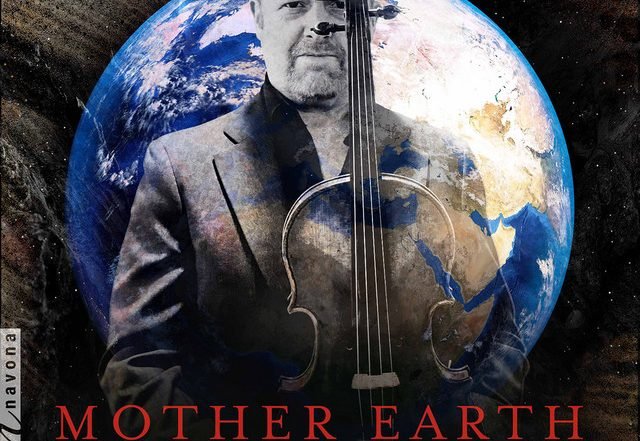
Johan Hugosson, Brett Deubner, Allison Brewster Franzett – Samarthana (Version for Viola & Piano) – song by Johan Hugosson, Brett Deubner, Allison Brewster Franzetti | Spotify (Spotify)
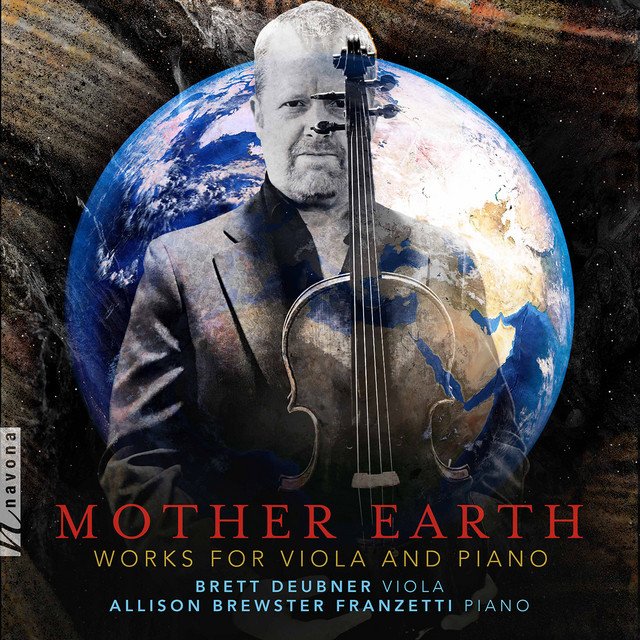
“100% Classic creation carefully made for selective listeners. Cooperative work with variety in progress and dynamic changes. Discover the vibrating Viola chords as they match with those piano keys in order to approach perfection.”
-Nagamag.com
MOTHER EARTH, the new album from celebrated violist Brett Deubner with PARMA Recordings, reflects humanity’s search for meaning in the midst of loss and mortal frailty. Born out of the strife of 2020, MOTHER EARTH expresses the angst and hope of this deeply challenging period through the language of music. Chant-like meditations, cathartic outpourings, and even a call to arms for environmental justice are only a few of the themes explored in MOTHER EARTH. Deubner, whose solo debut with the Grammy award-winning New Jersey Symphony Orchestra resulted in numerous subsequent engagements throughout the United States and abroad, partners with pianist Allison Brewster-Franzetti for this deeply moving collection.
https://www.brettdeubner.com/
https://www.facebook.com/bdeubner
Latest Neoclassical discoveries

Kristina Dervaitis – If Only
Lush piano theme and beautiful vocal creates very dreamy and cinematic atmosphere within this amazing song. Subtle string layers the song harmonics so well and... >>> Read more & listen to this song on Nagamag #singersongwriter #kristinadervaitis #canada #nagamag #musicmagazine IG: @kristinadervaitismusic
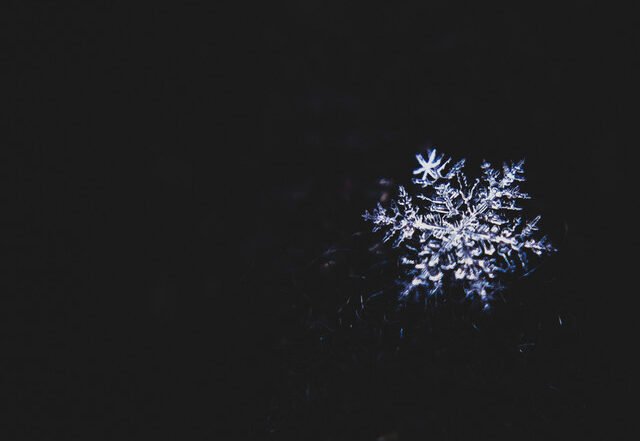
Jacob Trautner – Snowflake
Touching piano notes evokes very melancholic feeling of snow falling down your skin. Perfectly capturing that moments within this beautiful piano composition. ... >>> Read more & listen to this song on Nagamag #neo #modernclassical #crossoverclassical #jacobtrautner #denmark #nagamag #musicmagazine IG: @jacobtrautner
Steve Luck – Bloom
Почувствуйте, как внутри вас расцветают бескрайние сады, почувствуйте дыхание жизни и сияние души вместе с фортепианной музыкой от -Steve Luck-. Станьте частью... >>> Read more & listen to this song on Nagamag #solopiano #neo #modernclassical #steveluck #unitedkingdom #nagamag #musicmagazine IG: @steveluckmusic TW: @steveluck

Frederik Magle – Sunset for piano
Οι νότες του πιάνου διαπερνούν τόσο έντονα τα συναισθήματα μας και μας γεμίζουν αγάπη και νοσταλγία. Η φανταστική μελωδία περιπλανιέται στο χώρο και μας αναστα... >>> Read more & listen to this song on Nagamag #solopiano #neo #modernclassical #traditionalclassical #frederikmagle #denmark #nagamag #musicmagazine IG: @frederikmagle

David Arkenstone by emeraldwave – Gentle Storm
Το ξημέρωμα δεν αργεί να έρθει και η φύση αρχίζει να ξυπνά και να σε γεμίζει από την ευωδία των λουλουδιών. Μια όμορφη μελωδία σε γαληνεύει και παίρνει από πάν... >>> Read more & listen to this song on Nagamag #neo #modernclassical #newage #davidarkenstonebyemeraldwave #unitedstates #nagamag #musicmagazine IG: @david.arkenstone TW: @davidarkenstone
Francesco Taskayali – La Storia di Imparato
Όμορφη και μελαγχολική μελωδία που σε ταξιδεύει σε μια θάλασσα ανοιχτή. Ο ήλιος πέφτει χαμηλά και χαλαρώνει σιγά σιγά την ψυχή και το σώμα. Εικόνες του παρελθό... >>> Read more & listen to this song on Nagamag #cinematic #epicmusic #francescotaskayali #italy #nagamag #musicmagazine IG: @francescotaskayali
![Joss Jaffe x Todd Boston - Bird of Paradise (Deluxe Edition) [feat. Todd Boston], Neoclassical music genre, Nagamag Magazine](https://www.nagamag.com/wp-content/uploads/2023/05/joss-jaffe-x-todd-boston-bird-of-paradise-deluxe-edition-feat-todd-boston-nagamag-music-magazine-640x441.jpg)
Joss Jaffe x Todd Boston – Bird of Paradise (Deluxe Edition) [feat. Todd Boston]
Η φανταστική μελωδία χαλαρώνει το νου και το μυαλό. Σε ταξιδεύει σε τοπία μαγικά και γεμάτα χρώματα. Η ηρεμία και η γαλήνη έρχεται να σε συναντήσει και να σε γ... >>> Read more & listen to this song on Nagamag #neo #modernclassical #jossjaffe #jossjaffextoddboston #unitedstates #nagamag #musicmagazine IG: @jossjaffe TW: @jossjaffe

Kjell Sønksen – When The Rain Is Pounding
Когда дождь за окном стучит по железной крыше и каплями рисует узоры на запотевших окнах, начинаешь осознавать, что ты не один и природа вокруг тебя словно раз... >>> Read more & listen to this song on Nagamag #solopiano #neo #modernclassical #kjellsønksen #germany #nagamag #musicmagazine IG: @kjell_soenksen
Andrew Donovan – A Dance in the Park
Красивое кинематографическое путешествие, в котором каждый желающий сможет почувствовать себя в сказке из самого детства. Танец под луной двух влюблённых серде... >>> Read more & listen to this song on Nagamag #cinematic #epicmusic #andrewdonovan #unitedkingdom #nagamag #musicmagazine IG: @wildflowermusicx
Difference between Classical and Neoclassical Music
Classical music refers to a broad range of music written in the classical tradition, which encompasses a wide range of styles and forms. It is generally characterized by its formal structure and its use of traditional instruments and ensemble configurations.
Neoclassicism is a style of music that refers to the revival and use of classical forms and styles in music, particularly in the 18th and early 19th centuries. It is characterized by its use of clear, concise forms and a focus on structure and balance. Neoclassicism was a reaction against the romantic style of music, which was characterized by emotion and passion, and was influenced by the ideas of the Enlightenment, which valued reason and classical learning.
Some of the key differences between classical and neoclassical music include:
Time period: Classical music refers to music written during the classical period (1730-1820), while neoclassicism refers to music written after the classical period that incorporates elements of classical forms and styles.
Emphasis on structure: Classical music is known for its formal structure and the use of traditional forms such as the sonata and the symphony. Neoclassical music also places a strong emphasis on structure, but may also incorporate elements of popular music and folk music.
Emphasis on emotion: Classical music is often more reserved and formal in its emotional expression, while neoclassicism tends to be more emotional and expressive.
Use of tonality: Both classical and neoclassical music use tonality, but neoclassicism often incorporates a wider range of tonal structures and may experiment with atonality.
Use of traditional instruments: Both classical and neoclassical music use traditional classical instruments such as strings, woodwinds, brass, and percussion. However, neoclassicism may also incorporate elements of popular music and folk music, and may use a wider range of instruments.
Overall, the main difference between classical and neoclassical music is the time period in which the music was written, and the specific techniques and styles used by the composer. Classical music is generally more formal and reserved in its expression, while neoclassicism tends to be more expressive and may incorporate elements of popular music and folk music.
The most used instruments in Neoclassical Music
In neoclassical music, the most common instruments used are those found in the classical orchestra, including:
Strings: Violin, viola, cello, double bass
Woodwinds: Flute, oboe, clarinet, bassoon
Brass: Trumpet, French horn, trombone, tuba
Percussion: Timpani, snare drum, bass drum, cymbals, xylophone, marimba, triangle
Keyboard: Piano, harpsichord
These instruments are often used to create a wide range of textures and sounds, and are featured in many different types of classical music, including neoclassical music. In addition to these instruments, many composers also incorporate elements of popular music and folk music into their compositions, and may use a variety of other instruments such as guitars, bass, drums, and synthesizers.
It’s also worth noting that many composers and performers of neoclassical music are skilled in a variety of different instruments, and may switch between different instruments in order to achieve the desired sound and texture.
Vocals are sometimes used in neoclassical music, although they are not as common as instrumental music. When vocals are used in neoclassical music, they are typically performed by trained classical singers who have the ability to sing with precise pitch and control.
One common use of vocals in neoclassical music is in operatic compositions, where singers perform arias and recitatives in a style that is similar to traditional opera. Neoclassical opera is a subgenre of classical music that combines elements of traditional opera with elements of neoclassicism, and often incorporates elements of popular music and folk music.
In addition to operatic vocals, vocals may also be used in other forms of neoclassical music, such as choral music or vocal chamber music. Some composers may also incorporate elements of popular music or folk music into their compositions, and may use vocals in a more modern or experimental style.
It’s worth noting that the use of vocals in neoclassical music is highly dependent on the individual composer and the specific piece of music, and not all neoclassical compositions will feature vocals.