
Neoclassical Music ⁞ New Releases⁞ Artist Interviews⁞ Music News
Introduction of Neoclassical Music
Neoclassical music is a style of classical music that is characterized by its use of traditional forms and styles, as well as a focus on structure and balance. It is often seen as a reaction against the romantic style of music, which was characterized by emotion and passion, and was influenced by the ideas of the Enlightenment, which valued reason and classical learning.
Some of the key features of neoclassical music include the use of traditional forms such as sonata form, the use of clear and concise melodies, and the incorporation of elements of folk music and popular music. Neoclassical music also often featured a return to tonality, which is the use of a specific key or tonal center in a piece of music.
The neoclassical style has had a lasting influence on classical music, and it continues to be an important part of the classical repertoire
Favorite Neoclassical Music on Spotify
Favorite Neoclassical Videos on Youtube
Recent Neoclassical Interviews
Neoclassical Features
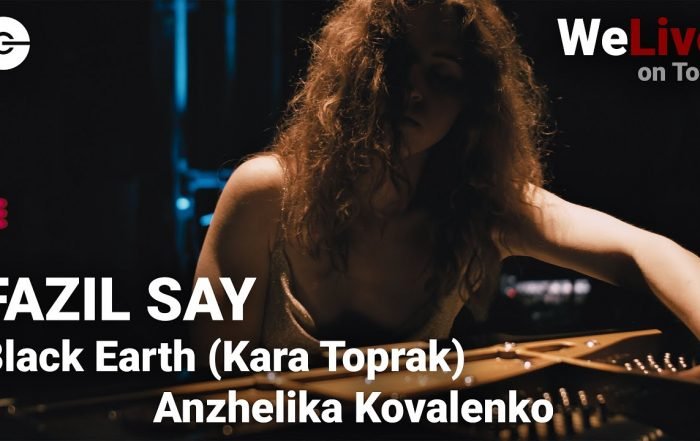
Anzhelika Kovalenko – Black Earth (Kara Toprak) by Fazil Say | WeLive on Tour | Live im Parktheater (Video)
“-Black Earth- combines the experimental component, which as it is developed, is revealed before the listener. In the begining you are immersed in melodic waves and it seems that the Earth leaves under your feet, but after a couple of minutes, the piano melody absorbs and takes you into oblivion. Awesome journey.”
“-Black Earth- сочетает в себе экспериментальную составляющую, которая по мере развития раскрывается перед слушателем. Сначала вас погружают в мелодический хаос и, кажется, что земля уходит из-под ног, но уже спустя пару минут мелодия фортепиано поглощает и уносит в небытие на своих волнах. Потрясающее путешествие.”
-Nagamag.com
In the video, the Ukrainian pianist Anzhelika Kovalenko performs the piece “Black Earth (Kara Toprak)” by the Turkish composer Fazil Say live at the German “Parktheater Lahr”. The core motif of the piano solo piece is the imitation of the Turkish folk music instrument Saz. Kovalenko herself is a great admirer of the Turkish composer Say. In front of 15 cameras and with a light show staged especially for the performance, she stages “Black Earth” as never before. The 25-year-old pianist impresses with a lot of feeling and great musicality. The recording is part of the second episode “Classic meets Electro” from the concert film series “WeLive on Tour”.
https://www.welive-festival.com/
Im Video stellt die ukrainische Pianistin Anzhelika Kovalenko live im deutschen “Parktheater Lahr” das Stück “Black Earth (Kara Toprak)” des türkischen Komponisten Fazil Say vor. Das Kernmotiv des Klavier-Solostückes ist die Imitation des türkischen Volksmusik-Instruments Saz. Kovalenko selbst ist eine große Bewunderin des türkischen Komponisten Say. Vor 15 Kameras und mit extra für den Auftritt inszenierter Lichtshow setzt sie “Black Earth” wie noch nie in Szene. Die 25-jährige Pianistin beeindruckt durch viel Gefühl und große Musikalität. Die Aufnahme ist Teil der zweiten Episode “Classic meets Electro” aus der Konzertfilmserie “WeLive on Tour”.
Anzhelika Kovalenko is a Ukrainian pianist. She studied at the Mykola Lysenko National High School in Lviv with Humetska Marianna and Humetska Halisa. Already as a student she was part of the “European Academy of Young Virtuosos” and played concerts in Ukraine, Poland and Lithuania. Kovalenko now lives and performs in Germany.
–
Anzhelika Kovalenko ist eine ukrainische Pianistin. Sie studierte an der Nationalhochschule Mykola Lysenko in Lwiw bei Humetska Marianna und Humetska Halisa. Bereits als Studentin war sie Teil der “European Academy of Young Virtuosos” und spielte Konzerte in der Ukraine, Polen und Litauen. Mittlerweile lebt und konzertiert Kovalenko in Deutschland.
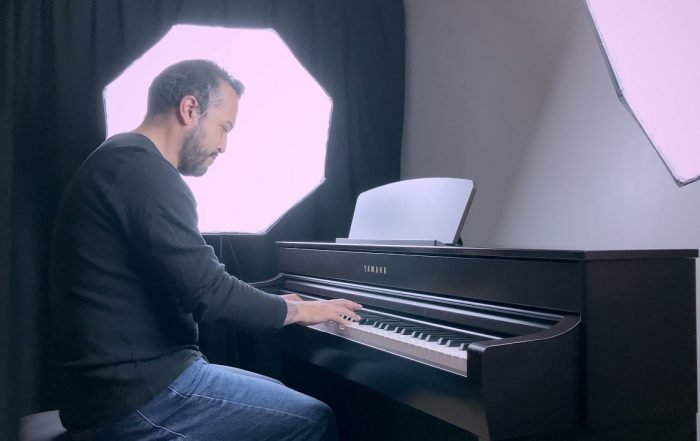
Terse – Carlos Maya – Neoclassical piano music (Video)
“-Neoclassical Piano Music- is the sunrise after a long rain and following the gray clouds, its first blinding rays appear. Incredible beauty of execution and real grace, like a breath of air after a long sleep.”
“-Neoclassical piano music- это восход солнца после долгого и продолжительного дождя, когда из-за серых туч проступают его первые и ослепляющие лучи. Невероятной красоты исполнение и настоящая грация, словно глоток воздуха после продолжительного сна.”
-Nagamag.com
https://www.facebook.com/carlosmayaofficial
https://www.instagram.com/carlosmayaofficial
https://carlosmaya.bandcamp.com/releases
Latest Neoclassical discoveries

Geert Veneklaas – The Dream
Меланхоличная и безумно красивая фортепианная композиция от -Geert Veneklaas- наполненная красивыми мечтами и снами. Каждая нота в этой музыке насыщенна живите... >>> Read more & listen to this song on Nagamag #solopiano #neo #modernclassical #geertveneklaas #netherlands #nagamag #musicmagazine

UtAGe – Cognitive Dissonance
For those who seek the difference, "UtAGe" from Japan has a nice piano surprice. Spontaneous and vivid melodic patterns, alternate each other with unpredictabl... >>> Read more & listen to this song on Nagamag #solopiano #utage #japan #nagamag #musicmagazine
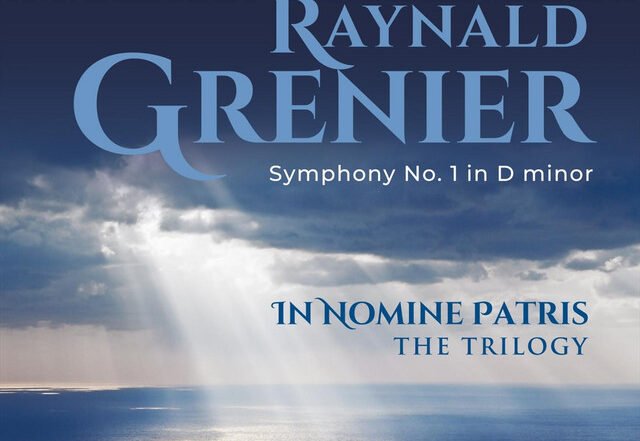
Raynald Grenier – Symphony No. 1 in D minor – 1st Movement: In Nomine Patris
Symphonic themes done in a very cinematic way. Very moving and melancholic, every emotion can be felt within all the parts of this beautiful composition. Depth... >>> Read more & listen to this song on Nagamag #cinematic #epicmusic #raynaldgrenier #canada #nagamag #musicmagazine

Sina Lennox – Lights
Mesmerizing atmosphere and beautiful piano themes that creates dreamy effect. Full of positive feeling can be heard with every note, perfectly exploring the ti... >>> Read more & listen to this song on Nagamag #neo #modernclassical #newage #sinalennox #germany #nagamag #musicmagazine

Domenico Quaceci – The snow falls when you walk
Тающие снежинки на тёплых ладонях, сверкающие в ночи маленькие бриллианты, которые медленно спускаются с небес. Вдох и выдох, снова вдох и снова выдох. Почувст... >>> Read more & listen to this song on Nagamag #solopiano #domenicoquaceci #italy #nagamag #musicmagazine IG: @domenicoquaceci_official

Eikona – Companion
Η ρομαντική και ήρεμη μελωδία μαλακώνει το μυαλό και την καρδιά. Μέσα σε μια γαλήνια ατμόσφαιρα ονειρεύομαι μαζί της και νιώθω πως όμορφες στιγμές θα έρθουν. Ο... >>> Read more & listen to this song on Nagamag #solopiano #eikona #unitedkingdom #nagamag #musicmagazine

Julian Loida – You Will Be Missed
Οι εκπληκτικές νότες του πιάνου εισχωρούν στο μυαλό μας και μοιράζονται την αγωνία τους μαζί μας. Η μελωδία ζωηρή περιπλανιέται αναζητώντας τον χαμένο εαυτό τη... >>> Read more & listen to this song on Nagamag #neo #modernclassical #julianloida #unitedstates #nagamag #musicmagazine IG: @julianloida

Eydís Evensen – Tranquillant
Με απαλές και ήρεμες κινήσεις ο πρωινός αέρας με γεμίζει αισιοδοξία και μου δίνει κουράγιο. Η υπέροχη μελωδία με αγκαλιάζει και μου χαϊδεύει στοργικά τα μαλλιά... >>> Read more & listen to this song on Nagamag #solopiano #neo #modernclassical #cinematic #epicmusic #eydísevensen #iceland #nagamag #musicmagazine IG: @eydisevensen TW: @eydis_evensen
Katya Richardson – From A Past Life
Η ήρεμη και ρομαντική μελωδία ρέει μέσα στο μυαλό και στο σώμα. Η μελαγχολική της υπόσταση με γεμίζει σκέψεις και μπορώ πια να αναλογιστώ και να αναζητήσω τις ... >>> Read more & listen to this song on Nagamag #solopiano #neo #modernclassical #katyarichardson #unitedstates #nagamag #musicmagazine
Difference between Classical and Neoclassical Music
Classical music refers to a broad range of music written in the classical tradition, which encompasses a wide range of styles and forms. It is generally characterized by its formal structure and its use of traditional instruments and ensemble configurations.
Neoclassicism is a style of music that refers to the revival and use of classical forms and styles in music, particularly in the 18th and early 19th centuries. It is characterized by its use of clear, concise forms and a focus on structure and balance. Neoclassicism was a reaction against the romantic style of music, which was characterized by emotion and passion, and was influenced by the ideas of the Enlightenment, which valued reason and classical learning.
Some of the key differences between classical and neoclassical music include:
Time period: Classical music refers to music written during the classical period (1730-1820), while neoclassicism refers to music written after the classical period that incorporates elements of classical forms and styles.
Emphasis on structure: Classical music is known for its formal structure and the use of traditional forms such as the sonata and the symphony. Neoclassical music also places a strong emphasis on structure, but may also incorporate elements of popular music and folk music.
Emphasis on emotion: Classical music is often more reserved and formal in its emotional expression, while neoclassicism tends to be more emotional and expressive.
Use of tonality: Both classical and neoclassical music use tonality, but neoclassicism often incorporates a wider range of tonal structures and may experiment with atonality.
Use of traditional instruments: Both classical and neoclassical music use traditional classical instruments such as strings, woodwinds, brass, and percussion. However, neoclassicism may also incorporate elements of popular music and folk music, and may use a wider range of instruments.
Overall, the main difference between classical and neoclassical music is the time period in which the music was written, and the specific techniques and styles used by the composer. Classical music is generally more formal and reserved in its expression, while neoclassicism tends to be more expressive and may incorporate elements of popular music and folk music.
The most used instruments in Neoclassical Music
In neoclassical music, the most common instruments used are those found in the classical orchestra, including:
Strings: Violin, viola, cello, double bass
Woodwinds: Flute, oboe, clarinet, bassoon
Brass: Trumpet, French horn, trombone, tuba
Percussion: Timpani, snare drum, bass drum, cymbals, xylophone, marimba, triangle
Keyboard: Piano, harpsichord
These instruments are often used to create a wide range of textures and sounds, and are featured in many different types of classical music, including neoclassical music. In addition to these instruments, many composers also incorporate elements of popular music and folk music into their compositions, and may use a variety of other instruments such as guitars, bass, drums, and synthesizers.
It’s also worth noting that many composers and performers of neoclassical music are skilled in a variety of different instruments, and may switch between different instruments in order to achieve the desired sound and texture.
Vocals are sometimes used in neoclassical music, although they are not as common as instrumental music. When vocals are used in neoclassical music, they are typically performed by trained classical singers who have the ability to sing with precise pitch and control.
One common use of vocals in neoclassical music is in operatic compositions, where singers perform arias and recitatives in a style that is similar to traditional opera. Neoclassical opera is a subgenre of classical music that combines elements of traditional opera with elements of neoclassicism, and often incorporates elements of popular music and folk music.
In addition to operatic vocals, vocals may also be used in other forms of neoclassical music, such as choral music or vocal chamber music. Some composers may also incorporate elements of popular music or folk music into their compositions, and may use vocals in a more modern or experimental style.
It’s worth noting that the use of vocals in neoclassical music is highly dependent on the individual composer and the specific piece of music, and not all neoclassical compositions will feature vocals.