
Neoclassical Music ⁞ New Releases⁞ Artist Interviews⁞ Music News
Introduction of Neoclassical Music
Neoclassical music is a style of classical music that is characterized by its use of traditional forms and styles, as well as a focus on structure and balance. It is often seen as a reaction against the romantic style of music, which was characterized by emotion and passion, and was influenced by the ideas of the Enlightenment, which valued reason and classical learning.
Some of the key features of neoclassical music include the use of traditional forms such as sonata form, the use of clear and concise melodies, and the incorporation of elements of folk music and popular music. Neoclassical music also often featured a return to tonality, which is the use of a specific key or tonal center in a piece of music.
The neoclassical style has had a lasting influence on classical music, and it continues to be an important part of the classical repertoire
Favorite Neoclassical Music on Spotify
Favorite Neoclassical Videos on Youtube
Recent Neoclassical Interviews
Neoclassical Features
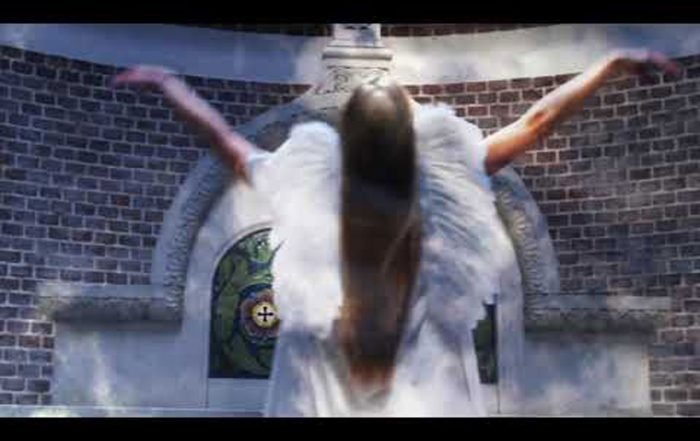
Mario Verandi – Small Wings Behind (Video)
“Mario Verandi composed a truly rich in harmonies story. Notes gently shimmer in the air, as if the raindrops play on the railing of a balcony. Yet somewhere far away, where clouds on sky are travelling quick you listen a lighting. ”
“Mario Verandi создал поистине пространственную музыку. Ноты мягко переливаются в воздухе, будто капли дождя играют на перилах веранды. И где то вдали, там где плывут по небу тучи слышится легкая тревога.”
-Nagamag.com
This track features delicate impressionistic piano melodies that flow over distinct electronic/ambient textures.
Mario Verandi is an Argentinean-born composer, performer and sound artist living in Berlin. With a career spanning more than 20 years, Mario Verandis works are wide-ranging and include electro-acoustic compositions, sound installations, music for dance and radio as well as collaborations with several musicians and artists. He has performed in several prestigious European festivals including Märzmusik (Berlin), Multiphonies GRM (Paris) and Donaueschinger Musiktage. His works have been awarded in the Prix Ars Electronica Awards (Linz), European Bell Days Composition Prize (ZKM, Karlsruhe), Bourges Electroacoustic Music Competition (France), Stockholm Electronic Art Awards (Sweden), Musica Nova (Prague), CIEJ Electronic Music Awards (Barcelona) and is included in the Essex Collection of Latin American Art. His most recent ambient/electronic music project culminated with the release “Remansum”. The album features musicians Sebastian Selke (Ceeys) and Dina Bolshakova, both active in ambient and classic music genres. Mario Verandi´s music has been released by labels such as TimeReleasedSound (USA), EMF Media (New York) and Edition RZ (Berlin) and appear also on several compilation records.
www.marioverandi.de
About photo/video:
Copyright 2020© Corinna Rosteck, Urheber-Nummer bei VG Bild-Kunst 759746
https://vimeo.com/445231434
Camera and Editing: Corinna Rosteck
Dance: Iris de Boor
Music/Composition: Mario Verandi

Thomas Hewitt Jones – Rising Again (Spotify)
“Thomas Hewitt Jones with Rising Again under Vivum Music imprint, showcases his unique cinematic skills on how to sound design emotions, how well manages harmonies and layer them brilliant, creating unique atmospheres which could sync perfect on romantic films. ”
-Nagamag.com
Artist shered with us few notes about the source of inspiration "I wanted to write a song about hope in difficult times, and triumph over adversity. This song's quiet poetry offers hope, consolation, and promise of good times to come. "
About The Artist
Thomas Hewitt Jones is an award-winning composer of contemporary classical and commercial music. Winner of the 2003 BBC Young Composer Competition, his music has been published by Boosey & Hawkes, Oxford University Press, Banks Music, the RSCM, Encore Publications, Universal Music, and is frequently heard on radio, TV and the cinema in the UK and abroad.
Thomas has written three ballets which toured the UK in 2008–2011 with Ballet Cymru, most notably a dance setting of Dylan Thomas’ masterpiece Under Milk Wood. His choral and instrumental music is frequently performed worldwide. He has also written numerous Christmas carols, including What Child is This? (OUP, 2012). Recent large-scale works include Wildflower Meadows, a song cycle commemorating the First World War, and the Christmas cantata Incarnation, released on Regent Records, both with words by regular collaborator Paul Williamson.
Commercial commissions have included work in America and scores for films in the UK, as well as music for the London 2012 Olympics Mascots animated films, with stories by Michael Morpurgo and narration by Stephen Fry. Thomas has also composed the music for a new musical version of Rumpelstiltskin which premiered at The Egg, Bath in December 2014. Recent performances include the premiere of a new set of songs charting the history of Bath with words by Paul Williamson (Bath Abbey, 2015), and the UK premiere of choral and orchestral work Panathenaia at the British Museum, commissioned by Hugo Ticciati.
Latest Neoclassical discoveries

Josué Parrilla – Jennifer’s Theme
Μέσα από την μελαγχολία και την νοσταλγία της μελωδίας ένας αναστεναγμός φεύγει για να ανακουφιστεί η ψυχή. Συναισθήματα και σκέψεις περιστρέφονται σε ένα πανη... >>> Read more & listen to this song on Nagamag #neo #modernclassical #cinematic #epicmusic #classicalstrings #josuéparrilla #spain #nagamag #musicmagazine
Diane Arkenstone – Rising
Beautiful themes and soft sounds makes a perfect atmosphere for angelic voice that is full of emotion. Cello theme adds more depth to that emotional feeling th... >>> Read more & listen to this song on Nagamag #ambient #dianearkenstone #unitedstates #nagamag #musicmagazine IG: @diane.arkenstone TW: @DianeArkenstone
Freya Arde – A Plea For Humanity
This amazing piece is just a puzzle in this beautiful and very touching soundtrack. Cello theme sounds so emotional and it is a core of this composition. Every... >>> Read more & listen to this song on Nagamag #cinematic #epicmusic #freyaarde #germany #nagamag #musicmagazine IG: @freyaarde
Sveinung Fjermestad – Akebakken
Эта неоклассическая мелодия напоминает неторопливую прогулку по воспоминаниям из прошлого. Музыка льётся маленьким ручейком вдоль берега, а вы всего лишь пасса... >>> Read more & listen to this song on Nagamag #solopiano #neo #modernclassical #sveinungfjermestad #norway #nagamag #musicmagazine IG: @sveinungfjermestadmusic

Mircadia – To Offer Whom a Chair
Υπέροχη μελωδία που σε ταξιδεύει σε απέραντες γαλάζιες ακρογιαλιές και αφήνει την φαντασία να φτιάχνει τα δικά της σκηνικά. Μια χαρά έρχεται μέσα σου και η νοσ... >>> Read more & listen to this song on Nagamag #neo #modernclassical #mircadia #unitedstates #nagamag #musicmagazine

Eydís Evensen – Anna’s Theme
Notes that echo inside the head, forming melodic shapes which smoothly fade away. Eydís Evensen from Iceland reveals her brilliant artistic creativity within t... >>> Read more & listen to this song on Nagamag #solopiano #neo #modernclassical #cinematic #epicmusic #eydísevensen #iceland #nagamag #musicmagazine IG: @eydisevensen TW: @eydis_evensen
Rémi Fay – Funambulist No7
Depth of emotions can be felt from the first piano notes. Melancholic atmospheres expands as the composition unfolds its harmonic structure. Violin and cello t... >>> Read more & listen to this song on Nagamag #neo #modernclassical #rémifay #france #nagamag #musicmagazine
Magnus John Anderson – Le Gras
Η βροχή σταματά και ο λαμπερός ήλιος παίρνει τη θέση του συννεφιασμένου ουρανού. Η μελωδία μας παρασύρει σε ένα νοσταλγικό και μεθυστικό χορό. Τα συναισθήματα ... >>> Read more & listen to this song on Nagamag #solopiano #neo #modernclassical #magnusjohnanderson #sweden #nagamag #musicmagazine IG: @_m_j_a_n_d_e_r_s_o_n
Pablo J. Garmon – Piano Room
В пустой комнате, при свете одинокой луны, где-то в тени холодных стен звучит мелодия пиано. Музыка, которая стремится выйти за рамки окружающего её пространст... >>> Read more & listen to this song on Nagamag #solopiano #pablojgarmon #spain #nagamag #musicmagazine TW: @pablojgarmon
Difference between Classical and Neoclassical Music
Classical music refers to a broad range of music written in the classical tradition, which encompasses a wide range of styles and forms. It is generally characterized by its formal structure and its use of traditional instruments and ensemble configurations.
Neoclassicism is a style of music that refers to the revival and use of classical forms and styles in music, particularly in the 18th and early 19th centuries. It is characterized by its use of clear, concise forms and a focus on structure and balance. Neoclassicism was a reaction against the romantic style of music, which was characterized by emotion and passion, and was influenced by the ideas of the Enlightenment, which valued reason and classical learning.
Some of the key differences between classical and neoclassical music include:
Time period: Classical music refers to music written during the classical period (1730-1820), while neoclassicism refers to music written after the classical period that incorporates elements of classical forms and styles.
Emphasis on structure: Classical music is known for its formal structure and the use of traditional forms such as the sonata and the symphony. Neoclassical music also places a strong emphasis on structure, but may also incorporate elements of popular music and folk music.
Emphasis on emotion: Classical music is often more reserved and formal in its emotional expression, while neoclassicism tends to be more emotional and expressive.
Use of tonality: Both classical and neoclassical music use tonality, but neoclassicism often incorporates a wider range of tonal structures and may experiment with atonality.
Use of traditional instruments: Both classical and neoclassical music use traditional classical instruments such as strings, woodwinds, brass, and percussion. However, neoclassicism may also incorporate elements of popular music and folk music, and may use a wider range of instruments.
Overall, the main difference between classical and neoclassical music is the time period in which the music was written, and the specific techniques and styles used by the composer. Classical music is generally more formal and reserved in its expression, while neoclassicism tends to be more expressive and may incorporate elements of popular music and folk music.
The most used instruments in Neoclassical Music
In neoclassical music, the most common instruments used are those found in the classical orchestra, including:
Strings: Violin, viola, cello, double bass
Woodwinds: Flute, oboe, clarinet, bassoon
Brass: Trumpet, French horn, trombone, tuba
Percussion: Timpani, snare drum, bass drum, cymbals, xylophone, marimba, triangle
Keyboard: Piano, harpsichord
These instruments are often used to create a wide range of textures and sounds, and are featured in many different types of classical music, including neoclassical music. In addition to these instruments, many composers also incorporate elements of popular music and folk music into their compositions, and may use a variety of other instruments such as guitars, bass, drums, and synthesizers.
It’s also worth noting that many composers and performers of neoclassical music are skilled in a variety of different instruments, and may switch between different instruments in order to achieve the desired sound and texture.
Vocals are sometimes used in neoclassical music, although they are not as common as instrumental music. When vocals are used in neoclassical music, they are typically performed by trained classical singers who have the ability to sing with precise pitch and control.
One common use of vocals in neoclassical music is in operatic compositions, where singers perform arias and recitatives in a style that is similar to traditional opera. Neoclassical opera is a subgenre of classical music that combines elements of traditional opera with elements of neoclassicism, and often incorporates elements of popular music and folk music.
In addition to operatic vocals, vocals may also be used in other forms of neoclassical music, such as choral music or vocal chamber music. Some composers may also incorporate elements of popular music or folk music into their compositions, and may use vocals in a more modern or experimental style.
It’s worth noting that the use of vocals in neoclassical music is highly dependent on the individual composer and the specific piece of music, and not all neoclassical compositions will feature vocals.