
Neoclassical Music ⁞ New Releases⁞ Artist Interviews⁞ Music News
Introduction of Neoclassical Music
Neoclassical music is a style of classical music that is characterized by its use of traditional forms and styles, as well as a focus on structure and balance. It is often seen as a reaction against the romantic style of music, which was characterized by emotion and passion, and was influenced by the ideas of the Enlightenment, which valued reason and classical learning.
Some of the key features of neoclassical music include the use of traditional forms such as sonata form, the use of clear and concise melodies, and the incorporation of elements of folk music and popular music. Neoclassical music also often featured a return to tonality, which is the use of a specific key or tonal center in a piece of music.
The neoclassical style has had a lasting influence on classical music, and it continues to be an important part of the classical repertoire
Favorite Neoclassical Music on Spotify
Favorite Neoclassical Videos on Youtube
Recent Neoclassical Interviews
Neoclassical Features
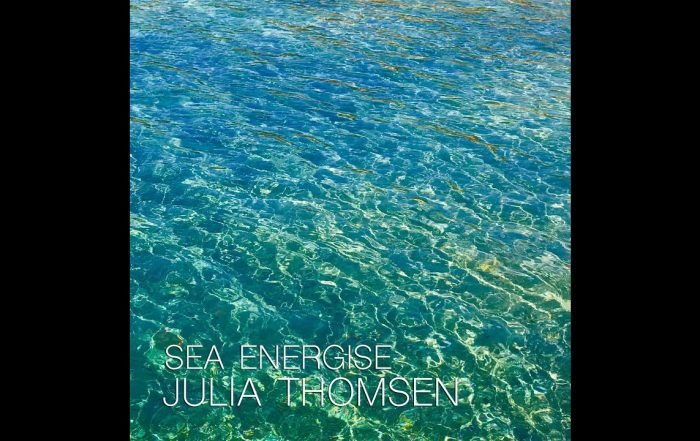
Energise | Julia Thomsen (Video)
“Julia Thomsen with a nimble, infinitely melodic flow, a gently performance and a sound clarity in the recording, with her music -Energise- recharge our emotional batteries in a way to achieve more, daydream and see the bright side of life. ”
-Nagamag.com
Sea Energise a beautiful blend of emotive minimalist piano mixed in with rich magical strings, which takes the listener on a blissful cinematic journey pointing towards the healing power of the sea and miracles of Nature. Special guest on the track is German Composer Orchestrator and Arranger Robin Hoffmann.
Julia says ‘Forces of Nature and the power of music – May the force be with you.
Through these difficult times I have been more inspired than ever to compose never ending music tracks and I hope that my music will help people to relax, reflect and refocus.
https://youtu.be/lf7NXnuAwV4
Julia Thomsen is a neo-classical composer who takes inspiration from nature and everything around her. Julia’s music has been used in art exhibitions, documentaries and films, most notably ‘Looking Out For George’ (2002) which was shortlisted for the Jury’s Prize at the Raindance Film Festival 2003 . In February 2020 Julia was signed up by international Sync agency, Deli Music.
‘Sea Energise’ EP follows the release of her previous single ‘Snowscape Remastered’, remastered at Abbey Road Studios by Grammy Award Winning engineer Andy Walter (Harry Potter).
Julia’s new EP, is a beautiful blend of emotive minimalist piano tracks mixed in with rich magical strings, which yet again takes the listener on a blissful cinematic journey pointing towards the power and miracles of Nature. Special guests on the record are Dani Howard who orchestrated ‘Evoque’, ‘Nature Interlude’ and ‘Starlight’; and German Composer Orchestrator and Arranger Robin Hoffmann who orchestrated and arranged ‘Sea Energise’, ‘Beauty Inside and Out’ and ‘Blended’. All tracks were mixed and mastered by Nick Harding.
Julia says on the EP: “Forces of Nature and the power of music – May the force be with you. Through these difficult times I have been more inspired than ever to compose never ending music tracks and I hope that my music will help people to relax reflect and re focus.”
“Julia’s wonderful score beautifully encapsulated the empathy and drama within our story.”
Chris Dodds Director on ‘ Looking Out For George’ (Raindance Film Festival Nominee 2002)
“ Her music is very distant, evocative and leads the listener to still waters, one of the hardest things music should do. Julia does with ease in her amazing style, creating an atmosphere that one would want to listen to forever. “
William Camilleri, Composer and Cannes Film Festival Judge

Daniel Rosenholm – November (Video)
“This kind of music is as a medicine against the fast forward way of life and information we live nowadays. Instantly it invites you to stop now, not waste your time only in your out-self experiences, devote bit of time for your inner self. Think, listen, feel. Daniel Rosenholm with November , soundtracks that with his gently performance full of emotive harmonies. ”
-Nagamag.com
https://www.instagram.com/danielrosenholm_music/
Latest Neoclassical discoveries

Gelka – Garden
Басовая мелодия в самом начале настраивает на погружение в свою сказочную атмосферу. Лёгкая, фоновая мелодия, которая словно пульсирует в такт музыке, нежнейши... >>> Read more & listen to this song on Nagamag #neo #modernclassical #gelka #hungary #nagamag #musicmagazine IG: @gelkamusic
Penguin Cafe – Second Variety
Η μελαγχολία της μελωδίας λυτρώνει την ψυχή μας και μας κάνει να δούμε καθαρά μέσα μας ποιες είναι οι πραγματικές μας επιθυμίες. Ήχοι με ποικίλες αποχρώσεις σ... >>> Read more & listen to this song on Nagamag #neo #modernclassical #newage #penguincafe #unitedkingdom #nagamag #musicmagazine IG: @penguincafe_official TW: @thepenguincafe

Frerick den Haan – The Academic Narrative
Η ήσυχη και απαλή μελωδία ηρεμεί τις αισθήσεις και χαλαρώνει το μυαλό. Στο γαλήνιο τοπίο τα προβλήματα φεύγουν μακριά και ξαναζωντανεύει η ελπίδα πως όλα θα πά... >>> Read more & listen to this song on Nagamag #solopiano #neo #modernclassical #cinematic #epicmusic #frerickdenhaan #netherlands #nagamag #musicmagazine IG: @frerickdenhaanmusic
Rick Gallagher Project – Wellspring
Γύρω μου η φύση φορά τα γιορτινά της και οι κήποι γεμίζουν λουλούδια. Μια υπέροχη μελωδία ρίχνει τη μαγεία της πάνω μου και μου θυμίζει πως ήρθε η ώρα να πάρω ... >>> Read more & listen to this song on Nagamag #solopiano #neo #modernclassical #rickgallagherproject #unitedstates #nagamag #musicmagazine IG: @rgallaghermusic
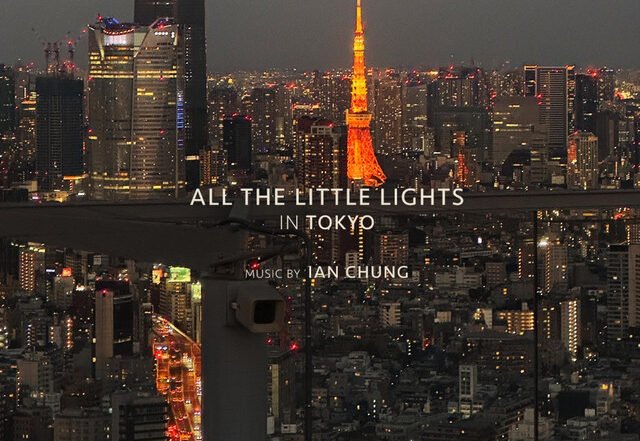
Ian Chung – All the Little Lights in Tokyo
Οι υπέροχες νότες του πιάνου και η μελωδία είναι τόσο συγκινητικές και τόσο συναισθηματικές. Όλη η ύπαρξη μας χάνεται μέσα τους και το μυαλό δεν μπορεί πια να... >>> Read more & listen to this song on Nagamag #neo #modernclassical #cinematic #epicmusic #ianchung #southkorea #nagamag #musicmagazine IG: @ianchung.music

Grandbrothers – Daybreak
Спокойствие и одновременное безмятежное путешествие, где среди белых облаков скрываются текстуры Ambient звучания и нежнейшая мелодия современной неоклассическ... >>> Read more & listen to this song on Nagamag #neo #modernclassical #ambient #grandbrothers #germany #nagamag #musicmagazine IG: @grandbrothers_ TW: @grandbrothers_

Stefan Meylaers – Once Upon A Time
Давным-давно... с этих слов начинается любая из сказок, которую вам читали в детстве ваши родители. Приглушённый свет, тени игрушек на разноцветных стенах, тёп... >>> Read more & listen to this song on Nagamag #cinematic #epicmusic #classicalstrings #stefanmeylaers #belgium #nagamag #musicmagazine IG: @stefanmeylaers
YuMe – Incompleteness
В этом мире всегда присутствует ощущение, что чего-то не хватает. Мало рассветов и закатов, недостаточно тепла и уюта и слишком мало хорошей музыки, которая бы... >>> Read more & listen to this song on Nagamag #solopiano #neo #modernclassical #yume #netherlands #nagamag #musicmagazine IG: @YuMePiano

Lemonhead – Snow
Υπέροχη και μαγευτική μελωδία που μετατρέπει την μελαγχολία σε ελπίδα. Τα εκπληκτικά φωνητικά είναι βάλσαμο για την ψυχή. Καθαρά, με έκταση και εναλλαγές που ε... >>> Read more & listen to this song on Nagamag #cinematic #epicmusic #lemonhead #unitedstates #nagamag #musicmagazine
Difference between Classical and Neoclassical Music
Classical music refers to a broad range of music written in the classical tradition, which encompasses a wide range of styles and forms. It is generally characterized by its formal structure and its use of traditional instruments and ensemble configurations.
Neoclassicism is a style of music that refers to the revival and use of classical forms and styles in music, particularly in the 18th and early 19th centuries. It is characterized by its use of clear, concise forms and a focus on structure and balance. Neoclassicism was a reaction against the romantic style of music, which was characterized by emotion and passion, and was influenced by the ideas of the Enlightenment, which valued reason and classical learning.
Some of the key differences between classical and neoclassical music include:
Time period: Classical music refers to music written during the classical period (1730-1820), while neoclassicism refers to music written after the classical period that incorporates elements of classical forms and styles.
Emphasis on structure: Classical music is known for its formal structure and the use of traditional forms such as the sonata and the symphony. Neoclassical music also places a strong emphasis on structure, but may also incorporate elements of popular music and folk music.
Emphasis on emotion: Classical music is often more reserved and formal in its emotional expression, while neoclassicism tends to be more emotional and expressive.
Use of tonality: Both classical and neoclassical music use tonality, but neoclassicism often incorporates a wider range of tonal structures and may experiment with atonality.
Use of traditional instruments: Both classical and neoclassical music use traditional classical instruments such as strings, woodwinds, brass, and percussion. However, neoclassicism may also incorporate elements of popular music and folk music, and may use a wider range of instruments.
Overall, the main difference between classical and neoclassical music is the time period in which the music was written, and the specific techniques and styles used by the composer. Classical music is generally more formal and reserved in its expression, while neoclassicism tends to be more expressive and may incorporate elements of popular music and folk music.
The most used instruments in Neoclassical Music
In neoclassical music, the most common instruments used are those found in the classical orchestra, including:
Strings: Violin, viola, cello, double bass
Woodwinds: Flute, oboe, clarinet, bassoon
Brass: Trumpet, French horn, trombone, tuba
Percussion: Timpani, snare drum, bass drum, cymbals, xylophone, marimba, triangle
Keyboard: Piano, harpsichord
These instruments are often used to create a wide range of textures and sounds, and are featured in many different types of classical music, including neoclassical music. In addition to these instruments, many composers also incorporate elements of popular music and folk music into their compositions, and may use a variety of other instruments such as guitars, bass, drums, and synthesizers.
It’s also worth noting that many composers and performers of neoclassical music are skilled in a variety of different instruments, and may switch between different instruments in order to achieve the desired sound and texture.
Vocals are sometimes used in neoclassical music, although they are not as common as instrumental music. When vocals are used in neoclassical music, they are typically performed by trained classical singers who have the ability to sing with precise pitch and control.
One common use of vocals in neoclassical music is in operatic compositions, where singers perform arias and recitatives in a style that is similar to traditional opera. Neoclassical opera is a subgenre of classical music that combines elements of traditional opera with elements of neoclassicism, and often incorporates elements of popular music and folk music.
In addition to operatic vocals, vocals may also be used in other forms of neoclassical music, such as choral music or vocal chamber music. Some composers may also incorporate elements of popular music or folk music into their compositions, and may use vocals in a more modern or experimental style.
It’s worth noting that the use of vocals in neoclassical music is highly dependent on the individual composer and the specific piece of music, and not all neoclassical compositions will feature vocals.