
Neoclassical Music ⁞ New Releases⁞ Artist Interviews⁞ Music News
Introduction of Neoclassical Music
Neoclassical music is a style of classical music that is characterized by its use of traditional forms and styles, as well as a focus on structure and balance. It is often seen as a reaction against the romantic style of music, which was characterized by emotion and passion, and was influenced by the ideas of the Enlightenment, which valued reason and classical learning.
Some of the key features of neoclassical music include the use of traditional forms such as sonata form, the use of clear and concise melodies, and the incorporation of elements of folk music and popular music. Neoclassical music also often featured a return to tonality, which is the use of a specific key or tonal center in a piece of music.
The neoclassical style has had a lasting influence on classical music, and it continues to be an important part of the classical repertoire
Favorite Neoclassical Music on Spotify
Favorite Neoclassical Videos on Youtube
Recent Neoclassical Interviews
Neoclassical Features
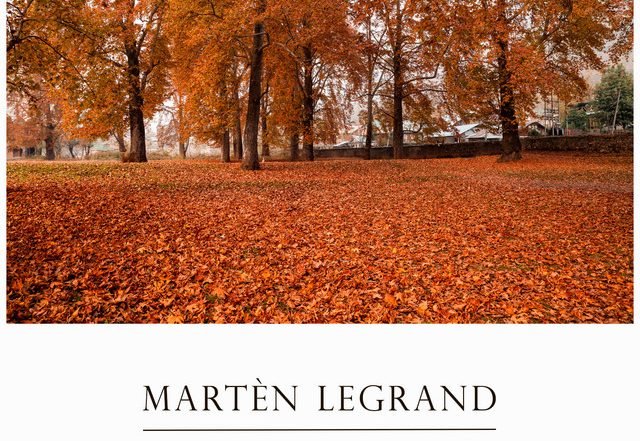
Martèn LeGrand – Fields Of Fallen Leaves (Spotify)
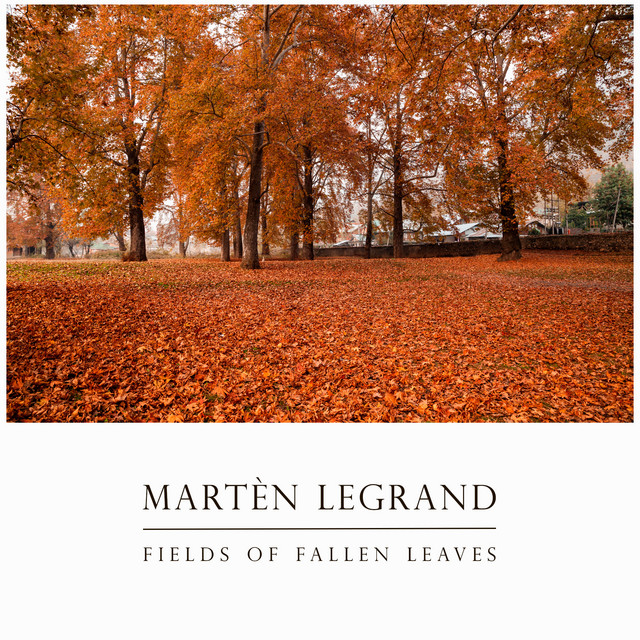
“-Martèn LeGrand- with his new solo piano -Fields Of Fallen Leaves- on PM Recordings invites us into a romantic confession with a hidden melancholic touch giving a wonderful sense of freedom like when you walk on through the falen leaves. ”
-Nagamag.com
Martèn LeGrand is the stage name of Dutch musician and pianist Maarten de Groot, born January 4, 1963.
After Martèn completed his degree at the Rotterdam Conservatory as a Hammond organist and music performance major in 1983, he began his career as a record producer for well-known international artists and bands such as Samantha Fox and Susan Snyder. Best known for her role in the soap opera As The World Turns, Martèn produced Snyder’s solo singles, also used in the popular serial drama as background music. By the same token, Martèn produced the Socaboy's hit song Follow The Leader, which became a number-one single in the Netherlands, topped the charts in the United States, South America and other European countries, and continues to be well played around the world today. Around this same period, Martèn also worked as a demonstrator and pioneer in the field of synthesizers at Roland Japan, based in Belgium.
In the decade to follow Martèn LeGrand composed and produced music for television and the film industry. He worked, among others, for the Dutch Broadcast Foundation (NOS) and the Dutch Evangelical Broadcasting association (EO), for whom he produced and composed a large range of music, including intros and performances for live television events. Martèn also played piano in a variety of bands, including East Coast, Time and Beethoven, and collaborated on various theatrical productions with singers Liesbeth List and Sandra van Megen – the last of which went on to accompany him at the Alliance Concours Française where they were awarded first place.
Around the turn of the century Martèn founded his own music studio, where he continues to work to this day. Free to determine his own schedule, Martèn’s newfound self-employment allowed him to finally integrate his other life passion: world travel. Filled with new insights and inspiration from his journeys abroad, Martèn reinvented himself as “the traveling pianist” and has since gone on to compose a wide variety of new work.
Saskatchewan, his recent solo debut album, is the first in a range of several released and upcoming piano albums. Inspired by his surroundings, Martèn named his debut album after the Canadian region of Saskatchewan, where he found himself enchanted by, among others, a small-town cathedral and the incredible natural world. A number of the tracks on his new album, songs such as Nipawin, Pinehouse and Beauval, are named after places where Martèn played while traveling. Martèn LeGrand strives to take his listeners on a journey, transporting them to beautiful and serene locations by way of his melodic compositions. Martèn LeGrand’s second piano album is released last year and is called Those Moments In Life. Currently, he’s releasing new piano pieces of his upcoming EP ‘The Fields’. With his piece Whitehaven, he’s made his music video debut recently.
https://www.instagram.com/martenlegrandofficiel/
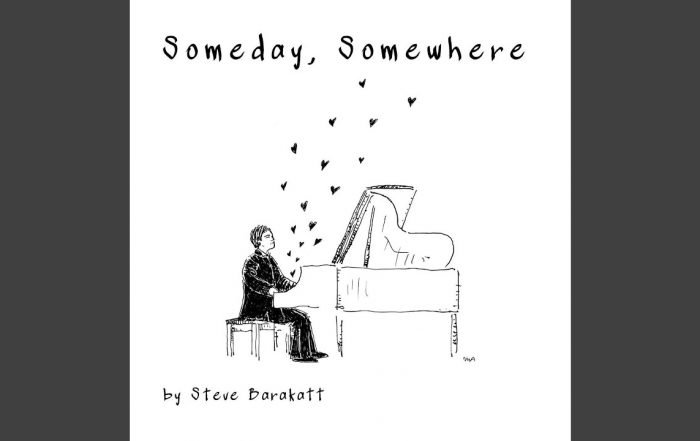
Steve Barakatt – Cedars of Lebanon (Video)
“World-renowned and award-winning composer, pianist, and music producer Steve Barakatt delivers a masterfully arranged and performed neoclassical piano sonata of the utmost quality with his exquisite expertise ”
-Nagamag.com
A beautiful piano solo composition inspired by the mythical Cedars of Lebanon.
Few words about Steve Barakatt:
For more than three decades, award-winning composer, pianist, music producer and creative director Steve Barakatt has collaborated with leading artists, record labels, studios, brands, and organizations on hundreds of projects around the globe. As a concert pianist, he has presented more than 500 live performances on five continents. His music has been featured on hundreds of TV programs & series as well as on major sports event TV broadcasts such as the FIFA World Cup and the F1 Grand Prix. As a recording artist, he has sold over five million albums worldwide and his music catalogue reached 100,000,000 views on YouTube.
He had artistic collaborations with Orchestre philharmonique de Radio France, Hong Kong Chinese Orchestra, City of Prague Philharmonic Orchestra & Choir, NHK Symphony Orchestra, Orchestre symphonique de Québec, Yaroslavl philharmonic Orchestra, Lahti Sinfonia, Polish Radio Symphony Orchestra, Auckland Symphony Orchestra, Orchestre métropolitain, Radio Nacional de Espana, Bilkent Symphony Orchestra, El Sistema, Angelique Kidjo, Natasha St-Pier, Nana Mouskouri, Maxim Vengerov, The Alexandrov Choir, Yannick Nézet-Séguin, Nic Raine, Yoav Talmi, Christian Vásquez, Yiruma, Richard O’Neill, Shirley Bassey, Leon Lai, Alan Tam, Kelly Chen, Daniel Chan, Agnes Chan, Sincere, Yoko Oginome, Miri Ben-Ari, Noriko Sakai, Audrey De Montigny, Sun Min, Wheesung, John Park, Shayne, Chen of EXO, Lee Dong Woo, Yesung of Superjunior, Sunny of Girls’ Generation, Luna of fx, Wendy & Seulgi of Red Velvet, Taeil & Doyoung of NCT127, Universal Music Publishing, Sony Music Entertainment, SM Entertainment, Yamaha, Roland Corp, Japan Central Music and many more…
The world’s most recognized composer of official anthems, Barakatt is the man behind “Lullaby, The UNICEF Anthem”, the Saemangeum MegaCity anthem “One More Heart, One More Dream”, “Motherland” to celebrate the 100th anniversary of Lebanon, anthems for Fairmont Le Château Frontenac and the world’s 66 Royal Golf Clubs, and compositions for numerous other prestigious organizations and events.
https://stevebarakatt.com/
Latest Neoclassical discoveries

Erwin Deleux x Liesl Stevens – Delta
Удивительной красоты прелюдия, которая посвящена нечто прекрасному, но словно скрыта в сердцах -Erwin Deleux и Liesl Stevens-. И только с помощью звуковых вибр... >>> Read more & listen to this song on Nagamag #neo #modernclassical #erwindeleux #erwindeleuxxlieslstevens #belgium #nagamag #musicmagazine

Patrick Beau – Lilac
Жизнь прекрасна в каждой прожитой секунде и нет ничего в этом мире, что может быть важнее просто жить и наслаждаться этим мгновением. Одно из окружающих чудес ... >>> Read more & listen to this song on Nagamag #solopiano #neo #modernclassical #patrickbeau #unitedstates #nagamag #musicmagazine IG: @lilbeauflex
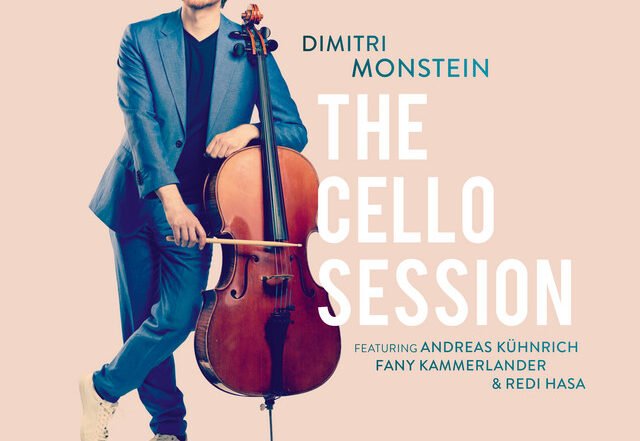
Dimitri Monstein – Monstein Sonate Adagio
Мелодия и звучание контрабаса словно одинокий плачь в ночи, но несёт в себе не горечь или печаль, а любовь и свет. Музыка -Dimitri Monstein- создана для того, ... >>> Read more & listen to this song on Nagamag #neo #modernclassical #jazz #cinematic #epicmusic #dimitrimonstein #switzerland #nagamag #musicmagazine IG: @dimitri_monstein

Alexandra Stréliski – Lumières
Бескрайняя глубина, почти невесомая и едва осязаемая меланхолия и полная идиллия бытия — всё это есть в новой неоклассической композиции -Alexandra Stréliski-,... >>> Read more & listen to this song on Nagamag #solopiano #neo #modernclassical #cinematic #epicmusic #alexandrastréliski #canada #nagamag #musicmagazine IG: @alexstreliski TW: @alexstreliski
Mark Sutton – Moonstruck
Πόσο πολύ γαληνεύει την ψυχή μου αυτή η υπέροχη μελωδία. Με την απαλότητα της και την ηρεμία της, διώχνει κάθε ανησυχία και καθησυχάζει το μυαλό και τις σκέψει... >>> Read more & listen to this song on Nagamag #neo #modernclassical #lounge #marksutton #unitedkingdom #nagamag #musicmagazine IG: @pianoman_mark TW: @Pianoman_mark
Jean Lucas – Romance en 16mm
Οι νότες του πιάνου και η μελωδία ζωντανεύουν αναμνήσεις και με ταξιδεύουν στο χρόνο. Ρομαντικά και διακριτικά κρατούν τις καλές στιγμές και σβήνουν τις πληγές... >>> Read more & listen to this song on Nagamag #solopiano #neo #modernclassical #jeanlucas #netherlands #nagamag #musicmagazine IG: @jeanlucasmusic
Søme – Drangsal
Ήσυχα και διακριτικά η μελωδία στριφογυρνά και σκορπίζει την αύρα της. Άλλοτε λίγο μελαγχολική και άλλοτε γεμάτη ελπίδα δείχνει να μας καταλαβαίνει και να συμμ... >>> Read more & listen to this song on Nagamag #solopiano #neo #modernclassical #søme #germany #nagamag #musicmagazine IG: @thisissomemusic
kmAndras – Farewell, Mr. Papathanassiou
"kmAndras" from Hungary offer a new Cinematic track dedicated to a respectful greek composer. Built on a main melodic pattern, this smooth production will leav... >>> Read more & listen to this song on Nagamag #cinematic #epicmusic #chillwave #newage #kmandras #hungary #nagamag #musicmagazine IG: @kmandras_official TW: @kmAndras_music

ParisPiano – Brighter
Τα κύματα της θάλασσας διαδέχονται το ένα το άλλο, όπως ακριβώς και τα στάδια της ζωής μας που δεν μένει ποτέ σταθερή. Πάντα μια όμορφη μελωδία σαν κι αυτή υπά... >>> Read more & listen to this song on Nagamag #solopiano #parispiano #france #nagamag #musicmagazine
Difference between Classical and Neoclassical Music
Classical music refers to a broad range of music written in the classical tradition, which encompasses a wide range of styles and forms. It is generally characterized by its formal structure and its use of traditional instruments and ensemble configurations.
Neoclassicism is a style of music that refers to the revival and use of classical forms and styles in music, particularly in the 18th and early 19th centuries. It is characterized by its use of clear, concise forms and a focus on structure and balance. Neoclassicism was a reaction against the romantic style of music, which was characterized by emotion and passion, and was influenced by the ideas of the Enlightenment, which valued reason and classical learning.
Some of the key differences between classical and neoclassical music include:
Time period: Classical music refers to music written during the classical period (1730-1820), while neoclassicism refers to music written after the classical period that incorporates elements of classical forms and styles.
Emphasis on structure: Classical music is known for its formal structure and the use of traditional forms such as the sonata and the symphony. Neoclassical music also places a strong emphasis on structure, but may also incorporate elements of popular music and folk music.
Emphasis on emotion: Classical music is often more reserved and formal in its emotional expression, while neoclassicism tends to be more emotional and expressive.
Use of tonality: Both classical and neoclassical music use tonality, but neoclassicism often incorporates a wider range of tonal structures and may experiment with atonality.
Use of traditional instruments: Both classical and neoclassical music use traditional classical instruments such as strings, woodwinds, brass, and percussion. However, neoclassicism may also incorporate elements of popular music and folk music, and may use a wider range of instruments.
Overall, the main difference between classical and neoclassical music is the time period in which the music was written, and the specific techniques and styles used by the composer. Classical music is generally more formal and reserved in its expression, while neoclassicism tends to be more expressive and may incorporate elements of popular music and folk music.
The most used instruments in Neoclassical Music
In neoclassical music, the most common instruments used are those found in the classical orchestra, including:
Strings: Violin, viola, cello, double bass
Woodwinds: Flute, oboe, clarinet, bassoon
Brass: Trumpet, French horn, trombone, tuba
Percussion: Timpani, snare drum, bass drum, cymbals, xylophone, marimba, triangle
Keyboard: Piano, harpsichord
These instruments are often used to create a wide range of textures and sounds, and are featured in many different types of classical music, including neoclassical music. In addition to these instruments, many composers also incorporate elements of popular music and folk music into their compositions, and may use a variety of other instruments such as guitars, bass, drums, and synthesizers.
It’s also worth noting that many composers and performers of neoclassical music are skilled in a variety of different instruments, and may switch between different instruments in order to achieve the desired sound and texture.
Vocals are sometimes used in neoclassical music, although they are not as common as instrumental music. When vocals are used in neoclassical music, they are typically performed by trained classical singers who have the ability to sing with precise pitch and control.
One common use of vocals in neoclassical music is in operatic compositions, where singers perform arias and recitatives in a style that is similar to traditional opera. Neoclassical opera is a subgenre of classical music that combines elements of traditional opera with elements of neoclassicism, and often incorporates elements of popular music and folk music.
In addition to operatic vocals, vocals may also be used in other forms of neoclassical music, such as choral music or vocal chamber music. Some composers may also incorporate elements of popular music or folk music into their compositions, and may use vocals in a more modern or experimental style.
It’s worth noting that the use of vocals in neoclassical music is highly dependent on the individual composer and the specific piece of music, and not all neoclassical compositions will feature vocals.