
Neoclassical Music ⁞ New Releases⁞ Artist Interviews⁞ Music News
Introduction of Neoclassical Music
Neoclassical music is a style of classical music that is characterized by its use of traditional forms and styles, as well as a focus on structure and balance. It is often seen as a reaction against the romantic style of music, which was characterized by emotion and passion, and was influenced by the ideas of the Enlightenment, which valued reason and classical learning.
Some of the key features of neoclassical music include the use of traditional forms such as sonata form, the use of clear and concise melodies, and the incorporation of elements of folk music and popular music. Neoclassical music also often featured a return to tonality, which is the use of a specific key or tonal center in a piece of music.
The neoclassical style has had a lasting influence on classical music, and it continues to be an important part of the classical repertoire
Favorite Neoclassical Music on Spotify
Favorite Neoclassical Videos on Youtube
Recent Neoclassical Interviews
Neoclassical Features

Henrik von Euler – Stor mellan

“If you prefer (Neo) Classical sound, trust "Henrik von Euler" for a short listening break. The artist has combined piano notes with wind instruments in order to create an image of warmth. This piece can make you feel so comfortable, like being with the best company of friends.”
-Nagamag.com
Today we release Stor mellan, the first single from the upcoming album Små Vågor 5 by Henrik von Euler and Små Vågor. You
Stor mellan is the only reasonable order at Restaurang Hjälmaren in Årsta. Everything else has become too expensive. I think they’re keeping the price down on it just so we can stay. We usually sit in Smygen or at table five. Table five is called Masa beş which phonetically translates to loads of beers in Swedish (Massa bärs).
We who sit there are Rickard, Osten, Pelle, Tove, Linda, Anna, Martina, Anders, Conny, Hult, Kajsa, Lisa, Uhrlander, Hygglo, Sampan, Caroline Boxarn and Bubben. Bengtssons used to sit there but they have moved to the city.

Markus Lehmann-Horn – Escape Attempt

“A gloomy, tension-inducing track, whose enchanting and hypnotizing atmosphere, captures your attention. Its orchestral sound and chorales can leave an indelible impression. Strong, rich and emotional work!”
“Мрачный, нагнетающий тревогу и беспокойство трек, чья пугающая, но в то же время чарующая, гипнотизирующая атмосфера, фокусирует на себе всё внимание. Оркестровая музыка и хоралы производят неизгладимое впечатление. Сильная, насыщенная и эмоциональная работа!”
-Nagamag.com
Soundtrack to "Forgotten Border", the formal deadliest Easter-Bloc border in the world.
Latest Neoclassical discoveries

Gregory Poulin – Another Chance to be in Love | Neoclassical music review
Very soothing and easy listening sounds make this song very enjoyable. Catchy violin theme is played so well, creating wonder... >>> Read full review & listen to the song on Nagamag #cinematic #nagamag #musicmagazine #musicreview #review FB: @gregorypoulinpiano

Eliezer Oliveira – Renaissance | Neoclassical music review
Harmonic structure gives different sound dimension, more depth and emotion to the already beautiful main theme that we can he... >>> Read full review & listen to the song on Nagamag #cinematic #nagamag #musicmagazine #musicreview #review IG: @eliezer_oliveira_oficial
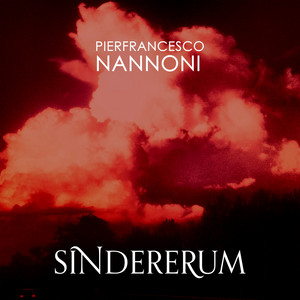
Pierfrancesco Nannoni – Sindererum | Neoclassical music review
Through the strongly impactful classical sound vibrations, the piano master Pierfrancesco Nannoni shapes a wide Cinematic tap... >>> Read full review & listen to the song on Nagamag #cinematic #epicmusic #pierfrancesconannoni #italy #nagamag #musicmagazine #musicreview #review FB: @pierfrancescomusica IG: @giusysigno
Manuel Peguero – Nadia’s Theme | Neoclassical music review
Η εκπληκτική μελωδία στροβιλίζεται μέσα στο μυαλό μου σαν μια χαρούμενη πεταλούδα. Θέλω να κρύψω τη χαρά αλλά αυτή ξεπηδά ανε... >>> Read full review & listen to the song on Nagamag #piano #nagamag #musicmagazine #musicreview #review
Lucas King – Sociopath | Neoclassical music review
Η επιβλητική μελωδία απλώνει το μυστηριώδες πέπλο της πάνω μας και με το μελαγχολικό άγγιγμα της μας βυθίζει στις σκέψεις μας... >>> Read full review & listen to the song on Nagamag #piano #cinematic #nagamag #musicmagazine #musicreview #review FB: @pagesLucas-King422277594533711

Eric Heitmann – Shores of Valhalla | Neoclassical music review
Flows brilliantly, great use of harmony, melodic structure is so dreamy, like a soundtrack from a fantasy movie and the smoot... >>> Read full review & listen to the song on Nagamag #cinematic #epicmusic #ericheitmann #unitedstates #nagamag #musicmagazine #musicreview #review FB: @ericheitmanncomposer IG: @ericheitmanncomposer
Mattia Cupelli – Reminiscence – Rework | Neoclassical music review
Pieces like these stays in your thought long after the music ends. Melancholic and very emotional atmosphere, that will fulfi... >>> Read full review & listen to the song on Nagamag #neo #modernclassical #classicalstrings #mattiacupelli #italy #nagamag #musicmagazine #musicreview #review IG: @mattiacupelliofficial TW: @Mattia_Cupelli TT: @@mattiacupelli

Neighborhood Libraries – We’ve Been Here Before | Neoclassical music review
Piano theme catches you right away. Nice instrumentation and nice development and layering of the opening melodic statement. ... >>> Read full review & listen to the song on Nagamag #neo #modernclassical #ambient #neighborhoodlibraries #canada #nagamag #musicmagazine #musicreview #review FB: @neighborhood.libraries IG: @neighborhood.libraries
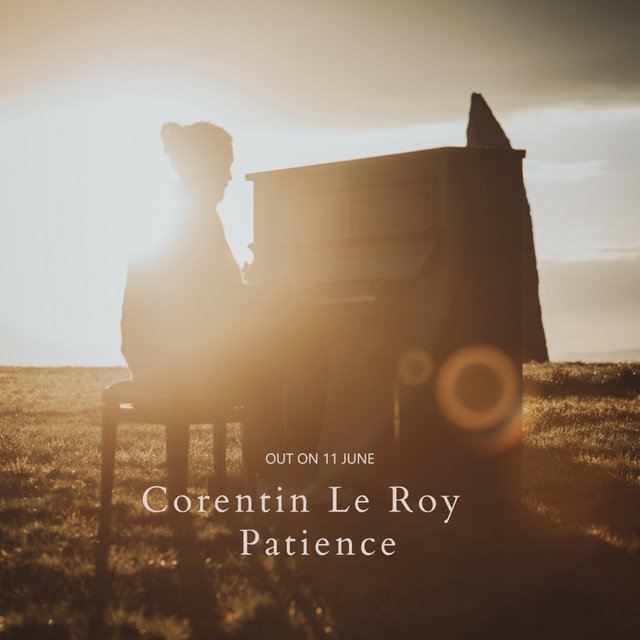
Corentin Le Roy – Patience | Neoclassical music review
Very dreamy atmosphere and amazing layering of piano themes, that creates very melancholic vibe within the song. Its depth go... >>> Read full review & listen to the song on Nagamag #piano #nagamag #musicmagazine #musicreview #review FB: @corentinleroypianist IG: @corentin_le_roy_pianist
Difference between Classical and Neoclassical Music
Classical music refers to a broad range of music written in the classical tradition, which encompasses a wide range of styles and forms. It is generally characterized by its formal structure and its use of traditional instruments and ensemble configurations.
Neoclassicism is a style of music that refers to the revival and use of classical forms and styles in music, particularly in the 18th and early 19th centuries. It is characterized by its use of clear, concise forms and a focus on structure and balance. Neoclassicism was a reaction against the romantic style of music, which was characterized by emotion and passion, and was influenced by the ideas of the Enlightenment, which valued reason and classical learning.
Some of the key differences between classical and neoclassical music include:
Time period: Classical music refers to music written during the classical period (1730-1820), while neoclassicism refers to music written after the classical period that incorporates elements of classical forms and styles.
Emphasis on structure: Classical music is known for its formal structure and the use of traditional forms such as the sonata and the symphony. Neoclassical music also places a strong emphasis on structure, but may also incorporate elements of popular music and folk music.
Emphasis on emotion: Classical music is often more reserved and formal in its emotional expression, while neoclassicism tends to be more emotional and expressive.
Use of tonality: Both classical and neoclassical music use tonality, but neoclassicism often incorporates a wider range of tonal structures and may experiment with atonality.
Use of traditional instruments: Both classical and neoclassical music use traditional classical instruments such as strings, woodwinds, brass, and percussion. However, neoclassicism may also incorporate elements of popular music and folk music, and may use a wider range of instruments.
Overall, the main difference between classical and neoclassical music is the time period in which the music was written, and the specific techniques and styles used by the composer. Classical music is generally more formal and reserved in its expression, while neoclassicism tends to be more expressive and may incorporate elements of popular music and folk music.
The most used instruments in Neoclassical Music
In neoclassical music, the most common instruments used are those found in the classical orchestra, including:
Strings: Violin, viola, cello, double bass
Woodwinds: Flute, oboe, clarinet, bassoon
Brass: Trumpet, French horn, trombone, tuba
Percussion: Timpani, snare drum, bass drum, cymbals, xylophone, marimba, triangle
Keyboard: Piano, harpsichord
These instruments are often used to create a wide range of textures and sounds, and are featured in many different types of classical music, including neoclassical music. In addition to these instruments, many composers also incorporate elements of popular music and folk music into their compositions, and may use a variety of other instruments such as guitars, bass, drums, and synthesizers.
It’s also worth noting that many composers and performers of neoclassical music are skilled in a variety of different instruments, and may switch between different instruments in order to achieve the desired sound and texture.
Vocals are sometimes used in neoclassical music, although they are not as common as instrumental music. When vocals are used in neoclassical music, they are typically performed by trained classical singers who have the ability to sing with precise pitch and control.
One common use of vocals in neoclassical music is in operatic compositions, where singers perform arias and recitatives in a style that is similar to traditional opera. Neoclassical opera is a subgenre of classical music that combines elements of traditional opera with elements of neoclassicism, and often incorporates elements of popular music and folk music.
In addition to operatic vocals, vocals may also be used in other forms of neoclassical music, such as choral music or vocal chamber music. Some composers may also incorporate elements of popular music or folk music into their compositions, and may use vocals in a more modern or experimental style.
It’s worth noting that the use of vocals in neoclassical music is highly dependent on the individual composer and the specific piece of music, and not all neoclassical compositions will feature vocals.