
Neoclassical Music ⁞ New Releases⁞ Artist Interviews⁞ Music News
Introduction of Neoclassical Music
Neoclassical music is a style of classical music that is characterized by its use of traditional forms and styles, as well as a focus on structure and balance. It is often seen as a reaction against the romantic style of music, which was characterized by emotion and passion, and was influenced by the ideas of the Enlightenment, which valued reason and classical learning.
Some of the key features of neoclassical music include the use of traditional forms such as sonata form, the use of clear and concise melodies, and the incorporation of elements of folk music and popular music. Neoclassical music also often featured a return to tonality, which is the use of a specific key or tonal center in a piece of music.
The neoclassical style has had a lasting influence on classical music, and it continues to be an important part of the classical repertoire
Favorite Neoclassical Music on Spotify
Favorite Neoclassical Videos on Youtube
Recent Neoclassical Interviews
Neoclassical Features
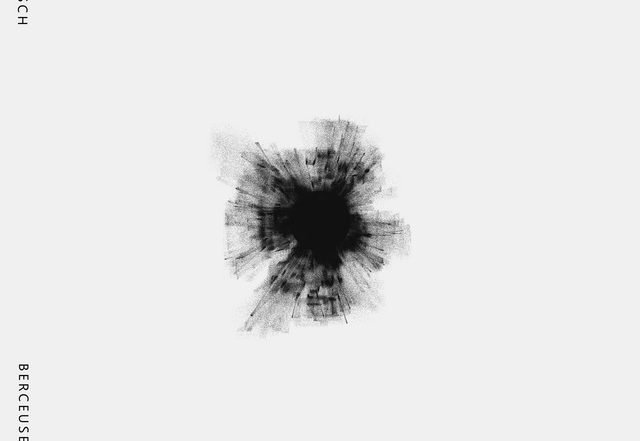
Felix Rösch – Berceuse Rework

“This Neoclassical composition will fill you with warm sensations that will smoothly cool down, like a cup of warm tea in your hands. Music that is able to pick up the key to your soul and maintain the necessary balance of harmony and peace inside it.”
“Эта неоклассическая композиция наполнит вас тёплыми ощущениями, которые будут плавно остывать, словно кружка тёплого чая в ваших руках. Музыка, которая способна подобрать ключ к вашей душе и сохранить в ней необходимый баланс гармонии и умиротворения. ”
-Nagamag.com
After the great success of ‘Berceuse’ — with radio plays from New York’s WQXR, to UK’s Scala radio, film synchronizations and beautiful playlist adds — it only felt natural to re-imagine this piece for my upcoming album ‘Fragmente’. While staying true to the original melody, this rework for string quartet and electronics shines a whole new light onto the quiet timbre of this gentle lullaby.
https://www.facebook.com/felixrosch/
Berlin-based composer Felix Rösch blends his years of experience as a classical composer and his passion for experimental electronic music into colorful, carefully constructed arrangements and contemplative ambiences.
His music is inspired by contemporary classical composers like John Adams, Henryk Górecki, and Anders Hillborg as well as artists like Rival Consoles, Max Richter and Ben Frost.
His latest EP ‘Piano’ — out May 28 — meshes fluid piano improvisations with carefully constructed layers of analog synthesizers and delicate string arrangements. The EP was entirely produced live on YouTube. On Feb 3 the second single ‘Interlude II’ from ‘Piano’ was released. “This track started as a piano improvisation, where I was fascinated by the idea of stoically repeating the most rudimentary two-note chord possible. That simplicity felt very liberating like I just hit the bottom of something I still can't really describe. From there everything else fell into place pretty quickly. This is probably my favorite piece on this EP.” Felix says.
‘Piano’ follows 2020’s ‘MYA’ and ‘str:orchestra’, which were featured in Spotify’s Fresh Finds, Classical New Releases, and Not Quite Classical playlists, and were licensed to a global Burberry advertisement campaign.
Over the past ten years, his orchestral compositions have frequently been performed and recorded by world-renowned orchestras like the German Film Orchestra Babelsberg and the WDR Symphony Orchestra & Choir. He has won several awards and scholarships and his music can be heard in countless theater performances, audiobook soundtracks, and film scores.
https://www.instagram.com/felixrosch/

Chiel Nugter – Watertoren
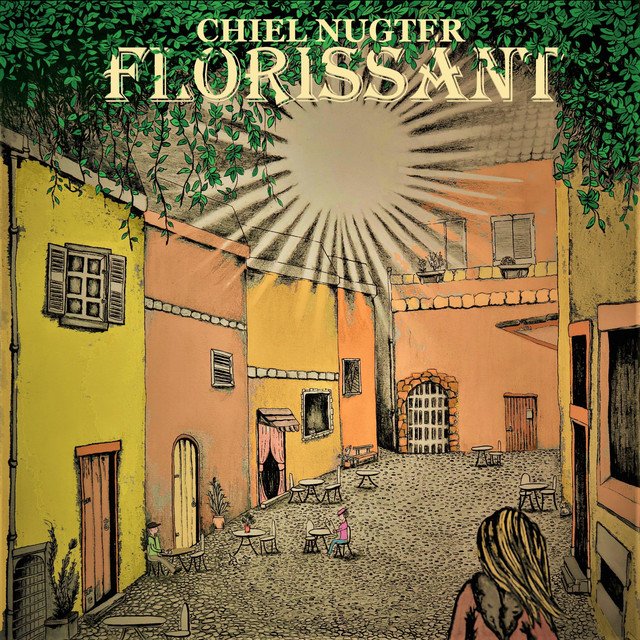
“Discover a Neoclassic flower which slowly blooms, revealing its vivid colours of absolute artistry. "Watertoren" is the result of vibrating violin and piano chords, tied together in a very integral way.”
-Nagamag.com
https://www.instagram.com/chielnugter
Chiel Nugter is a Dutch composer who is master of both Spanish and classical guitar. His genre can be described as dreamy and melancholic music where you can be thrown back in time as a way of 100% years. In addition to the music he releases under his own name, he also makes electronic music under the name Sabora. Here he cuts the more dark side of his soul and the more dark side of how he can see society. In 2016 Chiel also wrote a piece for sypmhonieorkest Tourrmalijn in honor of the Commemoration of jews in camp Vught. In 2020, Chiel created works inspired by cultural-historical events and buildings related to the city for the municipality of 's-Hertogenbosch. His latest work is a neo-classical album, with only the main instruments classical guitar and violin.
Latest Neoclassical discoveries
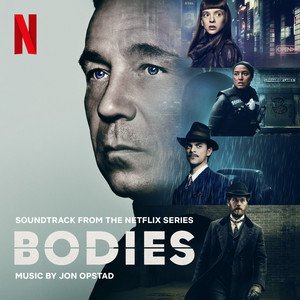
Jon Opstad – A Bullet in Time | Neoclassical music review
Cinematic structure gives this song different sound dimension, more depth and emotion to the already beautiful atmosphere. St... >>> Read full review & listen to the song on Nagamag #cinematic #epicmusic #jonopstad #unitedkingdom #nagamag #musicmagazine #musicreview #review

Peace and Honey – Rumor of the Sky | Neoclassical music review
Прекрасная, спокойная неоклассическая композиция от -Peace and Honey-, которая переносит слушателя в мир красоты, душевного р... >>> Read full review & listen to the song on Nagamag #solopiano #peaceandhoney #unitedstates #nagamag #musicmagazine #musicreview #review

Pascal Holper – Aphelion | Neoclassical music review
Pascal from Austria uses classical string elements to create a strongly affecting atmosphere. Delicate notes slowly unfold to... >>> Read full review & listen to the song on Nagamag #neo #modernclassical #classicalstrings #pascalholper #austria #nagamag #musicmagazine #musicreview #review FB: @pascalholpermusic IG: @pascalholper

Amakuno – Albedo 0 | Neoclassical music review
Удивительное сочетание неоклассической музыки и IDM, которое создаёт уникальную атмосферу и погружает в мир иной реальности. ... >>> Read full review & listen to the song on Nagamag #electronica #nagamag #musicmagazine #musicreview #review IG: @amakuno

Einar Bjartur – pungur vegur | Neoclassical music review
Невозможно слушать эту композицию и не чувствовать, как внутри тебя всё содрогается. Каждая клеточка твоего тела пытается осо... >>> Read full review & listen to the song on Nagamag #cinematic #nagamag #musicmagazine #musicreview #review FB: @profile.php IG: @einarbjartur

Angelo Nicola Giuliano – A long way | Neoclassical music review
Спокойный, умиротворённый музыкальный опус от -Angelo Nicola Giuliano-, который ни секунды не оставляет слушателя равнодушным... >>> Read full review & listen to the song on Nagamag #piano #nagamag #musicmagazine #musicreview #review

Michael Richardson – Decay | Neoclassical music review
Удивительное композиция, которое несомненно заслуживает каждой секунды вашего внимания. Мелодичное и атмосферное звучание, то... >>> Read full review & listen to the song on Nagamag #piano #nagamag #musicmagazine #musicreview #review FB: @diapasonweb IG: @www.instagram.comangelonicolagiuliano

Pierre-Alexandre Monin – A Long Way | Neoclassical music review
Открываясь нежным вступлением пиано, композиция медленно раскрывается, добавляя каждый новый элемент в музыкальные пазлы. Акк... >>> Read full review & listen to the song on Nagamag #solopiano #pierrealexandremonin #france #nagamag #musicmagazine #musicreview #review FB: @pierrealexmonin.mus
Peace, baby. – A Life | Neoclassical music review
Удивительной красоты неоклассическая композиция, которая затягивает слушателя своей энергией и гармонией. Музыкальные инструм... >>> Read full review & listen to the song on Nagamag #neo #modernclassical #newage #peace #baby #unitedstates #nagamag #musicmagazine #musicreview #review FB: @peacebabysongs IG: @peaceebabyyy
Difference between Classical and Neoclassical Music
Classical music refers to a broad range of music written in the classical tradition, which encompasses a wide range of styles and forms. It is generally characterized by its formal structure and its use of traditional instruments and ensemble configurations.
Neoclassicism is a style of music that refers to the revival and use of classical forms and styles in music, particularly in the 18th and early 19th centuries. It is characterized by its use of clear, concise forms and a focus on structure and balance. Neoclassicism was a reaction against the romantic style of music, which was characterized by emotion and passion, and was influenced by the ideas of the Enlightenment, which valued reason and classical learning.
Some of the key differences between classical and neoclassical music include:
Time period: Classical music refers to music written during the classical period (1730-1820), while neoclassicism refers to music written after the classical period that incorporates elements of classical forms and styles.
Emphasis on structure: Classical music is known for its formal structure and the use of traditional forms such as the sonata and the symphony. Neoclassical music also places a strong emphasis on structure, but may also incorporate elements of popular music and folk music.
Emphasis on emotion: Classical music is often more reserved and formal in its emotional expression, while neoclassicism tends to be more emotional and expressive.
Use of tonality: Both classical and neoclassical music use tonality, but neoclassicism often incorporates a wider range of tonal structures and may experiment with atonality.
Use of traditional instruments: Both classical and neoclassical music use traditional classical instruments such as strings, woodwinds, brass, and percussion. However, neoclassicism may also incorporate elements of popular music and folk music, and may use a wider range of instruments.
Overall, the main difference between classical and neoclassical music is the time period in which the music was written, and the specific techniques and styles used by the composer. Classical music is generally more formal and reserved in its expression, while neoclassicism tends to be more expressive and may incorporate elements of popular music and folk music.
The most used instruments in Neoclassical Music
In neoclassical music, the most common instruments used are those found in the classical orchestra, including:
Strings: Violin, viola, cello, double bass
Woodwinds: Flute, oboe, clarinet, bassoon
Brass: Trumpet, French horn, trombone, tuba
Percussion: Timpani, snare drum, bass drum, cymbals, xylophone, marimba, triangle
Keyboard: Piano, harpsichord
These instruments are often used to create a wide range of textures and sounds, and are featured in many different types of classical music, including neoclassical music. In addition to these instruments, many composers also incorporate elements of popular music and folk music into their compositions, and may use a variety of other instruments such as guitars, bass, drums, and synthesizers.
It’s also worth noting that many composers and performers of neoclassical music are skilled in a variety of different instruments, and may switch between different instruments in order to achieve the desired sound and texture.
Vocals are sometimes used in neoclassical music, although they are not as common as instrumental music. When vocals are used in neoclassical music, they are typically performed by trained classical singers who have the ability to sing with precise pitch and control.
One common use of vocals in neoclassical music is in operatic compositions, where singers perform arias and recitatives in a style that is similar to traditional opera. Neoclassical opera is a subgenre of classical music that combines elements of traditional opera with elements of neoclassicism, and often incorporates elements of popular music and folk music.
In addition to operatic vocals, vocals may also be used in other forms of neoclassical music, such as choral music or vocal chamber music. Some composers may also incorporate elements of popular music or folk music into their compositions, and may use vocals in a more modern or experimental style.
It’s worth noting that the use of vocals in neoclassical music is highly dependent on the individual composer and the specific piece of music, and not all neoclassical compositions will feature vocals.