
Jazz Music ⁞ New Releases⁞ Artist Interviews⁞ Music News
Introduction of Jazz Music
Jazz is a genre of music that originated in the African-American communities of New Orleans, United States, in the late 19th and early 20th centuries. It is characterized by its use of improvisation, complex harmonic structures, and a wide range of musical influences, including blues, gospel, and European classical music. Jazz is known for its swing rhythm, which is created by the use of syncopated rhythms and a strong pulse. It is often played by small ensembles, such as a quintet or sextet, and is known for its ability to adapt to a wide range of musical contexts and styles. Jazz has had a significant influence on many other genres of music, and has been an important part of the cultural fabric of the United States and the rest of the world for more than a century.
Jazz by Nagamag Playlist on Spotify
Recent Jazz Interviews
Jazz Featured Releases
David Whitman – With Love (Spotify)
“Music David Whitman is a bouquet of passions and a deep, sincere respect for his work. The album Soul Flow is an example of defeating improvisations within the framework of Jazz, and ensemble percussion as an inventive element of hunting technical masterpieces.”
“Музыка David Whitman это букет из страсти и глубокого, искреннего уважения к своему творчеству. Альбом Soul Flow пример поразительной импровизации в рамках изысканного Джаза, а ансамблевая перкуссия как изумительный элемент ловкого технического мастерства.”
-Nagamag.com
This song received an Independent Music Award nomination for Best Instrumental Jazz Song. The album received two other IMA nominations and won four Global Music Awards. John Raymond, one of DownBeat magazines most watched young trumpet players, marvelously interprets the feature.
https://www.instagram.com/davidrobertwhitman/
David Whitman brings a passion and deep respect for the music to the stage wherever and whenever he performs. Praised for his versatility, he possesses a high level of skill across a broad range of percussion styles and ensemble situations. Critics provide affirmation ; “His spirit echoes the playing of Art Blakey,” and “his goal of capturing the high standards of … prestigious jazz labels is dazzlingly achieved,” with playing that is hailed as “swinging,” “mesmerizing,” and “invigorating,” with “mesmerizing brushwork,” “youthful exuberance,” and “deft technical skill.”
David’s first album as leader ("Oh, Clara!") was recently released on the North Park label to critical acclaim, winning an Independent Music Award for Best Instrumental Jazz Album in 2018, as well as a nomination for Best Producer. His second album as leader (“Soul Flow”) won four Global Music Awards (Production, Composition, Jazz, Album --- all Silver), and three additional Independent Music Award nominations (Best Jazz Song, Best Blues Song, and Best Producer).
David has also toured, performed, or recorded with The Who, Geoffrey Keezer, Peter Townshend, Jimmy Dorsey Orchestra, John Raymond, Johnny Mathis, Weird Al Yankovic, Roger Nierenburg, and so many more amazing artists.
https://twitter.com/whitmadr
Eve Adams – A Walk in the Park (Spotify)

“Just as folk music brings together genres of music and people, so is Eve Adams doing with us in their composition A Walk in the Park. The unobtrusiveness and ease of being that unites our hearts.”
“Как фолк-музыка объединяет музыкальные жанры и людей, точно также и Eve Adams поступает с нами в своей композиции A Walk in the Park. Ненавязчивость и лёгкость бытия объединяющая наши сердца.”
-Nagamag.com
Independent jazzfolk artist Eve Adams follows her captivating "You're Not Wrong" single with her newest offering "A Walk In The Park," due out next week. As a captivating writer from Los Angeles who heralds the undying influence of 20th century Americana music, her folk-noir sound tells stories of "dark, domestic dramas unfolding behind closed doors, equal parts violence and romance."
"Just like a walk in the park, we can go on and on," Adams croons in the opening line of her new single. Delicate and naive vocals are accompanied by a jazzy bass line, dramatic, tumbling organ and hazy percussion. The song seems to creep in from down a dark hallway, where a woozy pair of high heels tap on the sticky linoleum floor. Eve questions fate in this new track and shares, "Romance can be such a perfect distraction. It's a shame it doesn't last."
"To me, this song is about escaping into the fantasy of a new romance. Like the feeling of getting to know someone new, walking around in the dark, with nothing but the night to notice," she adds.
Eve spent her formative years traveling to and from her family farm in the tiny town of Colcord, Oklahoma. Inspired by the pastoral landscapes and the nuanced characters she grew up around, her whimsical tales depict a world that is familiar yet surreal, haunted by apparitions.
Eve's coming of age coincided with her departure to Montreal at the age of 18. A fortuitous meeting with saxophonist Military Genius led to the recording of her first album "In Hell" (2017)- Part I of their "Divine Romance" trilogy. While writing Part II, the blossoming creative relationship was cut short when Eve had to return to California due to a family crisis. During this time of uncertainty, Eve self-produced and released her second album "Candy Colored Doom" in 2019.
In the emotional wake of a tragedy, Eve rejoined Military Genius in Vancouver to finally complete the long-awaited Part II.
https://www.instagram.com/eve____adams/
Latest Jazz discoveries
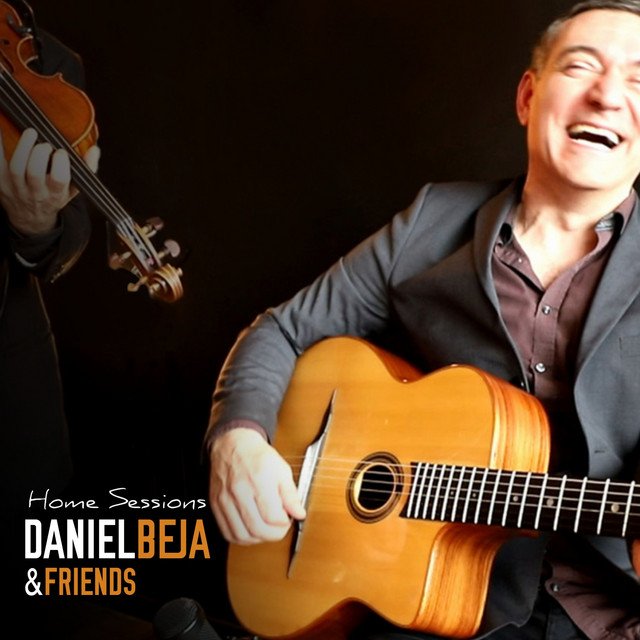
Adieu Paris – Daniel Beja
Melancholic and very emotional song feels deeper and deeper with every time it is played. Addictive violin lead is just beaut... >>> Read full review & listen to the song on Nagamag #jazz #danielbeja #france #nagamag #musicmagazine #musicreview #review

All So Incredible – Cici Arthur (Joseph Shabason, Chris A. Cummings, Thom Gill)
Amazing jazz song with lounge harmonic structure behind it. Full of catchy themes, that feels almost cinematic. Blissful lead... >>> Read full review & listen to the song on Nagamag #dreampop #ambient #ciciarthurjosephshabason #chrisacummings #thomgill #canada #nagamag #musicmagazine #musicreview #review
02/09/23 – Seth Finch x Gabrielle Cavassa
Smooth mood and easy listening sounds that are layered with blissful lead vocal. Her voice is definitely makes us focus the m... >>> Read full review & listen to the song on Nagamag #neosoul #nujazz #jazztronica #jazz #sethfinchxgabriellecavassa #sethfinchxgabriellecavassa #unitedstates #nagamag #musicmagazine #musicreview #review

Ladies Man – Bush Divers
Όμορφα και παθιασμένα φωνητικά που ανεβάζουν την αδρεναλίνη με την πληθωρική ερμηνεία τους. Η μελωδία με τα μεθυστικά αγγίγμα... >>> Read full review & listen to the song on Nagamag #funk #indierock #alternativerock #bushdivers #unitedstates #nagamag #musicmagazine #musicreview #review

Desperate For Love – Camille Trust
Όμορφα και ρομαντικά φωνητικά που με τον αισθησιασμό τους μαλακώνουν την καρδιά μας και ανεβάζουν το επίπεδο της διασκέδασης ... >>> Read full review & listen to the song on Nagamag #neosoul #funk #retrosoul #camilletrust #unitedstates #nagamag #musicmagazine #musicreview #review
Old Lucia Song – Per Thornberg
Ethereal melodies and gentle textures with this enchanting and soothing song. Its harmonic structure brings depth of emotions... >>> Read full review & listen to the song on Nagamag #jazz #holidaymusic #perthornberg #sweden #nagamag #musicmagazine #musicreview #review

Spirit Dance Parts I and II – Ambient Jazz Ensemble
Amazing jazz song with smooth harmonic structure behind it. Full of catchy piano riffs, trumpet themes, funky vibe and smooth... >>> Read full review & listen to the song on Nagamag #nujazz #jazztronica #jazzfusion #jazz #ambientjazzensemble #unitedkingdom #nagamag #musicmagazine #musicreview #review
Moanin – Bastian Weinig
Smooth and very easy listening sounds make this song very enjoyable. Catchy piano themes and kontrabass fit so well, creating... >>> Read full review & listen to the song on Nagamag #jazz #bastianweinig #germany #nagamag #musicmagazine #musicreview #review
Miss Missed Connection – Sweet Magnolia
Song catches you right away. Nice instrumentation, especially its trumpet themes, that feels so epic in a way. Great producti... >>> Read full review & listen to the song on Nagamag #jazz #retrosoul #sweetmagnolia #unitedstates #nagamag #musicmagazine #musicreview #review
Some Jazz subgenres
There are many subgenres of jazz, and the boundaries between them can be somewhat fluid. Here are a few of the most common subgenres of jazz:
Dixieland jazz: Also known as “traditional” or “New Orleans” jazz, this style is characterized by its use of collective improvisation and a strong rhythm section, featuring instruments such as the trumpet, trombone, and clarinet.
Swing: This style emerged in the 1930s and 1940s and is characterized by its use of a swinging rhythm and big band instrumentation. It was popularized by bands led by musicians such as Duke Ellington and Benny Goodman.
Bebop: This style emerged in the 1940s and is characterized by its fast tempo, complex chord progressions, and extensive use of improvisation. It was popularized by musicians such as Charlie Parker and Dizzy Gillespie.
Cool jazz: This style emerged in the 1950s and is characterized by its use of complex harmonies and a laid-back, relaxed approach to rhythm. It was popularized by musicians such as Miles Davis and Dave Brubeck.
Fusion: This style emerged in the 1970s and is characterized by its incorporation of elements from other genres of music, such as rock, funk, and world music. It was popularized by musicians such as John McLaughlin and Chick Corea.
Smooth jazz: This style emerged in the 1980s and is characterized by its use of electronic instrumentation and a focus on melody and groove. It was popularized by musicians such as George Benson and Grover Washington Jr.
Hard bop: This style emerged in the 1950s and is characterized by its use of blues and gospel influences and its incorporation of elements from bebop and swing. It was popularized by musicians such as Horace Silver and Art Blakey.
Free jazz: This style emerged in the 1960s and is characterized by its use of extended improvisation and a lack of strict chord progressions or other formal structures. It was popularized by musicians such as Ornette Coleman and John Coltrane.
Latin jazz: This style is characterized by its incorporation of Latin American rhythms and melodies, as well as its use of percussion instruments such as congas, timbales, and bongos. It was popularized by musicians such as Tito Puente and Cal Tjader.
Acid jazz: This style emerged in the 1980s and is characterized by its incorporation of elements from funk, soul, and hip hop, as well as its use of electronic instrumentation. It was popularized by musicians such as Brand New Heavies and Jamiroquai.
Jazz-rock: This style emerged in the 1970s and is characterized by its incorporation of elements from rock music and its use of electric instruments. It was popularized by musicians such as Mahavishnu Orchestra and Weather Report.
Jazz-funk: This style is characterized by its incorporation of elements from funk music and its use of electric instruments and groove-based rhythms. It was popularized by musicians such as James Brown and George Clinton.
As with any genre of music, these subgenres are just a few of the many that exist within the broader category of jazz. There are many other styles and variations within jazz.
The most used instruments in Jazz Music
There are many different instruments that are commonly used in jazz music, and the specific instruments used can vary depending on the style and context of the music. Here are a few of the most common instruments used in jazz:
Piano: The piano is a common instrument in jazz music and is often used to provide the harmonic foundation for the music. Jazz pianists may use a range of techniques, including comping (providing chordal accompaniment), soloing (performing a melodic solo), and improvising (creating music spontaneously).
Drums: The drums are an important part of the rhythm section in jazz music and are often used to create a swinging or groove-based feel. Jazz drummers may use a range of techniques, including various stick and cymbal patterns, to create complex rhythms and interactive interactions with other musicians.
Bass: The bass is another important part of the rhythm section in jazz music and is often used to provide the foundation for the music. Jazz bassists may use a range of techniques, including walking bass lines (a repeating pattern of notes played over the chord progression of a song) and soloing, to create a strong rhythmic and melodic foundation for the music.
Guitar: The guitar is often used in jazz music and can play a variety of roles, from providing chordal accompaniment to soloing. Jazz guitarists may use a range of techniques, including chord voicings (arrangements of notes in a chord), arpeggios (broken chords played one note at a time), and improvisation, to create complex and interesting musical textures.
Saxophone: The saxophone is a common instrument in jazz music and is often used to play melodies and improvise solos. Jazz saxophonists may use a range of techniques, including alternate fingerings, multiphonics (playing more than one pitch at a time), and circular breathing (a technique for continuous blowing), to create a wide range of sounds and textures.
Vocals: Vocals are often used in jazz music, and many jazz singers have made significant contributions to the genre. Jazz vocals can take many forms, ranging from scat singing (improvised vocalizations using nonsense syllables) to more traditional vocal styles such as singing with lyrics. Some famous jazz singers include Billie Holiday, Ella Fitzgerald, and Louis Armstrong, all of whom are known for their unique vocal styles and ability to improvise.
In addition to traditional vocals, many jazz musicians also use electronic effects and processing to manipulate their voices, creating a wide range of sounds and textures. Some jazz musicians, such as Bobby McFerrin and Gregory Porter, have made significant contributions to the genre using only their voices, without any accompanying instruments.
In jazz music, lyrics are often used in the same way as in other genres of music, to express emotions, tell a story, or convey a message. However, jazz lyrics may also be used to create a structure for improvisation or to provide a basis for scat singing, which is a form of vocal improvisation in which the singer uses nonsense syllables instead of actual words.
Jazz lyrics may also be more abstract and poetic than lyrics in other genres of music, and may use figurative language or symbolism to convey meaning. Jazz lyrics often reflect the social and cultural contexts in which the music was created, and may address themes such as love, loss, hope, and social or political issues.
Overall, vocals and the meaning of lyrics in jazz music depends on the context in which they are used and the intentions of the songwriter. They can be used to express emotions, tell a story, convey a message, or provide a structure for the music to follow.