
Jazz Music ⁞ New Releases⁞ Artist Interviews⁞ Music News
Introduction of Jazz Music
Jazz is a genre of music that originated in the African-American communities of New Orleans, United States, in the late 19th and early 20th centuries. It is characterized by its use of improvisation, complex harmonic structures, and a wide range of musical influences, including blues, gospel, and European classical music. Jazz is known for its swing rhythm, which is created by the use of syncopated rhythms and a strong pulse. It is often played by small ensembles, such as a quintet or sextet, and is known for its ability to adapt to a wide range of musical contexts and styles. Jazz has had a significant influence on many other genres of music, and has been an important part of the cultural fabric of the United States and the rest of the world for more than a century.
Jazz by Nagamag Playlist on Spotify
Recent Jazz Interviews
Jazz Featured Releases
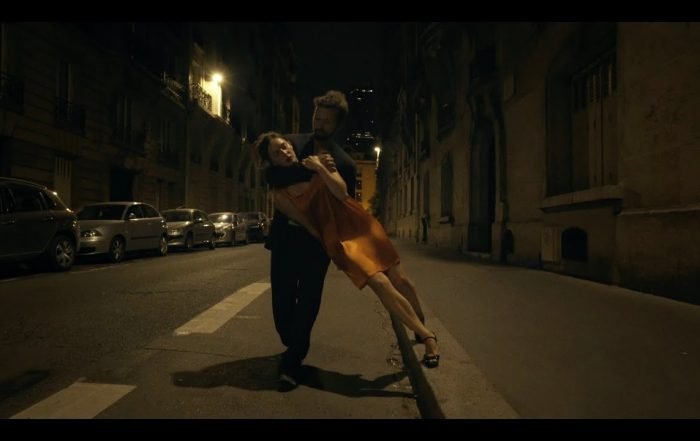
Oan Kim – Mambo (Video)
“Exclusively made for the most selective listeners, this Jazz juwel is going to add one more missing piece in your musical puzzle. Elusive sound elements mixed with dominating saxophone and a sample of passionate vocals. This is the recipe for artistic success!”
-Nagamag.com
TAKEN FROM THE UPCOMING ALBUM ‘OAN KIM & THE DIRTY JAZZ’
Mambo is the latest single from Oan Kim’s upcoming album ‘Oan Kim & the Dirty Jazz’. Inspired by the likes of Archie Shepp and Charles Lloyd, Oan’s inimitable jazz saxophone style is neatly entwined in this mysterious and minimal track.
https://www.instagram.com/oan.kim/?hl=en
The single follows on from the first release of the album Wong Kar Why, which features French musician Edward Perraud. The album was produced by Oan himself in his home studio in Paris, with Oan playing saxophone and guitar throughout. On Mambo, he explains ‘as with most of this album I wanted to mix different genres. It all started with the guitar and bass line alla Nick Cave or Timber Timbre. This bass line really sets a particular mood of subdued tension, that I wanted to do a jazz saxophone track on.’
Also singing on the track, Oan added ‘the lyrics describe a compulsive liar enjoying the joy and laughter that his lies provoke’.
‘I called it Mambo because it reminds me of music from the Mambo era and I liked the connotations, but it’s clearly not a mambo per se’.
Oan’s compelling sound palette follows from studies at Conservatoire National Supérieur de Musique de Paris and the Bill Evans Piano Academy, whilst also being fascinated by contemporary music and the indie scene in which he played for a number of years with electro-rock duo Chinese Army and rock band Film Noir.
Bringing together his musical and artistic influences into a melting pot of creativity, Oan’s passion for music and filmmaking is evident with the mesmerizing music video for Mambo. Featuring two contemporary dancers, the video showcases the ‘dynamics of seduction within a dance number’.
Inspired by a mix of Pina Bausch and Fred Astaire, the video aims to show ‘where a couple is gaging each other, getting closer, pushing back, pulling closer, embracing, controlling the other, or falling into each other’s arms’, whilst also keeping the urban settings of dance similar to in the film Pina by Wim Wenders.
The dance is based on these ‘push/pull dynamics’, borrowing elements of ballroom dancing that match the retro elements of the music.
Mambo, the second single from the upcoming album ‘Oan Kim & The Dirty Jazz’, is available now on all major platforms.

Livio Almeida, Rodrigo Balduino, Rodrigo Bezerra, André Bra – Radamés y Pelé – song by Livio Almeida, Rodrigo Balduino, Rodrigo Bezerra, André Braz | Spotify (Spotify)
“Light Jazz composition, which we want to compare with a gust of a warm, summer breeze. Walk along this velvet sound. Music which dips us into the atmosphere of the artist's imagination and can set free from any negative thoughts.”
“Лёгкая джазовая композиция, которую так и хочется сравнить с порывом тёплого, летнего ветерка. Прогулка по набережной в сопровождение бархатного звучания. Музыка, которая окунает нас в атмосферу воображения автора и полностью освобождает от любых негативных мыслей.”
-Nagamag.com
Radamés y Pelé is a song written by the great maestro Tom Jobim for his last album, to render homage to this two geniuses – and friends of his: the composer Radames Gnatalli and the soccer player Pelé.
This mixture between choro and bossa-nova is the first release of the project Jobiniando, and was handled by 3 exponents of the new Brazilian Jazz:
Livio Almeida (sax tenor) has a master’s degree in composition at the Brooklyn College of New York and plays with great names of the American jazz scene, such as the Grammy award winning pianist Arturo O’Farril, Ari Hoening, Helio Alves and Romero Lubambo.
Rodrigo Bezerra (guitar) is one of the most prolific guitar players and composers of his generation. Having recorded 6 albums as a leader, he can easily combine jazz and brazilian music, and have played with artists such as Ellen Oléria and Carlos Malta.
Rodrigo Balduino (bass) is member of the Esdras Nogueira Quartet. He has shared the stage with names like Bocato and Dominguinhos and has recently produced the new album of Ramiro Pinheiro, released with the jazz label Fresh Sounds.
https://www.instagram.com/brasounds
https://www.facebook.com/rodrigobalduino
https://twitter.com/rodrigobalduino
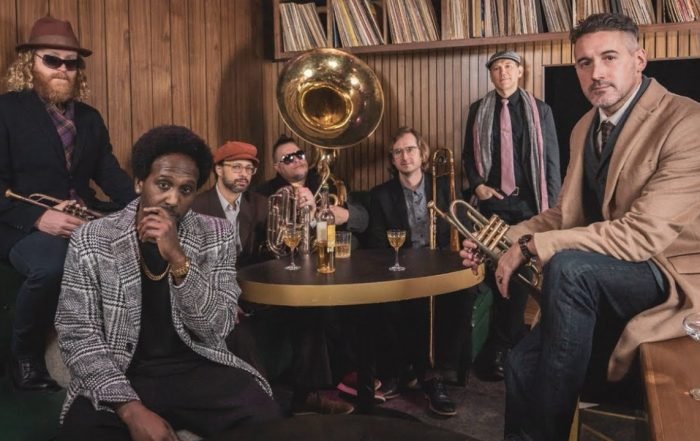
Be The One Tonight – LowDown Brass Band (Video)
“It’s practically impossible to stand still with this one. The beat pulls you in with a quality fusion of sounds from the American landscape. Nothing lights up a track like a proper horn section and clean vocals from the whole crew. ”
-Nagamag.com
“Be The One Tonight” is a classic party song that is a perfect example of how the LDB sound is evolving. You get the elements of the brass soli and instrumental at the beginning and in the middle of the song we are transformed into a modern “Trap” section of the tune, blending in elements of hip hop into the brass band sound. This song was a true collaboration and many of the artists in the collective offered their talents to the final product.
https://m.facebook.com/lowdownbrassband
https://www.instagram.com/lowdownbrassband
Latest Jazz discoveries
Old Lucia Song – Per Thornberg
Ethereal melodies and gentle textures with this enchanting and soothing song. Its harmonic structure brings depth of emotions... >>> Read full review & listen to the song on Nagamag #jazz #holidaymusic #perthornberg #sweden #nagamag #musicmagazine #musicreview #review

Spirit Dance Parts I and II – Ambient Jazz Ensemble
Amazing jazz song with smooth harmonic structure behind it. Full of catchy piano riffs, trumpet themes, funky vibe and smooth... >>> Read full review & listen to the song on Nagamag #nujazz #jazztronica #jazzfusion #jazz #ambientjazzensemble #unitedkingdom #nagamag #musicmagazine #musicreview #review
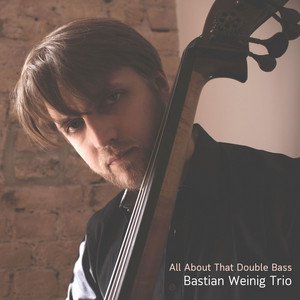
Moanin – Bastian Weinig
Smooth and very easy listening sounds make this song very enjoyable. Catchy piano themes and kontrabass fit so well, creating... >>> Read full review & listen to the song on Nagamag #jazz #bastianweinig #germany #nagamag #musicmagazine #musicreview #review
Miss Missed Connection – Sweet Magnolia
Song catches you right away. Nice instrumentation, especially its trumpet themes, that feels so epic in a way. Great producti... >>> Read full review & listen to the song on Nagamag #jazz #retrosoul #sweetmagnolia #unitedstates #nagamag #musicmagazine #musicreview #review
Ice On Fire – th&o.
Η ένταση και η ζωντάνια του ρυθμού μας ξεσηκώνει και μας διασκεδάζει χωρίς όρια. Τα εξαιρετικά φωνητικά κάνουν την καρδιά μας... >>> Read full review & listen to the song on Nagamag #contemporaryrnb #th&o #southafrica #nagamag #musicmagazine #musicreview #review

Do You Think That Santa Celebrates Halloween? – Kyle Cox
Η γιορτινή μελωδία ζεσταίνει τις καρδίες μας και το κεφάτο σαξόφωνο μας γεμίζει χαρά. Τα υπέροχα και καθαρά φωνητικά παιχνιδί... >>> Read full review & listen to the song on Nagamag #jazz #holidaymusic #kylecox #nagamag #musicmagazine #musicreview #review

All I Want For Christmas Is One More Beer (Fake X-mas Song) – Mighty Joe Belson
Η γλυκιά μελωδία με το ταπεραμέντο και την ευκίνητη ροή της δημιουργεί όμορφες εικόνες στο μυαλό μας. Ένα γιορτινό χορευτικό ... >>> Read full review & listen to the song on Nagamag #jazz #holidaymusic #mightyjoebelson #unitedstates #nagamag #musicmagazine #musicreview #review

Baked Potato – Liz Nash
Ένα όμορφο ρομαντικό ταξίδι μέσα από την γλυκιά αυτή μελωδία που την απολαμβάνουμε χωρίς αμφιβολία. Η κιθάρα στο 2:00 κάνει τ... >>> Read full review & listen to the song on Nagamag #indiefolk #jazz #liznash #unitedstates #nagamag #musicmagazine #musicreview #review
Santa’s Sleigh – Greg Johnson
Μια όμορφη γιορτή στήνεται και η χαρούμενη μελωδία φοράει τα καλά της διώχνοντας μακριά τις έγνοιες και τα προβλήματα, ενώ το... >>> Read full review & listen to the song on Nagamag #jazz #adultcontemporary #gregjohnson #unitedstates #nagamag #musicmagazine #musicreview #review
Some Jazz subgenres
There are many subgenres of jazz, and the boundaries between them can be somewhat fluid. Here are a few of the most common subgenres of jazz:
Dixieland jazz: Also known as “traditional” or “New Orleans” jazz, this style is characterized by its use of collective improvisation and a strong rhythm section, featuring instruments such as the trumpet, trombone, and clarinet.
Swing: This style emerged in the 1930s and 1940s and is characterized by its use of a swinging rhythm and big band instrumentation. It was popularized by bands led by musicians such as Duke Ellington and Benny Goodman.
Bebop: This style emerged in the 1940s and is characterized by its fast tempo, complex chord progressions, and extensive use of improvisation. It was popularized by musicians such as Charlie Parker and Dizzy Gillespie.
Cool jazz: This style emerged in the 1950s and is characterized by its use of complex harmonies and a laid-back, relaxed approach to rhythm. It was popularized by musicians such as Miles Davis and Dave Brubeck.
Fusion: This style emerged in the 1970s and is characterized by its incorporation of elements from other genres of music, such as rock, funk, and world music. It was popularized by musicians such as John McLaughlin and Chick Corea.
Smooth jazz: This style emerged in the 1980s and is characterized by its use of electronic instrumentation and a focus on melody and groove. It was popularized by musicians such as George Benson and Grover Washington Jr.
Hard bop: This style emerged in the 1950s and is characterized by its use of blues and gospel influences and its incorporation of elements from bebop and swing. It was popularized by musicians such as Horace Silver and Art Blakey.
Free jazz: This style emerged in the 1960s and is characterized by its use of extended improvisation and a lack of strict chord progressions or other formal structures. It was popularized by musicians such as Ornette Coleman and John Coltrane.
Latin jazz: This style is characterized by its incorporation of Latin American rhythms and melodies, as well as its use of percussion instruments such as congas, timbales, and bongos. It was popularized by musicians such as Tito Puente and Cal Tjader.
Acid jazz: This style emerged in the 1980s and is characterized by its incorporation of elements from funk, soul, and hip hop, as well as its use of electronic instrumentation. It was popularized by musicians such as Brand New Heavies and Jamiroquai.
Jazz-rock: This style emerged in the 1970s and is characterized by its incorporation of elements from rock music and its use of electric instruments. It was popularized by musicians such as Mahavishnu Orchestra and Weather Report.
Jazz-funk: This style is characterized by its incorporation of elements from funk music and its use of electric instruments and groove-based rhythms. It was popularized by musicians such as James Brown and George Clinton.
As with any genre of music, these subgenres are just a few of the many that exist within the broader category of jazz. There are many other styles and variations within jazz.
The most used instruments in Jazz Music
There are many different instruments that are commonly used in jazz music, and the specific instruments used can vary depending on the style and context of the music. Here are a few of the most common instruments used in jazz:
Piano: The piano is a common instrument in jazz music and is often used to provide the harmonic foundation for the music. Jazz pianists may use a range of techniques, including comping (providing chordal accompaniment), soloing (performing a melodic solo), and improvising (creating music spontaneously).
Drums: The drums are an important part of the rhythm section in jazz music and are often used to create a swinging or groove-based feel. Jazz drummers may use a range of techniques, including various stick and cymbal patterns, to create complex rhythms and interactive interactions with other musicians.
Bass: The bass is another important part of the rhythm section in jazz music and is often used to provide the foundation for the music. Jazz bassists may use a range of techniques, including walking bass lines (a repeating pattern of notes played over the chord progression of a song) and soloing, to create a strong rhythmic and melodic foundation for the music.
Guitar: The guitar is often used in jazz music and can play a variety of roles, from providing chordal accompaniment to soloing. Jazz guitarists may use a range of techniques, including chord voicings (arrangements of notes in a chord), arpeggios (broken chords played one note at a time), and improvisation, to create complex and interesting musical textures.
Saxophone: The saxophone is a common instrument in jazz music and is often used to play melodies and improvise solos. Jazz saxophonists may use a range of techniques, including alternate fingerings, multiphonics (playing more than one pitch at a time), and circular breathing (a technique for continuous blowing), to create a wide range of sounds and textures.
Vocals: Vocals are often used in jazz music, and many jazz singers have made significant contributions to the genre. Jazz vocals can take many forms, ranging from scat singing (improvised vocalizations using nonsense syllables) to more traditional vocal styles such as singing with lyrics. Some famous jazz singers include Billie Holiday, Ella Fitzgerald, and Louis Armstrong, all of whom are known for their unique vocal styles and ability to improvise.
In addition to traditional vocals, many jazz musicians also use electronic effects and processing to manipulate their voices, creating a wide range of sounds and textures. Some jazz musicians, such as Bobby McFerrin and Gregory Porter, have made significant contributions to the genre using only their voices, without any accompanying instruments.
In jazz music, lyrics are often used in the same way as in other genres of music, to express emotions, tell a story, or convey a message. However, jazz lyrics may also be used to create a structure for improvisation or to provide a basis for scat singing, which is a form of vocal improvisation in which the singer uses nonsense syllables instead of actual words.
Jazz lyrics may also be more abstract and poetic than lyrics in other genres of music, and may use figurative language or symbolism to convey meaning. Jazz lyrics often reflect the social and cultural contexts in which the music was created, and may address themes such as love, loss, hope, and social or political issues.
Overall, vocals and the meaning of lyrics in jazz music depends on the context in which they are used and the intentions of the songwriter. They can be used to express emotions, tell a story, convey a message, or provide a structure for the music to follow.